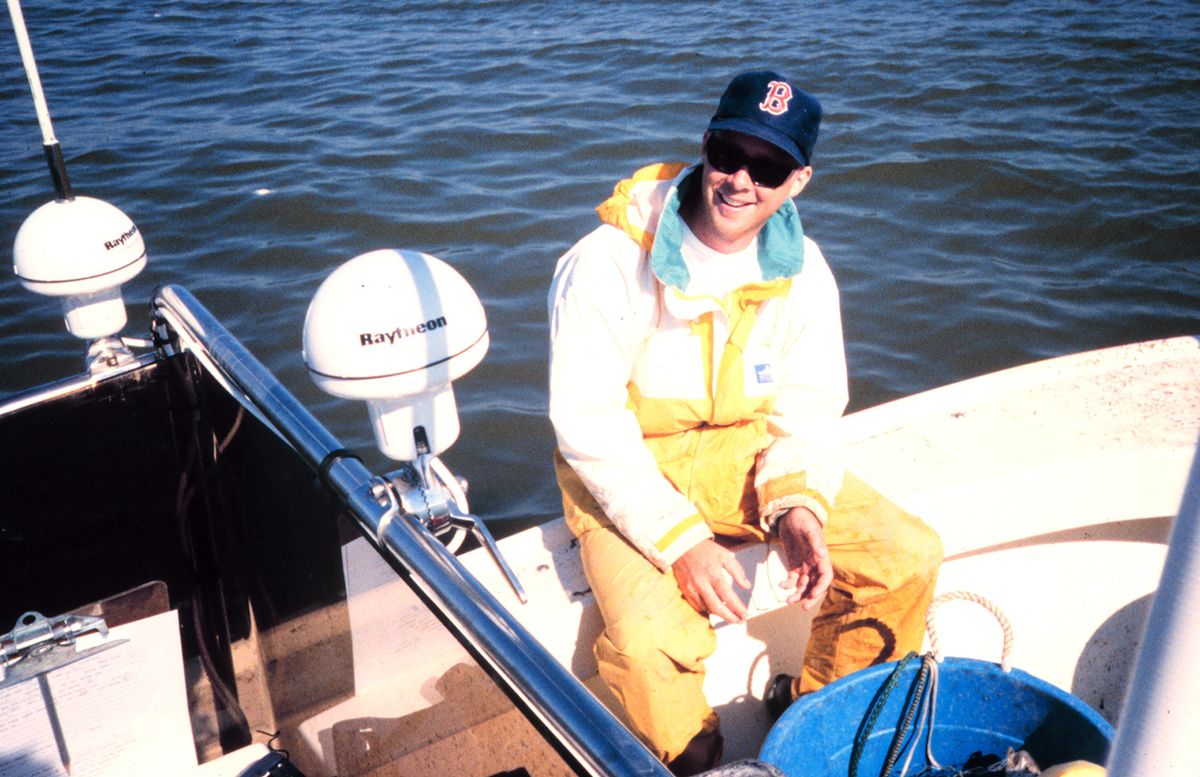
Chris Doley’s legacy at the National Oceanic and Atmospheric Administration is closely tied to his long and deeply influential partnerships with community-based organizations working on the frontlines of coastal restoration. Among those, his relationship with the North Carolina Coastal Federation stands out for its longevity and impact and for the role it played in advancing community-driven habitat restoration in North Carolina and beyond.
Chris became involved with the Coastal Federation’s work in the mid-1990s, during the formative years of NOAA’s Community-Based Habitat Restoration efforts. At that time, the Coastal Federation was in its second decade of work and was beginning to expand into fisheries habitat restoration as an emerging program area. The organization was advancing an idea that was still gaining traction nationally: that locally driven, science-based restoration — done with communities, not just for them — could deliver durable ecological results.
Supporter Spotlight

Chris was never just a grant manager. He became a trusted partner, sounding board, and advocate within NOAA — someone who understood both the realities of federal programs and the practical challenges of getting projects done on the ground. His willingness to listen, ask hard questions, and support promising ideas proved instrumental during a period when both NOAA’s restoration programs and the Federation’s habitat work were still taking shape.
With support provided through what would become NOAA’s Restoration Center, the Coastal Federation began to build one of the country’s more visible and respected nonprofit coastal restoration programs — rooted in applied science, community engagement, and practical outcomes.
Building a Restoration Agenda from the Ground Up
Working closely with Chris and NOAA’s habitat restoration staff, the Federation developed an increasingly integrated restoration approach — linking living shorelines, oyster reef restoration, salt marsh recovery, and water quality improvement into a more cohesive strategy. This systems-based framing was not yet common practice in the 1990s and early 2000s, when many restoration projects were relatively small, site-specific, and narrowly focused.
Chris encouraged partners to think beyond individual projects — at scale and to achieve significant ecological outcomes beyond individual project boundaries. Early NOAA support enabled the Federation to pilot some of North Carolina’s first living shoreline projects in the early 2000s, well before the practice was widely accepted or routinely permitted. These projects demonstrated that oyster reefs and marsh vegetation could stabilize shorelines, protect property, and improve habitat—often performing as well as or better than hardened shoreline structures, particularly during storm events.
The success of those projects didn’t just validate a new technique; it reshaped the Federation’s restoration agenda. Living shorelines became a core program area, and the lessons learned in North Carolina helped inform NOAA (and other federal agency) guidance, state permitting reforms, and restoration programs nationwide.
Supporter Spotlight
Oyster Reefs, Scale, and Staying Power
A similar trajectory emerged with oyster restoration. With Chris’s backing, the Coastal Federation undertook increasingly ambitious reef restoration efforts, including a major NOAA-supported initiative in 2009-2010, funded through the American Recovery and Reinvestment Act. That effort restored nearly 50 acres of oyster reefs and helped establish permanent oyster sanctuaries in Pamlico Sound, at the time among the larger oyster restoration efforts in the region.
More than a decade later, that long arc culminated in another milestone: the 2022 NOAA-supported investment to complete North Carolina’s 500-acre oyster sanctuary network. This project reflects decades of shared learning, trust, and persistence between NOAA and its partners.
Restore America’s Estuaries and Broader Influence
The Coastal Federation is a founding member of Restore America’s Estuaries (RAE), established in 1994 to connect community-based restoration organizations and share effective practices nationally. Chris supported NOAA’s engagement with RAE, recognizing that strong regional organizations could anchor a growing national restoration movement.
Through RAE and other collaborative forums, restoration approaches refined in North Carolina, such as community-driven project delivery, living shorelines, oyster sanctuaries, and volunteer engagement, were shared, adapted, and applied in other regions, helping advance restoration practice across the country.
Enduring Impact
From my perspective, what set Chris apart was his quiet confidence and deep respect for the people doing the work on the ground. I recall sitting with him in quiet corners of crowded conferences and workshops, where he would ask thoughtful, practical questions or offer observations about how our partnership was evolving. He simply wanted to understand, to learn, and to find ways to be an even better partner.
Chris Doley rarely sought the spotlight, but his influence is clear in the durability and credibility of NOAA’s community-based restoration programs and the projects they have supported. He created space for partners like the Coastal Federation to experiment, learn, and improve — while never losing sight of ecological outcomes and the public good.
As Chris retires after more than 35 years at NOAA, the North Carolina Coastal Federation — and countless partners across the country — continue to build on the foundation he helped establish. The restoration agenda he supported in North Carolina now informs broader policy discussions, restoration practice, and investment strategies nationwide.
Thank you, Chris, for believing early, backing consistently, and helping turn local action into lasting impact.