The North Carolina Department of Environmental Quality has suffered the highest percentage of staff cuts of any state, with nearly one-third of its workforce eliminated between 2010 and 2024, according to an environmental watchdog group.
A whopping 32%, or 386 DEQ staff positions, were wiped out during that 14-year period, according to an Environmental Integrity Project report released earlier this month.
Supporter Spotlight

Those staff cuts, the report concludes, leave the state agency responsible for administering regulations to protect water, air quality and the public’s health “ill-positioned to confront” pollution from the state’s growing factory farming industry, climate-driven storms and flooding in coastal communities.
The report notes how the agency was downsized when former Gov. Pat McCrory signed the 2015-16 state budget into law, triggering a shift of several divisions from what was then the Department of Environment and Natural Resources to the Department of Natural and Cultural Resources.
The Republican governor, who also renamed the agency the Department of Environmental Quality, said the move aligned with his vision for government efficiency.
Josh Kastrinsky, DEQ’s deputy communications director, said in an email last week that it is “difficult” to directly compare present staffing levels to those in 2010 because of the changes that were made to the department in 2015.
“However, for several regulatory divisions that existed in 2010 and 2025, staffing levels declined by at least 25%,” he wrote, adding that, “The EIP report focuses on regulatory work and does not include DEQ’s non-regulatory work, which affects the total numbers of staff shown.”
Supporter Spotlight
As of the week that began Dec. 8, the departments vacancy rate was 8%, Kastrinsky said.
“This includes an engineer vacancy rate of 14% and an environmental specialist vacancy rate of 9%,” he said. “Several DEQ programs have larger workloads and several programs have less staff than they did in 2010.”
North Carolina’s population has increased by more than 11.5% since 2010, according to USAFacts, a nonprofit organization that gathers data from federal, state and local governments.
The state’s population growth corresponds to an increase in environmental permit applications filed with the department.
Since 2010, the department’s Division of Mitigation Services has seen a 200% increase in projects.
During that same time period, the number of erosion and sediment control project applicants filed with the Division of Energy, Mineral, and Land Resources has jumped by nearly 60%, and the Division of Waste Management has received a 62% increase in underground storage tank applications.
“The 2010-2025 period also includes several destructive hurricanes, and DEQ staff have been heavily involved in recovery and long-term resilience in impacted communities,” Kastrinsky said. “DEQ’s ability to hire and retain sufficient staff levels has a direct effect on its ability to provide permit oversight, technical assistance to businesses and customer service to North Carolinians.”
The department’s “roughly 1,700 staff members remain dedicated to providing science-based efforts to ensure clean air, water and lands by managing applications, conducting inspections and permit oversight, investigating complaints and taking enforcement measures as appropriate under law,” he continued. “DEQ also continues to focus on a variety of funding and assistance programs to maintain critical infrastructure and make communities’ aging systems more resilient to increasingly severe natural disasters.”
The Environmental Integrity Program analyzed the budgets, annual expenditures and staffing levels from 2010 through to 2024 of the environmental agencies of all 50 states.
North Carolina topped the list of 31 states found to have cut jobs at their environmental agencies from 2010 to 2024. Connecticut experienced a 26% cut during that same time, followed closely by Arizona, which saw a 25% reduction in its environmental agency’s staff.
Seven states, including Texas, Mississippi, South Dakota, and Connecticut, reduced their pollution control funding by at least a third, the report concludes.
The impacts of such cuts will likely only be exacerbated by the Trump Administration’s plans to downsize the Environmental Protection Agency, the program warns.
“The Trump Administration is attempting to dismantle EPA and rollback commonsense federal pollution rules, claiming that the states can pick up the slack and protect our communities – but that’s not the case,” Jen Duggan, Environmental Integrity Project executive director, stated in a release. “The implementation of our environmental laws depend on both a strong EPA and state agencies that have the resources they need to do their jobs. But our research found that many states have already cut their pollution control agencies and so more cuts at the federal level will only put more Americans at risk.”
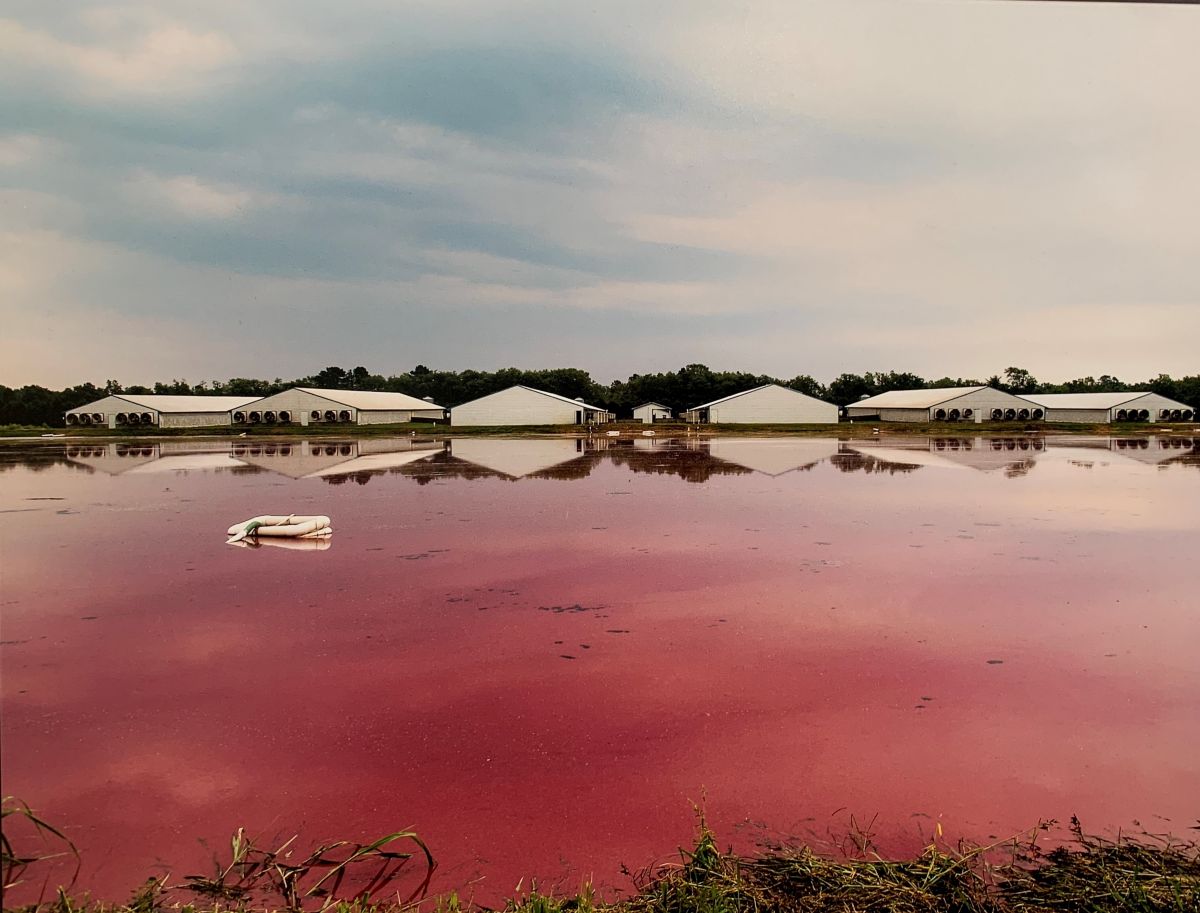
The report highlights North Carolina’s factory farming industry, which includes the production of nearly 1 billion chickens annually for sale as meat. And, as of March, there were 8.1 million hogs in concentrated animal feeding operations, or CAFOs, in the state.
Poultry waste at these CAFOs is sometimes dumped in open-air heaps and, when it rains, washes into nearby streams, discharging harmful nutrients into waters downstream, including those in the Cape Fear River Basin, which has the highest density of CAFOs in the world, according to Cape Fear River Watch.
“The unchecked expansion of hog and poultry farms has left the state environmental agency unable to even evaluate the cumulative impacts,” Drew Ball, director of Natural Resources Defense Council’s Southeast Campaigns team, states in the report. “At this point, policy experts and advocates can’t even get the information they need to protect the public. You can’t respond if you don’t know what’s coming online. We need to think a lot harder about keeping track of potential pollution and what it could mean for downstream communities.”
Coastal Review will not publish Wednesday, Thursday and Friday in observance of the Christmas holiday.