Part of an ongoing series on North Carolina’s observance of America’s 250th.
When Halifax was founded in 1760 on the south bank of the Roanoke River, the town became a thriving commercial and social hub, largely because of its access to the Albemarle Sound, but as the American Revolution took hold in the 1770s, the town found itself at the epicenter of North Carolina’s move from British rule to independence.
Supporter Spotlight

North Carolina’s Fourth Provincial Congress met in Halifax in the spring of 1776, when delegates from across the colony unanimously adopted a document recommending freedom from England that was later called the “Halifax Resolves,” according to state historians.
“North Carolina played a significant role in winning America’s independence,” Gov. Josh Stein said in a statement. “The creation and adoption of the Halifax Resolves on April 12, 1776 was the first official action by any colony calling for independence from Great Britain, forever cementing North Carolina’s place in history as ‘First in Freedom.’”
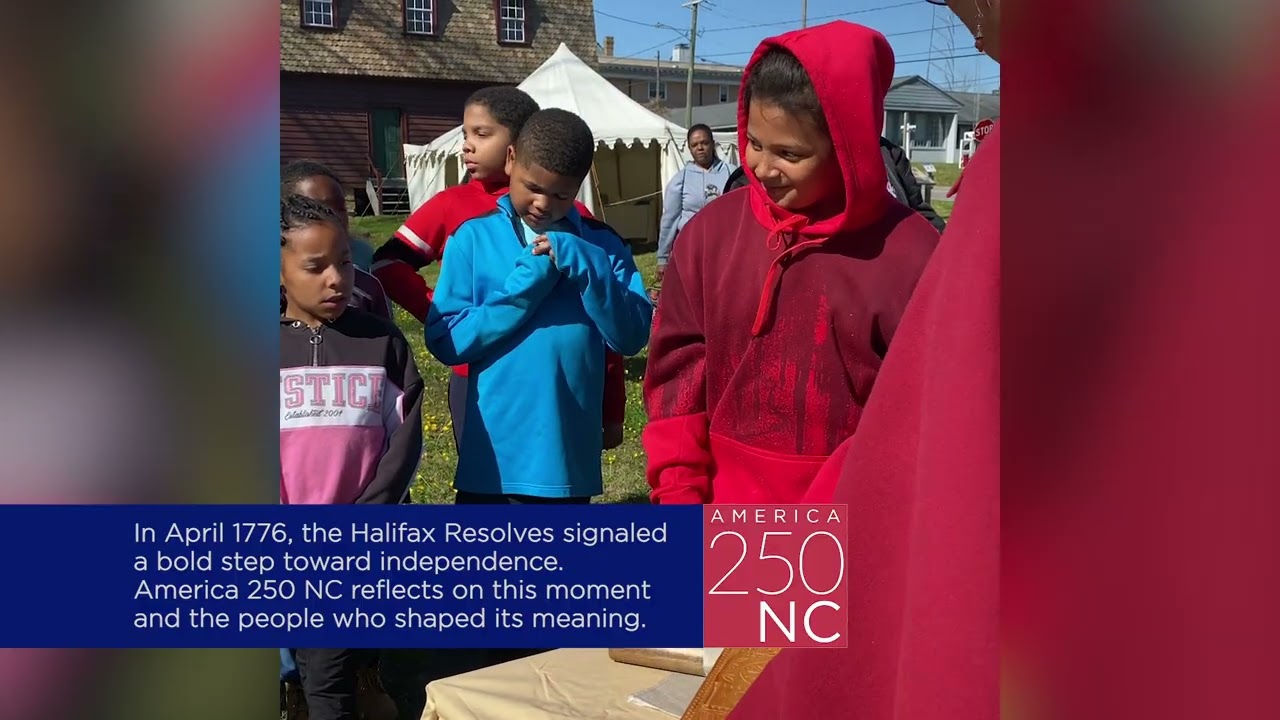
The state will commemorate the 250th anniversary of the document with “Prelude to Revolution: Halifax Resolves Days,” at the Historic Halifax State Historic Site in Halifax County.
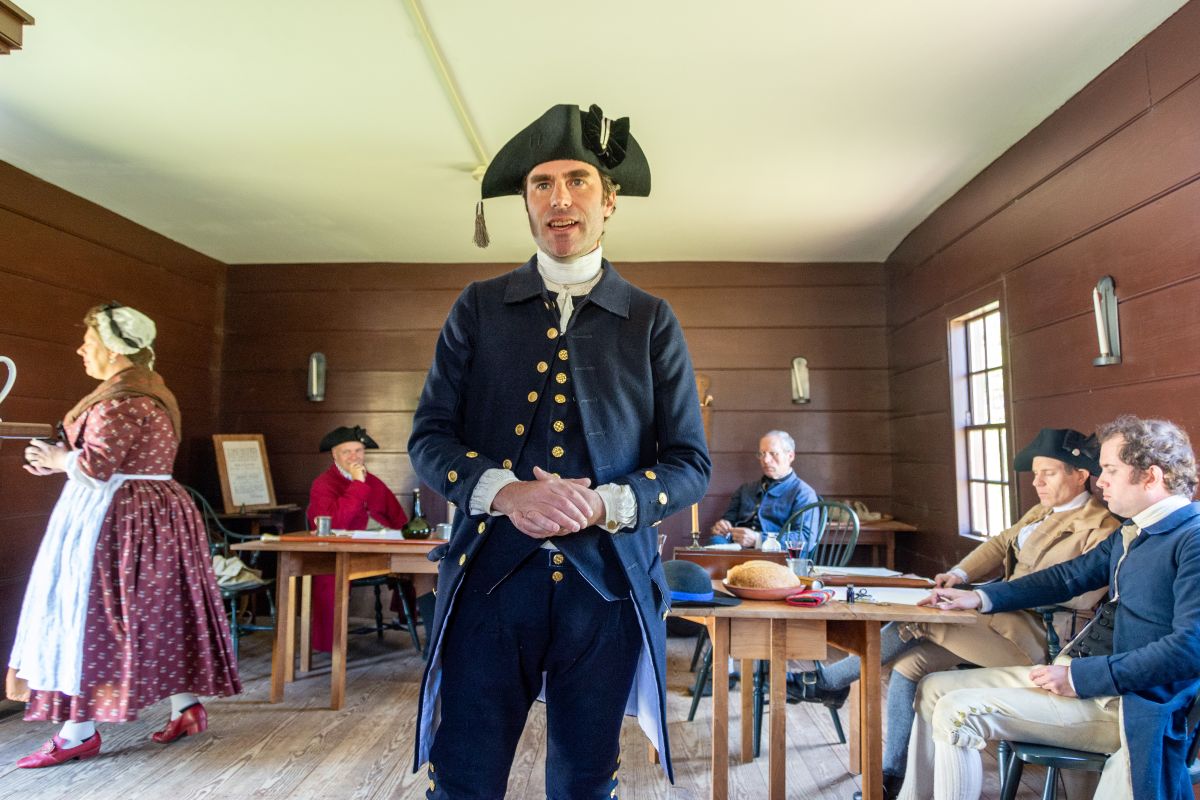
Scheduled for 10 a.m. to 5 p.m. Friday through Sunday, there will be living history vignettes, lectures, live colonial music, Tryon Palace Fife and Drum Corps performances, historic trades and weapons demonstrations, a military parade, food trucks, vendors, exhibits, tours and themed photo booths.
The site, which holds a smaller-scale observation each year in April, features several authentically restored and furnished buildings including the 1838 Jail, the 1790 Eagle Tavern and the Underground Railroad Trail.
Supporter Spotlight

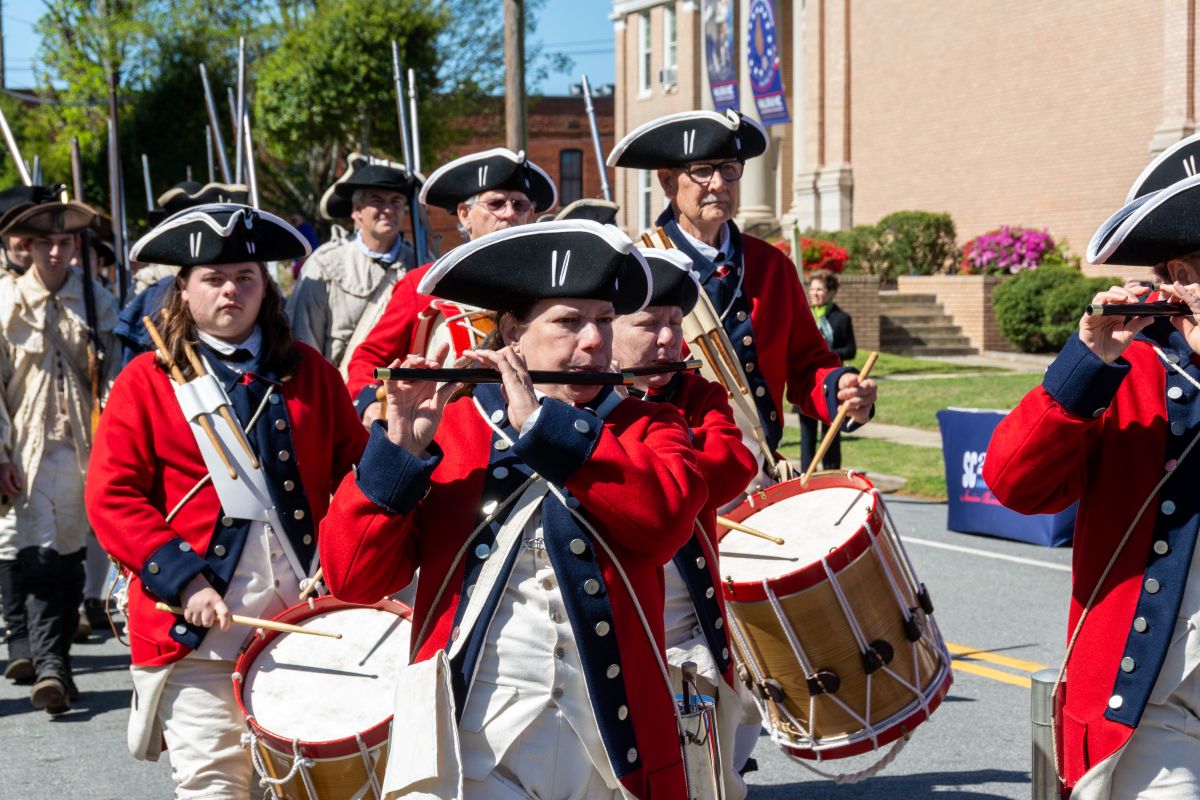
Halifax Resolves Days is a signature event for America 250 NC, the state’s official initiative led by the North Carolina Department of Natural and Cultural Resources to commemorate the 250th anniversary of the signing of the Declaration of Independence and celebrate the state’s role in the American Revolution.
Signature events like this “honor our state’s pivotal role in shaping the American story. From historic reenactments to cultural festivals, these events will inspire, educate, and unite communities across the state.”
N.C. Department of Natural & Cultural Resources Assistant Communications Director Michele Walker told Coastal Review that some event highlights include a ceremony with the state-recognized Haliwa-Saponi Indian Tribe, a living history reenactment of the Provincial delegates debating independence, the annual Halifax Resolves Day Ceremony April 12 at the colonial courthouse site, and live music and a drone show at dark on King Street.
A full schedule is available on the event website.
As part of “Halifax Resolves Days,” the state will officially open Historic Halifax State Historic Site’s newly renovated visitor center at 25 St. David St., “unveiling a modern facility and a new exhibit detailing Halifax’s significant role in the state’s history,” according to the release.
Starting Friday and continuing through Oct. 6, visitors to the center will have the unique opportunity to view the Halifax Resolves document on loan from the National Archives in Washington, D.C.
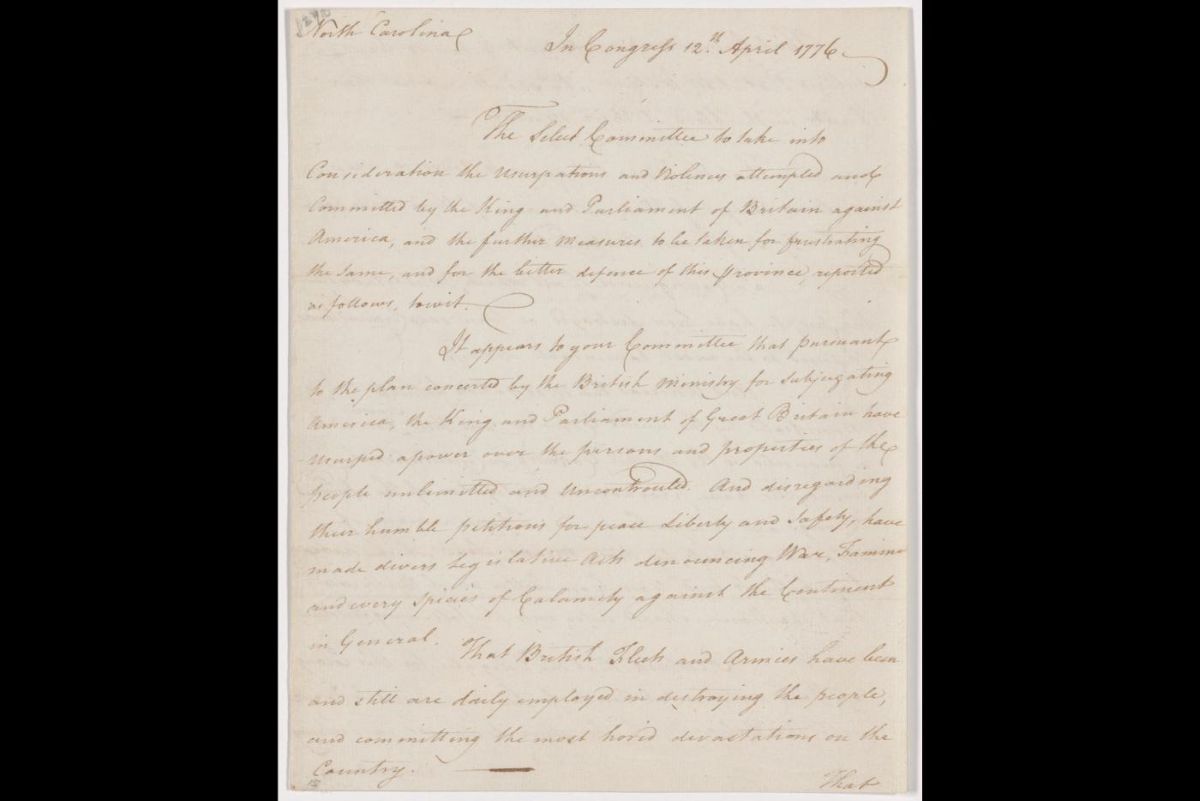
This is the first time the Resolves document – the only known copy to exist — is believed to be returning to Halifax since it was sent to the Continental Congress in Philadelphia in 1776. The State Archives of North Carolina holds the journal copy of the Resolves that will be displayed in Halifax this fall, the state said.
“The opportunity to view this 250-year-old document in the place where it was created is a truly once-in-a-lifetime experience,” N.C. Department of Natural and Cultural Resources Secretary Pamela B. Cashwell said in a statement. “The Halifax Resolves is one of the most important pieces of our state’s story — its date is emblazoned on our state flag — and we’re so excited for North Carolinians to see it in person.”
Halifax’s role in the American Revolution
The Roanoke River, which is one of the five largest rivers in the Southeast that flows from the foothills of the Appalachian into the Atlantic Ocean, begins in Montgomery County, Virginia, enters North Carolina in Warren County and flows through Halifax, Northampton, Bertie, Martin, Washington counties, before emptying into Batchelor’s Bay of Albemarle Sound, according to state documents.
English colonists from Virginia in the early 18th century settled in the Roanoke River Valley and began farming the fertile land. In the following decades, a plantation system evolved that relied on slave labor to grow wheat, corn, peas, tobacco, and other staple crops for markets outside of the colony.
At the behest of the merchants, Halifax was founded in 1757 to use to their advantage the river’s access to the Albemarle Sound and its ports. Though a smallpox epidemic in 1758 stalled settlement, the town was settled in 1760 as the seat of Halifax County, which was designated Jan. 1, 1759. There were nearly 60 houses and public buildings at the time.

“This new town was at a major crossroads between North-South trading paths between the American colonies and West-East trading paths between the coast and the interior of the state. With this advantage, the small town quickly became a major trading center and river port for good moving between the backcountry, the plantations, and Virginia,” the state continues.
Not long after, the town became the backdrop for monumental political events during the American Revolution.
After the patriot victory Feb. 28, 1776, at Moores Creek Bridge in Pender County, the battle that effectively ended British rule in the colony, 83 delegates met in Halifax April 4, 1776, for the Fourth Provincial Congress of North Carolina.
Related: Rainy remembrance marks Revolution’s first decisive win
The delegates unanimously adopted on April 12, 1776, the document now called the “Halifax Resolves.”
“The Halifax Resolves were the first official action by any of the 13 colonies to call for independence from Great Britain. It is acknowledged as an important precursor to the Declaration of Independence,” Walker told Coastal Review.
The document gave William Hooper, Joseph Hewes and John Penn, the state’s representatives to the Second Continental Congress, authority to vote for independence. The Second Continental Congress was the governing body for the colonial governments that coordinated resistance to British rule during the American Revolution.
The Fourth Provincial Congress adjourned on May 15, 1776, after appointing a single Council of Safety to rule the entire colony. While the council was meeting in Halifax on July 22, 1776, the group learned that the Declaration of Independence had been signed in Philadelphia on July 4, 1776.
“The council adopted a resolution declaring North Carolinians ‘absolved from all Allegiance to the British Crown’,” according to the historic site’s webpage.
Cornelius Harnett, a resident and Revolutionary patriot, was selected for the North Carolina’s first public reading of the Declaration of Independence to the town of Halifax Aug. 1, 1776.
The Fifth Provincial Congress assembled in Halifax that November, and by Dec. 18, the delegation had approved the new state’s first constitution. As its last official act Dec. 23, 1776, the congress appointed Richard Caswell as the first governor of the State of North Carolina.
“This one small town of Halifax saw the adoption for national independence, the first state constitution and the election of the first governor after colonial rule. Clearly Halifax was a front runner for the independence movement in not only North Carolina, but the entire nation as well,” according to the site.
Walker said that this was the state’s big moment in Revolutionary history, and Historic Halifax State Historic Site preserves this important action for all North Carolinians.
Visitor center renovation
Division of State Historic Sites Public Information Officer Terra Schramm told Coastal Review that in 1976, during the nation’s Bicentennial, this visitor center first opened its doors to welcome guests to Historic Halifax State Historic Site, which was established in 1965.
The North Carolina General Assembly appropriated $5.2 million to renovate the visitor center in 2022 and to complete the restoration of the William R. Davie House, a part of the historic site, in time for the nation’s 250th anniversary this year, she continued.
“The renovation of this building is now complete the interior has been thoroughly replaced, new climate control systems installed, the building foundation sealed, a clerestory added to light the lobby, and the conditioned interior space expanded from 4,900 square feet to just over 6,000 square feet,” Schramm said.
Of note, is a specially designed document display case that has been built to meet security and environmental control standards outlined by the National Archives and Records Administration.
“The case will be used to exhibit a rotation of significant historical documents, starting (appropriately) with the Halifax Resolves,” Schramm explained in her email response.
Clearscapes of Raleigh was hired to design and oversee the work, with Calvin Davinport Inc. of Rocky Mount serving as the general contractor. New historical exhibits for the building were designed by Design Dimensions of Raleigh, she said.