People like plants.
People love plants.
Supporter Spotlight
As long as there have been people and plants, plant lovers have been sharing seeds and snips and starts, probably a holdover from our Garden of Eden days when humans were the Head Gardeners in Charge.
People love beauty, and what could be more beautiful than sharing our love of plants with other people?
Sharing new species of plants is how figs got to the United States, via settlers bringing starts.
It’s how corn and squash and lima beans got to Europe from the New World.
People love to try new foods and new recipes, and you can’t cook a new favorite dish unless you have the proper ingredients.
Supporter Spotlight

With new ingredients comes a lot of reward as people expand their palates. It can also come with some risk, as people who have cooked with a certain vegetable for a long time know all the ins and outs.
For example, I said something to an older friend of mine one Fourth of July about eating corn on the cob and how much Americans love it and asked if he and his wife were going to enjoy any while it was fresh and available. His wife was from England. His reply? “Oh no, no, no. The Brit doesn’t eat corn. That’s what you feed to hogs.”
Upon questioning him, he had no idea why, only that it’s the way things were done across the pond.
So, my little over-curious squirrel brain went into action. Researching it, I discovered that when corn was first brought back to Europe, people loved it. Loved it so much in fact, they tried to use it the way we do potatoes. For everything.
What the Europeans didn’t know, and the natives of South America had figured out over a long period of growing and eating corn was that — it’s a bit more involved than I’m making it out to be — but corn, eaten solely by itself, causes horrendous multigenerational birth defects.
Eaten in conjunction with squash and lima beans … Voila! No problem! The other vegetables fill in the missing nutrients, which the Europeans had no idea about, and why would they have?
Plant diversity is awesome. When humans depend on a single source of nutrition — think potatoes and the Irish potato famine — it can be devastating when that plant fails.
Diversity is part of why seed saving is so important, and I went more in-depth on that subject in one of my past articles.
Before there were cameras, thankfully there were explorers and plant junkies who drew scarily accurate renditions of plants they found or saw — intricate renderings of bark, leaves, flowers, and seeds. Thanks also to them for nabbing starts, seeds and seedlings, taking them back to their own countries, and nurturing their finds.
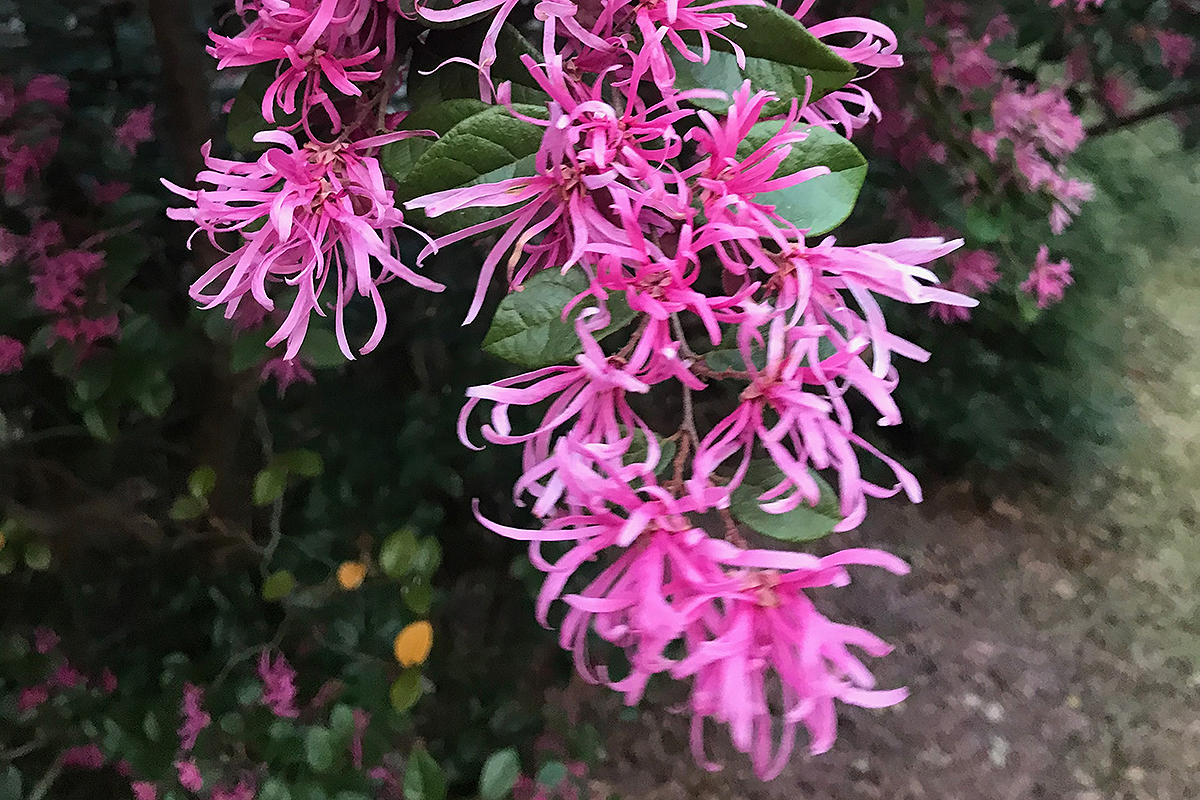
Plant names can often give you an idea of their origins. For instance, japonica means that plant originated in Japan. Chinensis, China. Think camellia japonica, or lorapetalum chinense. Otherwise known as camellias and fringe flowers.
We all know and love azaleas, but did you know that, while most of us are familiar with the gorgeous azaleas featured at Orton and Airlie and Wilmington in general, as well as in our yards, they are not natives. Go figure. North Carolina does have around 15 native varieties.
Many of the plants we know and love have been imported and planted to the point we think they’re indigenous. Some of them are beloved, and some of them, despite people’s best intentions — think kudzu, Pueraria montana — have become insanely invasive.
Kudzu, a native of Asia, was introduced to the U.S. in 1876, via the Philadelphia Centennial Exposition. At its introduction to our country, it was initially praised for its fragrant flowers and ease of care. In the 1930s and ’40s, it was touted — subsidized even, by the government — for its uses in erosion control and as livestock feed. Farmers were encouraged to plant kudzu by the acre, and the Civilian Conservation Corps was enlisted to plant it. We all know how well that worked out.
An overabundance of the same type of plants in one place creates the perfect environment for insects and diseases that prey on said plants to thrive. Lantana is super popular here, not only because it’s beautiful and attracts butterflies by the score, but because it likes heat and tolerates drought. During the last few years, because of the excessive availability of their food source, lantana lace bugs (Teleonemia scrupulosa) have become a huge problem on this once carefree plant.
Same with diseases. The disease that’s currently wiping out most of Florida’s citrus trees? Citrus greening, huanglongbing — say that fast five times — is a bacterial infection. Spread by the Asian citrus psyllid, again, the overabundance of the insect’s food source only makes the problem worse.
So, what’s our take on mass plantings of the same nonnative plants? The results speak for themselves.
Not good.
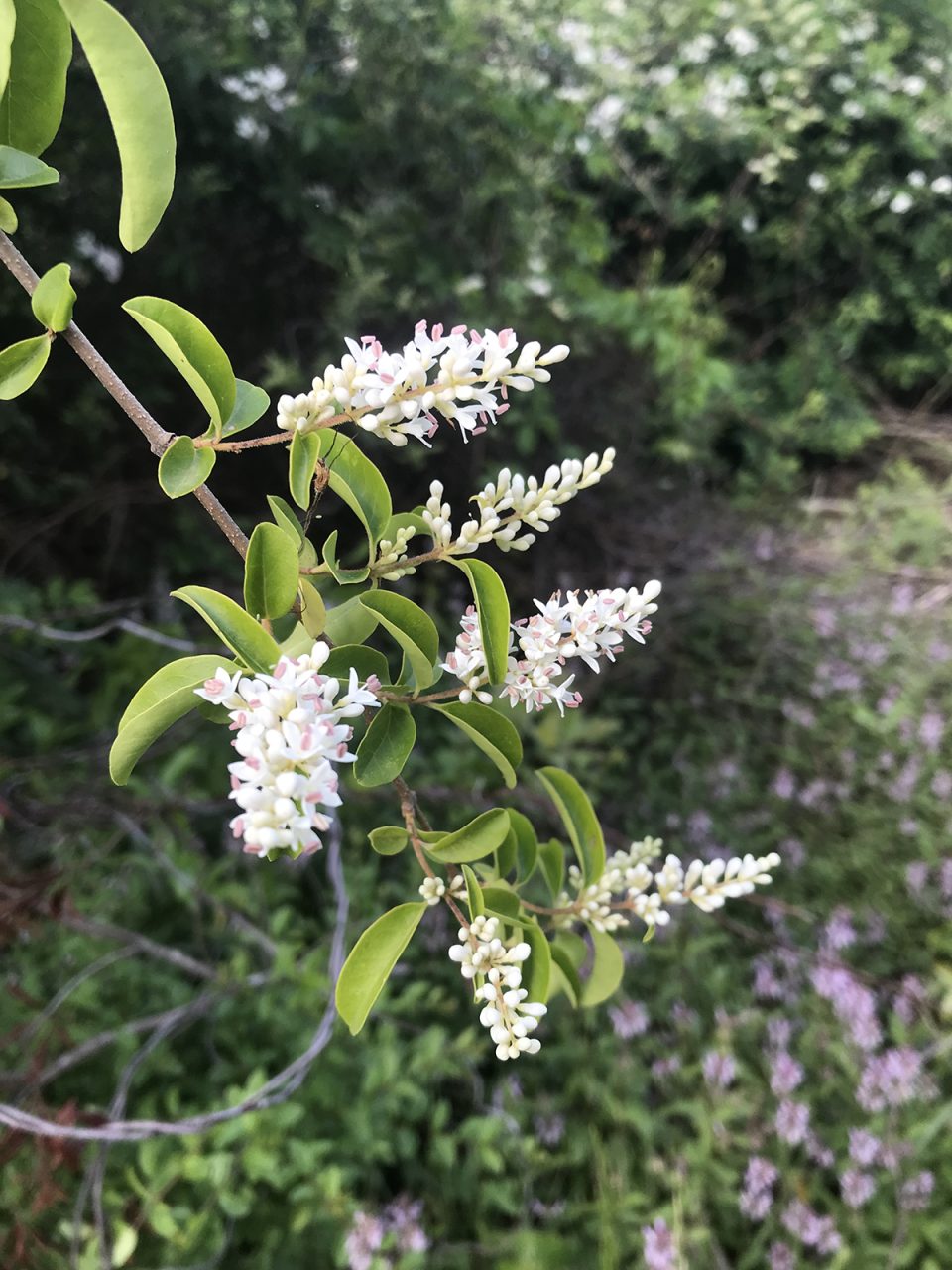
Nonnatives that become invasive, i.e. Chinese privet, (Ligustrum sinense), which was imported as a hedgerow plant in the mid-1800s, while fast-growing and good for delineating fencelines and yard boundaries, yields berries that are attractive to birds, and thus easily spread. Its rapid growth and dispersal rates make it one of the most invasive plants in the South. Often taking over and crowding out natives, privet is extremely hard to kill. Privet often forms dense thickets, impenetrable to wildlife.
Sharing plants can be a great, inexpensive way to expand our gardens, and plant people love to help other gardeners. Sharing is caring, right?
Am I advocating being selfish? Absolutely not! I am, however, urging a bit of caution. Do your research. We have so much information available to us, information that our ancestors didn’t have when they thought they were doing the right thing by introducing new plants. There are tons of gorgeous natives, and more and more nurseries specialize in native species.
Beauty may be in the eye of the beholder, but sometimes it truly is only skin deep.