
As North Carolina’s population grows, local and state governments, elected officials, educators and nonprofit groups are bracing for the demands more residents will put on the state’s already taxed and aging water infrastructure.
The 2026 Emerging Issues Forum: Future Forward Water held Feb. 25 brought together these decision-makers and advocates to forums in Morehead City, Winston-Salem and Asheville, where they could share their challenges, ideas and solutions regarding the often-unnoticed necessity.
Supporter Spotlight

The forum featured several speakers, including Gov. Josh Stein, and group discussions that focused on four main challenges: aging infrastructure, resiliency, the water workforce crisis, and maintaining safe and reliable water systems.
In a video message, Stein said that North Carolina’s water infrastructure faces serious challenges. The American Society of Civil Engineers recently graded the state, giving it a C-plus on drinking water, C-minus on stormwater, and a D-minus on dams and on wastewater.
“Storms like Hurricane Helene, Hurricane Matthew, Hurricane Florence and tropical Storm Chantal damaged wells and water systems across the state, leaving many communities without clean water,” he continued. “At the same time, continued population growth in some of our areas require expanded service and new infrastructure. Life sciences, companies, data centers coming to North Carolina also require large amounts of water to operate, further straining our infrastructure. Many rural communities struggle in aging systems and limited financial capacity. Contaminants such as PFAS further poison our water supply. We must take all of these challenges on as a clarion call.”
Usually held in Raleigh, this year’s forum was hosted in the three locations to celebrate the 40th anniversary of the Emerging Issues Forum, the idea of the late Gov. Jim Hunt, who died in December. Institute for Emerging Issues, established in 2002 at North Carolina State University, hosts the forum. The institute “is a nonpartisan connector, bringing North Carolinians together across sectors, regions and perspectives to address the state’s most significant challenges while advancing its economic competitiveness.”
Sandra Merkel DeJames, who is a member of the Institute for Emerging Issues National Advisory Board, explained to the more than 100 attending the Morehead City forum that the challenge being addressed that day is how to keep up with the unprecedented population growth facing the state. Population growth is the topic of the three-year Emerging Issues Forum series that kicked off in 2025, and focused on energy infrastructure. Next year the event will address housing.
Supporter Spotlight

“Last year, the state added an average of 400 new residents every day. That’s over 145,000 people by 2050. Some 14 million residents will call our state home, compared to the 11.2 million today,” said DeJames, who is president and CEO of Harmonize Strategy Group.
“People are moving to North Carolina for work, education, our climate and a host of other reasons,” she continued. All of these “new residents will need access to housing, energy and water that’s safe and affordable. They’ll need transportation and broadband and all of the other critical infrastructure needed to support a thriving economy, like childcare, healthcare, public safety and education.”
Companies are moving to the state as well, she continued.
“We’ve been named the best state for business in three of the past four years by CNBC. Once here, they too need infrastructure to support their operations,” DeJames said. “As to those businesses already here, this population and business growth will not be even across the state, or even within this region, but all areas have infrastructure needs, and we must now meet them.”
DeJames continued that forum organizers spent the last year learning more about the state’s water issues, “and we’ve learned the following: Water is a truly hidden infrastructure.” But, it is also the “most local form of infrastructure.”
The state is one of 10 with more than 5,000 public water systems – it is closer to 6,000 — and that number does not include the more than 2 million people who use privately owned wells and septic systems.
While water issues vary by region, there are common themes.
“First, our water infrastructure is aging,” DeJames said, despite some of the largest increases in water infrastructure spending in recent years.
“One conservative estimate is that we need $20 billion in new investments for drinking water and $21 billion in new investments for wastewater treatment and sanitary sewers in the coming decades, left unaddressed, our state’s economic vitality and public health are at risk.”
Next is the need to treat water for new contaminants.
“The emergence of new contaminants that can impact our health, such as PFAS, and the additional billions of dollars in cost to treat them will further compound financial pressures on our water systems and our customers,” DeJames said. Per- and polyfluoroalkyl substances, or PFAS, are long-lasting chemicals found in water, air and soil that are linked to harmful health effects.
Third, the state’s water infrastructure is too vulnerable.
“The damage done to wells and water systems from Hurricane Helene, Tropical Storm Chantal and other storms add to longer-term challenges to water and wastewater systems across the state. We need to increase our infrastructure’s resiliency,” she said.
“And finally, we need more workers in the water sector. There is significant shortage of qualified workers as the current workforce ages out, and not enough new workers to enter these fields.”
N.C. State’s Peter A. Pappas Real Estate Development Program Director Chuck Flink expressed similar points in a message delivered to all three forum locations via video.
The state’s population is expected to grow by between 3 and 3.5 million people in the next 25 years, and the growth is not going to hit North Carolina in a uniform manner. “A lot of it’s going to congregate in our two metro areas, which we expect to grow by more than a million people each in this 25-year period,” Flink said.
Wake County currently is the third fastest growing county in the country, averaging around 65 to 75 people moving there each day. It is the most populated county in the state. Charlotte is currently the sixth fastest growing city in America, averaging around 65 residents a day, and it’s the 15th most populated city in the country today, Flink continued.
By the year 2050, 75% of all residents will live in cities, and that’s a new phenomenon for the state, and at the same time, while we have this population growing, the state is experiencing population loss, with 41% of North Carolina’s municipalities in decline.
“We have vast swaths of our eastern part of our state and some portions of our western counties that are losing population,” Flink said. “In fact, we have a band of counties that stretches from the Virginia border to the South Carolina border, where we need more population, we need more economic opportunity. So it’s not a real simple picture there.”
He paused to say that he loves that the state is a collection of small communities, “and yet some of these small communities, especially in the eastern part of the state, are literally being abandoned due to population loss.”
“In North Carolina, 50% of us derive our drinking water from underground reservoirs, aquifers, and when we look at other elements of our water infrastructure, our water and wastewater systems are antiquated and they’re failing,” he said.
In some cases, there has been an overall decline in water quality across the state because of drought, overconsumption, and pollution, including forever chemicals.
The people that manage water infrastructure are aging as well. More education and training is needed for a new workforce to manage the infrastructure going forward.
However, Flink said he’s optimistic about where the state can go.
“It really begins with planning. Planning for growth. How do we want to grow? I think that’s the ace of spades that we control,” Flink said, adding that growth can be controlled and that’s how these challenges will be met.
There were four panel discussions throughout the day. The panels each had participants represented different sectors who shared the hurdles they’re facing, their frustrations and ways they’re navigating these challenges.
Martin Doyle, professor of River Systems Science and Policy at Duke University’s Nicholas Institute for Energy, explained that water systems are not supported by general tax revenue, but are covered by the funds generated by billing its customers.
The UNC School of Government surveyed water systems around the state, and found that less than a quarter of those water systems actually collected sufficient revenue to be considered economically viable.
“They’re not collecting sufficient revenue to cover their costs as well as to cover the cost of preventative maintenance,” Doyle said. “The challenge for this is that we have a large number of water systems that are operating right at the financial threshold. They’re just getting by” and unable to keep up with preventative maintenance.
East Carolina University Water Resources Center Associate Director Samantha Mosier said that there are a number of ways to solve some of the state’s problems. She encouraged raising awareness about infrastructure needs, but the “real solution” is to help municipalities establish or join a regional authority.
“Most small local governments in North Carolina have their own water and wastewater system because that was part of becoming a town, years and years ago when we had lots of population,” Mosier said. “But in the eastern part of the state, we’re seeing that loss of the population.”
With the population dwindling, utilities are losing their customer base, making it no longer feasible for every small town to maintain a water system. Encouraging regionalization brings folks together to have those conversations.
“To me is that next critical strategy we’ve got to embrace as a local, regional and state level,” she said.
Belhaven Town Manager Lynn Davis said that Beaufort County town’s obstacles are many, including a limited budget. “How do we not just look at the day to day, not just look at the infrastructure that we have, but how do we plan for if something breaks and that’s a challenge that faces us.”
She said staffing is another challenge. Half of the town’s staff could retire right now, and it won’t be easy to replace those workers. “You just don’t find people that have the knowledge and the skills.”
Cape Fear Public Utility Authority Security and Emergency Manager Craig Malone said when it comes to tackling these issues, “it’s not the plan itself that we need to focus on, it’s the process of planning. It helps us look at these contingencies, look at these risks, and our options to address these emergencies.”
He incorporates resiliency planning into his capital improvement plan. “Now you don’t have to stop and plan for emergency. Now you don’t have to stop and plan for that resiliency action or that upgrade to your facility.”
Nags Head Mayor Ben Cahoon said the town has 3,000 year-round residents, and around 45,000 in the summer time, and 80% of the properties have on-site septic systems. On a summer day, millions of gallons of water goes through the houses and into the septic systems.
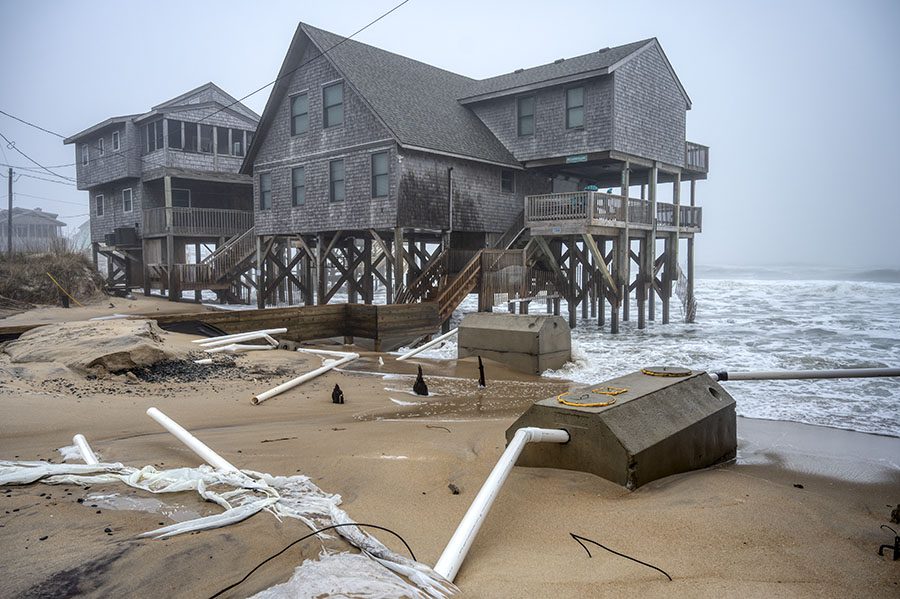
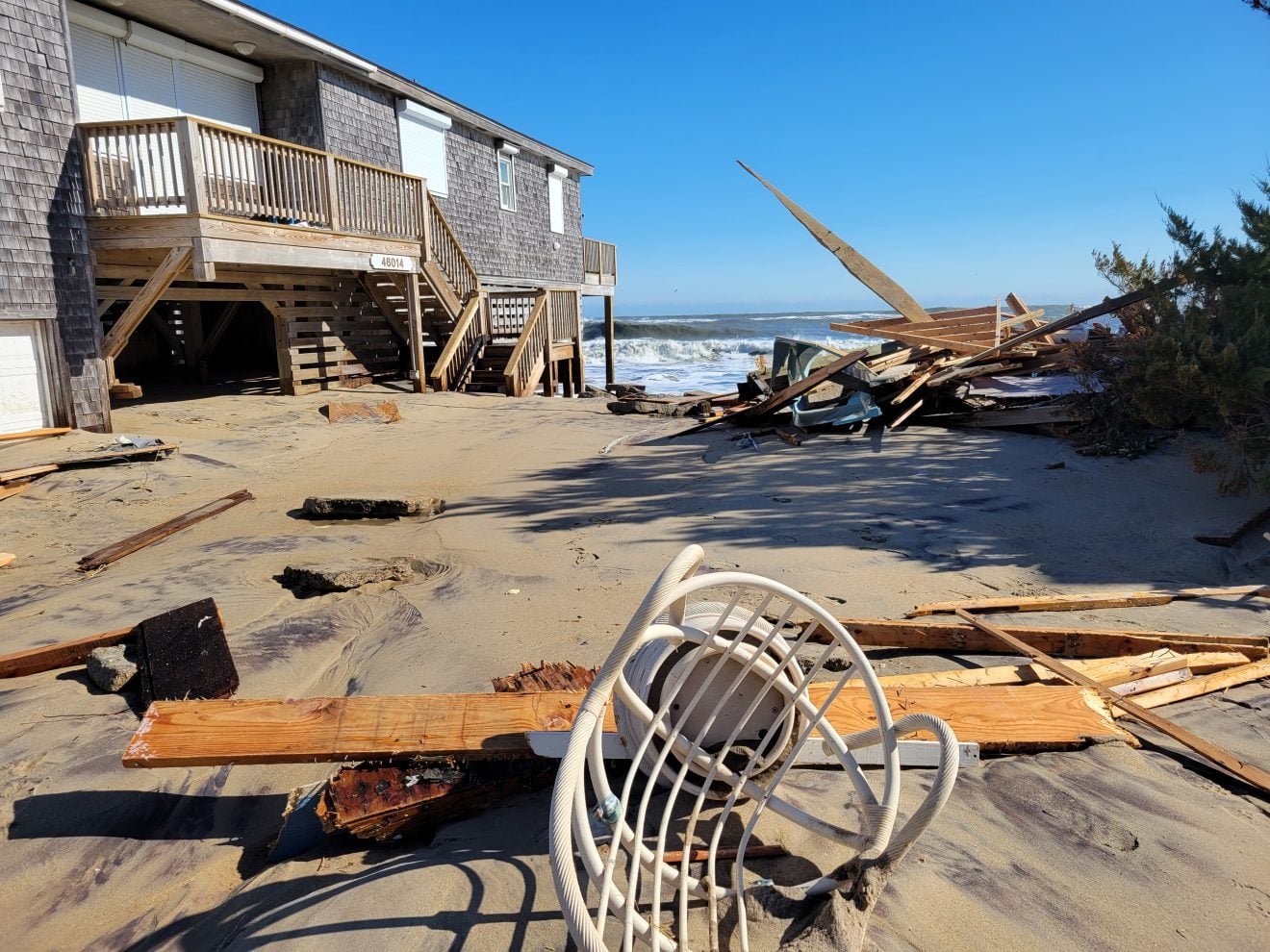
“At the same time we have sea level rise, which is bringing the water table up under those wastewater systems, causing them to perhaps function less effectively. And then we get a storm, and you get a lot of water in those ditches and in the ground, and you can imagine the dynamics of what’s happening in the ground.”
Cahoon said the town has to plan for these issues.
“We do integrate drinking water, wastewater, stormwater, capacity into our zoning, development/redevelopment decisions. We do that by tying our infrastructure capacity directly to our long-range planning and adopted master plans and our resilience strategies, rather than treating any of these separately. So in Nags Head, our land use and development decisions are guided by the town’s comp plan.”
To address the retiring workforce that most local governments seem to be facing, some town leaders are changing how they recruit. For example, Maysville Town Manager Shcumata Brown said they’re looking for employees who have the aptitude to learn and not focus on certain certifications.
Perry Harker, vice president of Workforce Continuing Education at Carteret Community College, said that students aren’t hearing about this type of career, and the college is trying to introduce students to water and wastewater industry opportunities.
Compounding these issues is water quality.
Ben Farmer, planning and development services director for Upper Coastal Plain Council of Government, said raw water is pumped to a treatment plant, and that water has to fall within certain threshold or maximum containment levels. The systems, regardless of the town or city’s size, have to make sure that drinking water is up to that very extreme standard to keep the water safe.
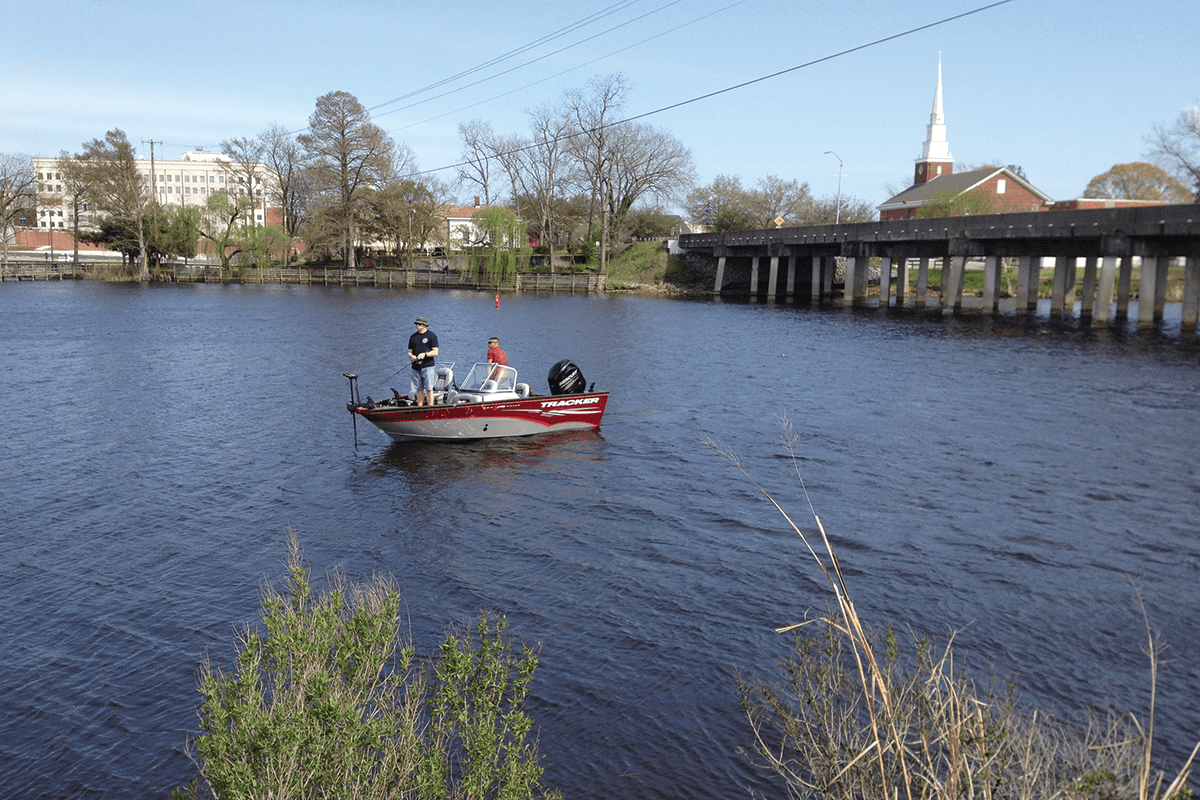
Cape Fear Riverkeeper Kemp Burdette told the attendees that many residents get their drinking water from rivers — the Cape Fear River basin provides about one in five residents with the drinking water – and “protecting rivers is the single most effective way of protecting drinking water supply and reducing infrastructure costs for communities, period.”
Jacksonville Stormwater Manager Pat Donovan-Brandenburg said that we all need to be part of the solution.
“Each one of us impact stormwater. Meaning we have a home, we have a car, we have a road to get to and from work. I challenge all of us to look at our individual yards, our individual businesses,” she said.
“What can we do to disconnect our stormwater runoff from ever making it out to the storm drain in the road and out to a stream? Can we get it to infiltrate instead of making it to our surface waters? Making it to our surface waters does not recharge our aquifers, and we need to recharge aquifers in order to have the drinking water,” she said. “There’s the connection. So can you disconnect your storm drains or your gutters and put it into your landscape beds? Can you put in an infiltration trench? Can you put in a rain garden or rain barrel? Everybody’s yard, everybody’s business counts toward stormwater runoff, so we can all be part of the solution,” she reiterated.
There’s so much technology out there, so ask your engineer to think outside of the box. “Yes, it may cost a little bit more, but if you’re building there for the rest of your life, invest in your community. Because that’s what it is. We’ve got to invest in our neighborhoods, invest in our communities. So my message is very simple, reduce the storm water that you’re creating individually off your own property, and collectively, we will make a difference.”