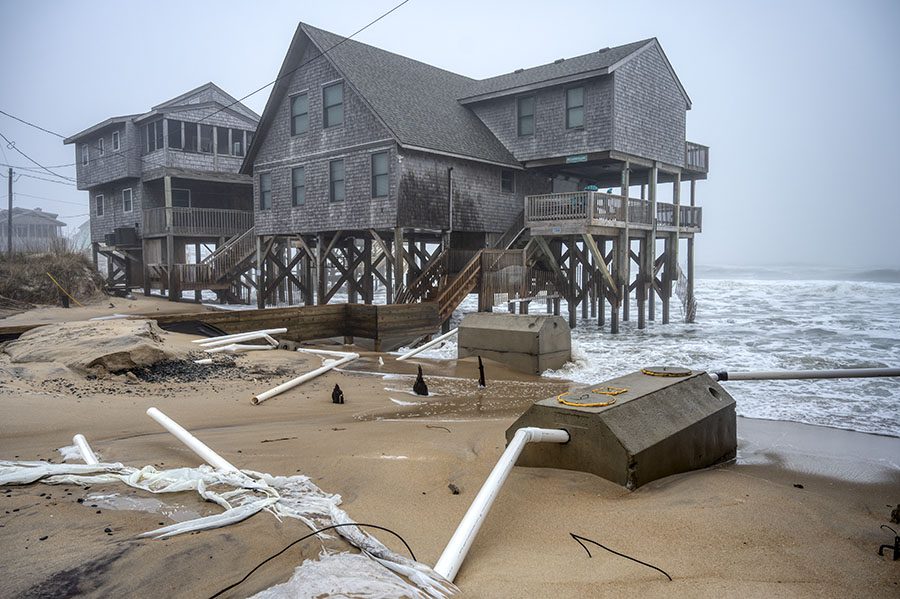
Coastal Resources Commission members last week held off on addressing oceanfront septic tank system rules in order to give environmental and health officials the opportunity to collaborate on the process.
During the commission’s Feb. 26 meeting in Atlantic Beach, staff with the North Carolina Department of Environmental Quality’s Division of Coastal Management, which implements the commission’s rules and policies, asked for extra time to work with the state’s Department of Health and Human Services. DHHS regulates permitting, design, installation, operation and maintenance for on-site septic systems.
Supporter Spotlight

The failed septic system issue had been forefront for the commission in the early 2020s, until the topic was sidelined in April 2023 when the Rules Review Commission rejected dozens of rules the Coastal Resources Commission submitted as part of the 10-year rule review process, including protections for Jockey’s Ridge, redirecting the CRC’s attention.
After the rules protecting the sand dune system on the Outer Banks were put back in place in 2025, the Coastal Resource Commission resumed the discussions on remedies for oceanfront septic system failures.
Division Coastal Policy Analyst Cameron Luck explained last Thursday that the commission directed the staff at its November 2025 meeting to find out how many septic system failures along the waterfront were caused by tidal inundation, how many coastal communities rely on septic systems, and the overlap of the commission’s rules with the DHHS’s permitting process.
Luck said that Initially the plan for the February meeting was for the proposed amendments to move forward. But, after the division, DHHS and the North Carolina Coastal Federation, met Feb. 18 to review the issue, the consensus was to pause the rulemaking process.
The plan as of last Thursday was to schedule a meeting in mid-March with the health department and other agencies and organizations. “We want everybody at the table,” to better understand how stakeholders feel about the issue and willingness to address septic tank failures through a collaborative effort, Luck said.
Supporter Spotlight

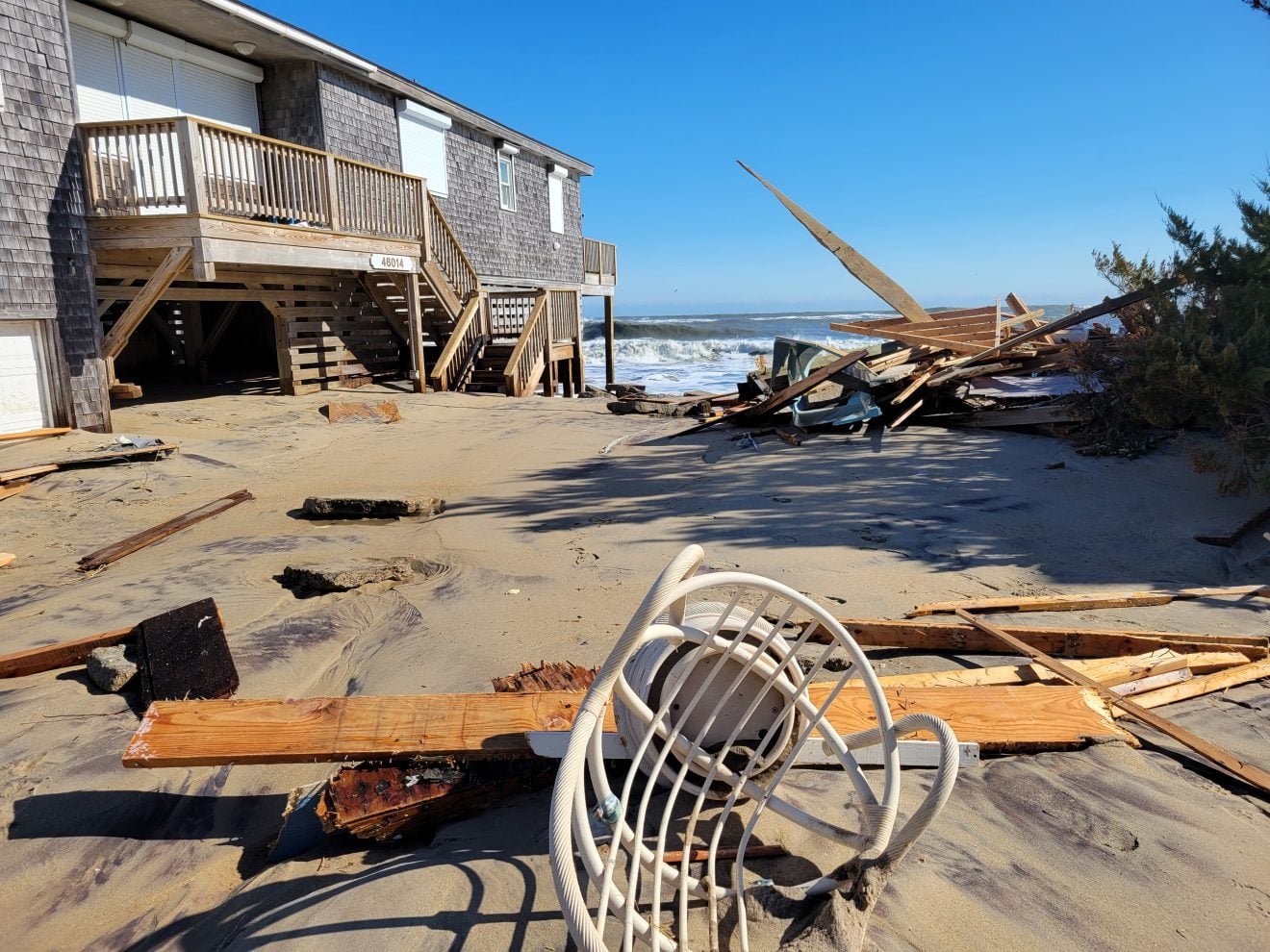
Under the current rules, septic tanks are grouped with houses, which precludes oceanfront septic systems from requiring a permit for repair. And, an oceanfront septic system must be relocated or dismantled within eight years of when a home becomes threatened.
Division staff proposed clarifying that new structures must meet the oceanfront setback, and if a home or septic system is relocated, all remaining debris, including the original septic system, must be removed as well.
Staff also proposed specifying that septic system repair and/or replacement is not evaluated under general statute. Instead, it requires a Coastal Area Management Act permit to replace any septic tank, pump tank, or ground absorption system component.
North Carolina Coastal Federation Executive Director Braxton Davis, who was previously director of the Division of Coastal Management, has been involved in the process for some time. The Coastal Federation publishes Coastal Review.
Davis explained to the commission that it already regulates new oceanfront septic tanks by requiring that those systems meet the oceanfront setback. However, the division currently doesn’t have rules regarding repairing oceanfront septic systems.
DHHS, Dare and septic systems
Two officials with the state health department explained to the commission the prevalence of on-site wastewater systems in the state and the role the division plays in managing them.
Deputy Environmental Health Section Chief Jon Fowlkes said that about 50% of the state relies on septic systems and that has remained consistent over the last 20 to 30 years.
“Every county in our state uses septic systems, some counties more, some counties less,” he said, with some ranging from 14% to 93%, “so it really varies on where you’re at, and we’ve had approximately 1 million septic systems installed since 1990.”
The state’s wastewater rules apply to residential and some commercial on-site septic systems.
On-Site Water Protection Branch Head Wilson Mize with DHHS told the commission that neither he nor Fowlkes worked on the coast before, and “it’s been a learning curve” for them while working with Dare, Currituck and Carteret counties.
He used Dare as an example for how the county is handling its oceanfront septic problems, particularly the scenario of when a tank that was once covered in sand is exposed during a weather event.
After every storm, environmental health staff coordinate with local building inspectors and walk the impacted beach areas, looking for damaged dwellings and determine which systems have been compromised, Mize said.
In many cases the health department’s hands are tied when it comes to not issuing permits. “Our rules don’t give the county much authority to deny that permit if it meets our rules,” Fowlkes said.
Dare County Manager Bobby Outten said the county has a similar situation, stating that they’re also required to issue a permit for septic tanks, even if they’re in the surf zone.
“If the owner can get access to his building, we have to give them the permits. And so now they’ve got a house sitting in the water, their septic tank’s on the wet sand beach, and their drain field is back in the dry sand beach and we have to permit it,” he continued.
“They do it. Two weeks later, we have a nor’easter. It knocks the top off, it dumps the septic in the ocean again, and we start the process again. The water subsides. They put a new top on it. It meets all the requirements. We permit it,” he explained. “And the cycle continues until they lose enough lot that they can’t have a drain field, or they’ve lost enough lot, or lose the tank, and they don’t have anywhere to put the tank, and we don’t have a remedy for that, and we don’t have a remedy for it once it’s all said and done.”
Outten said there are options to break the cycle, including the establishment of setbacks by the commission, or rules that the health department can enforce.
“So we’re stuck in this situation because none of the rules work together to solve what I think we all see as a problem,” he said. “If our goal is to get those tanks off of the beaches, then the rules don’t currently work to do that.”
Commission Chair Renee Cahoon recognized that there’s no easy solution, “but we know that we can’t continue to have all the septic tanks on the beach. It’s not environmentally healthy. It’s not even good business sense for the people in North Carolina, because it does impact our tourism industry and all the property owners that are invested here.”