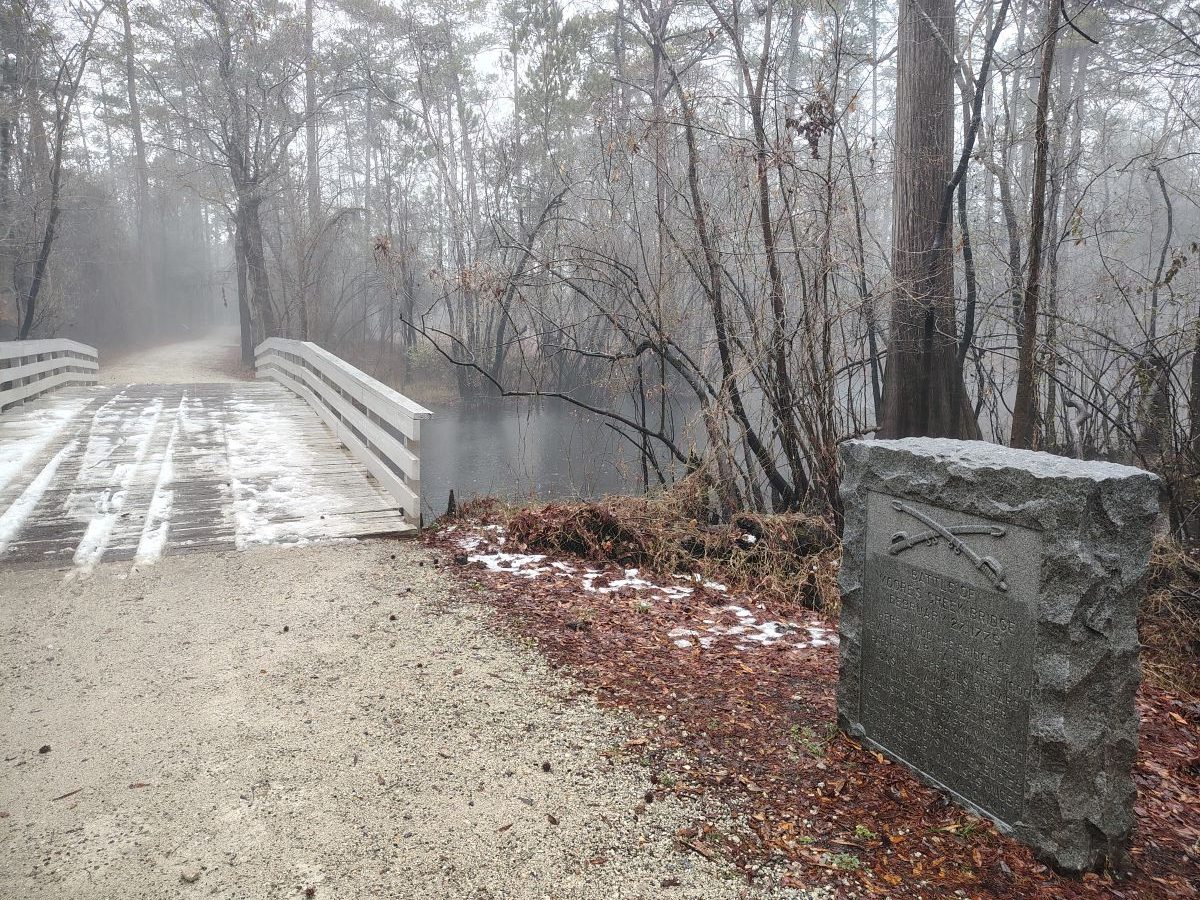
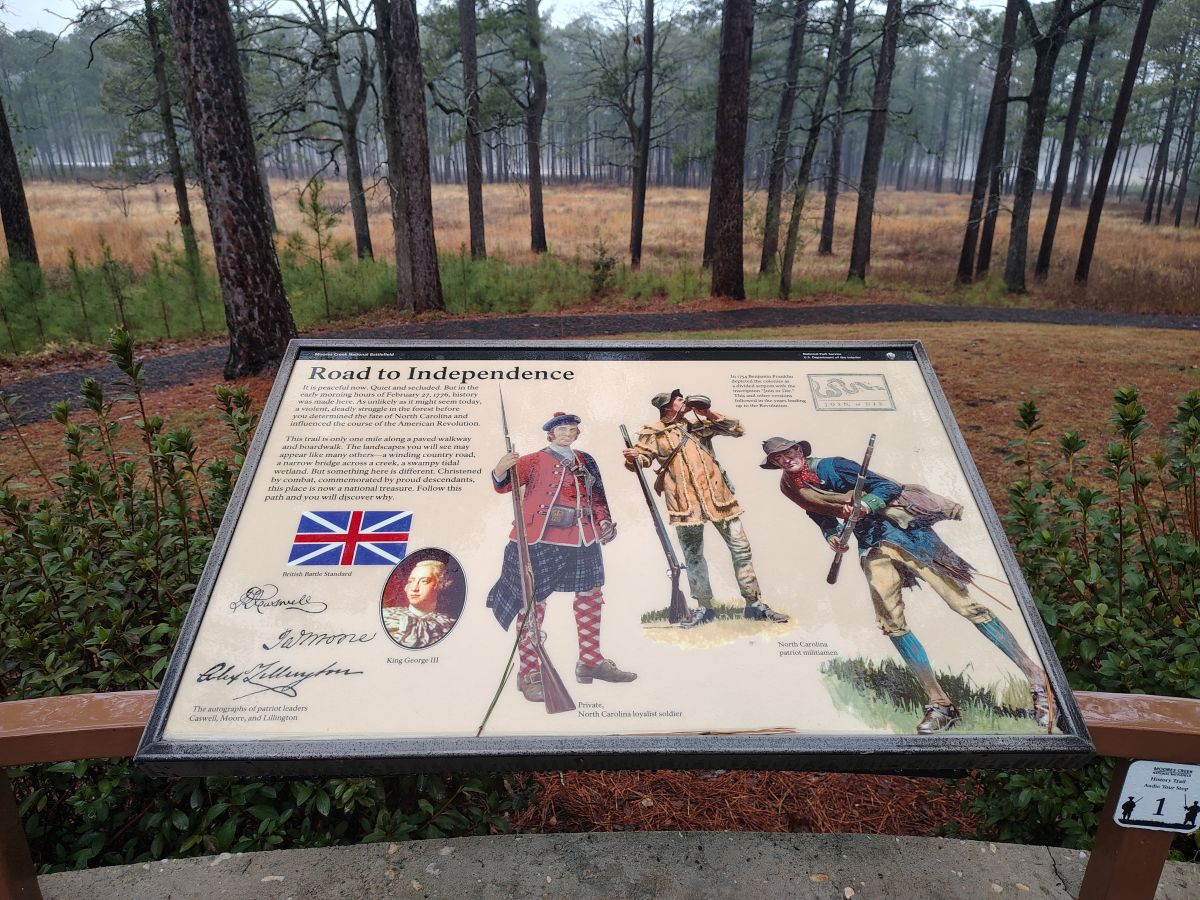
By all accounts, it was bitterly cold in the wee hours of Feb. 27, 1776, when loyalists, soaked to the bone from enduring days of rainfall, began a 6-mile march through swampy muck and dense brush in present-day Pender County to seize a patriot camp on the west bank of Moores Creek Bridge.
The move to confront the patriots at the Black River Road bridge that crosses Moores Creek was an unplanned step in a larger strategy for England to recapture North Carolina, a plan British Royal Governor Josiah Martin coordinated when he lost control of the colony and was exiled in the first half of 1775, according to the National Park Service.
Supporter Spotlight

After Martin convinced his superiors that his plan to raise an army of 10,000 and march to the coast to join with British forces would restore royal rule to the colony, he began recruiting at Cross Creek, now known as Fayetteville, in early 1776.
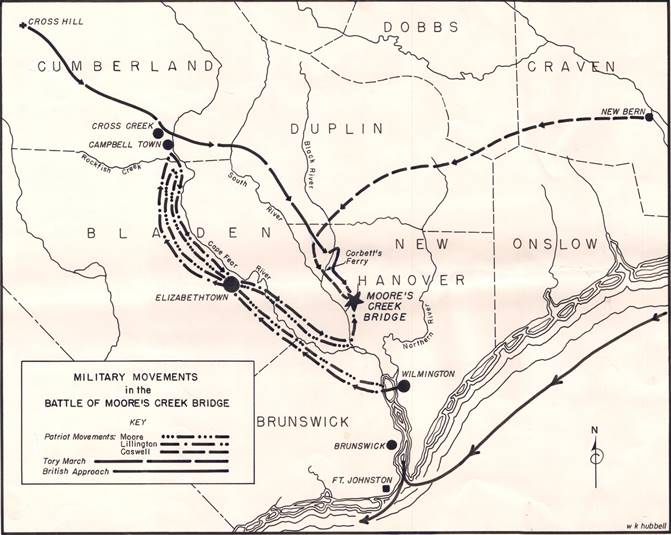
He ended up with 1,600 loyalists, mostly Scottish immigrants, marching east, but patriots thwarted their attempts to reach the coast.
By the end of February, the last direct route to Wilmington that the patriots hadn’t blocked was the sandy and narrow Black River Road.
Patriots knew that Moores Creek Bridge was the last defendable position and got the upper hand by arriving there first.
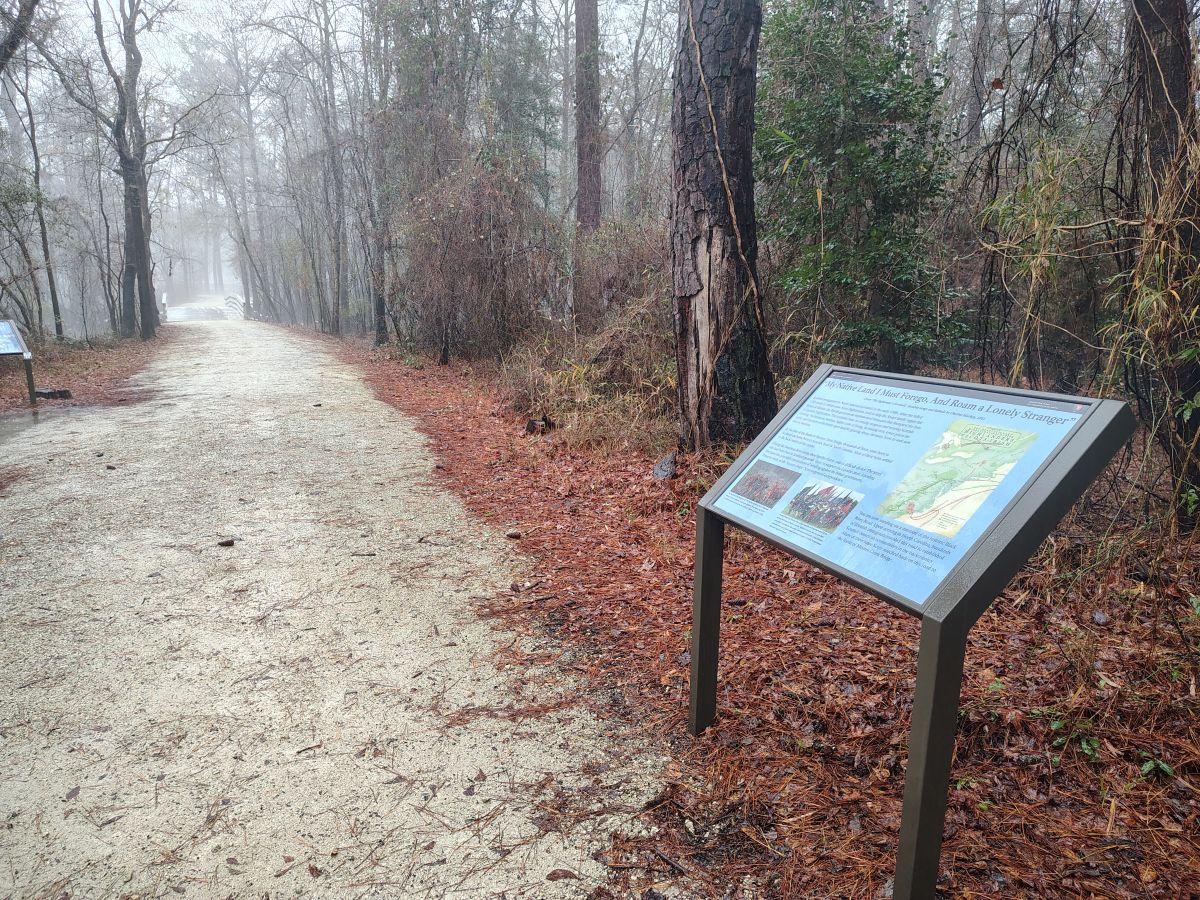
When the loyalists arrived Feb. 26, 1776, they offered the patriots a chance to forgo the battle and pledge allegiance to the crown, which the patriots declined. The loyalists had sent a scout to get a read on the patriots’ plans. The scout reported the troops were vulnerable, and loyalists decided to attack.
Supporter Spotlight
The loyalists left camp at 1 a.m. the next day to hike the 6 miles through backcountry to the patriot encampment, only to find it abandoned.
Unbeknownst to the loyalists, the patriots had moved camp the night before to the east side of Moores Creek Bridge, knowing that was the only way to cross the creek to continue along Black River Road to Wilmington.
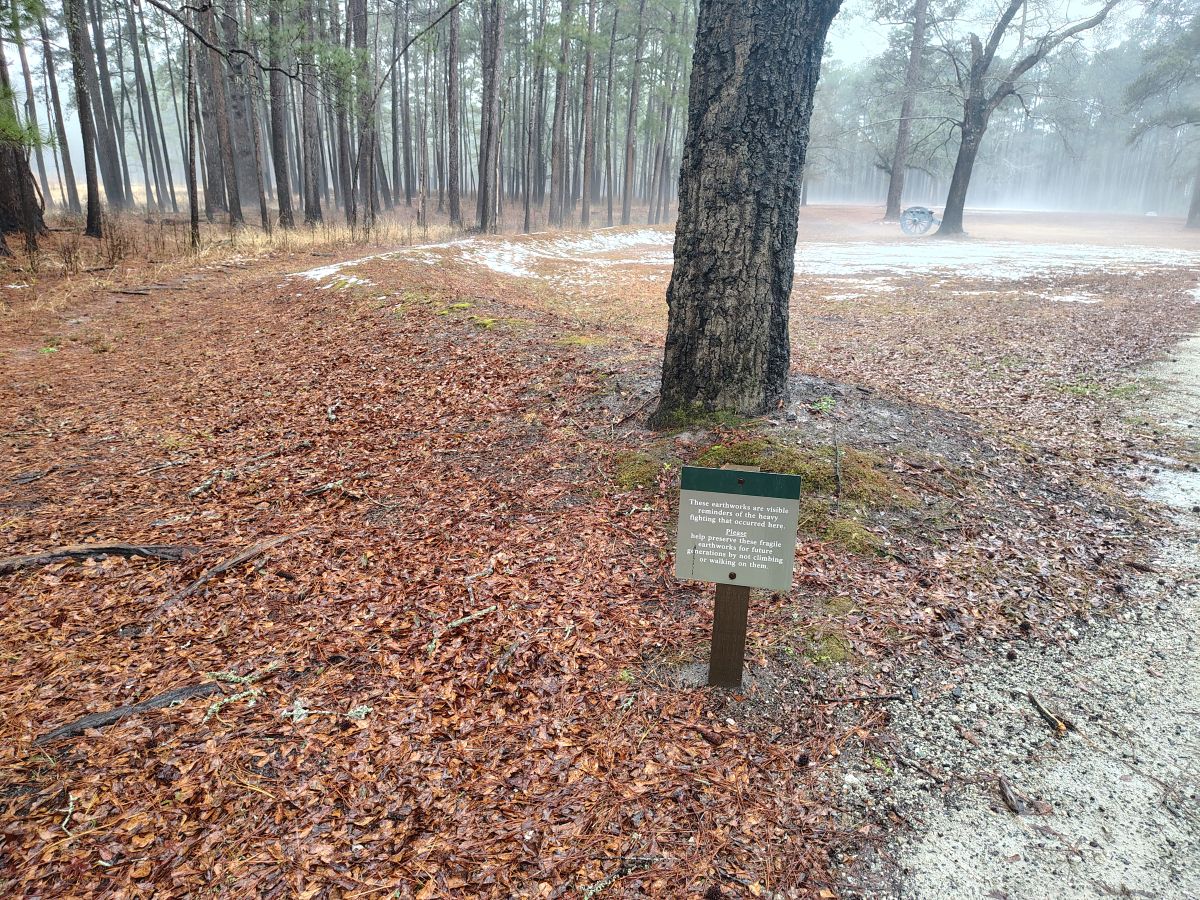
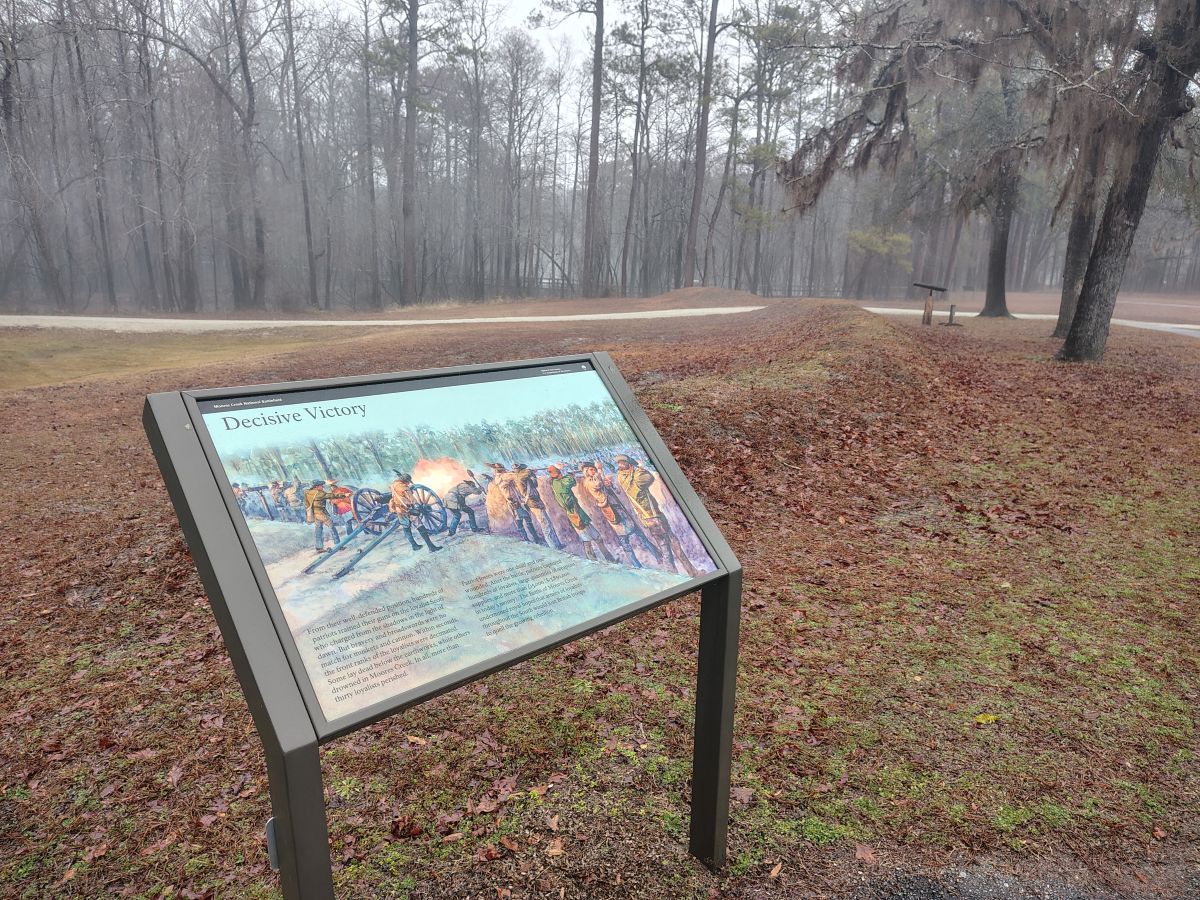
The patriots were lying in wait, cannons and muskets ready, hidden behind earthworks they built on a ridge overlooking the creek.
Loyalist Lt. Col. Donald McLeod led about 50 loyalists to the bridge around 5 a.m., only to discover it partly dismantled. Planks had been removed and those that were left were slathered in soap and tallow.
Undeterred, McLeod was confident he had enough men to attack. The commander drew his weapon “and exclaimed, ‘King George and Broadswords.'”
The small group charged, not expecting around 1,000 patriots to be hidden behind the earthworks just 30 feet away until McLeod, and more than two dozen other loyalists, were fired upon and killed instantly.
“With McLeod, the Loyalist commander at the bridge, now dead, the attack stalled, and the remaining Loyalists gave up and retreated into the darkness,” the park service explains.
“This battle marked the last broadsword charge by Scottish Highlanders and the first significant victory for the Patriots in the American Revolution,” the park service website states.
“In the days that followed the battle, the resounding victory echoed though the colonies, and a new hope was born. On April 12, 1776 the Patriot leaders in North Carolina signed the Halifax Resolves, a document that gave the delegates of the colony sent to the Continental Congress the right to vote for Independence. North Carolina would become the first colony to take such action.”
Related: Battle of Moores Creek Bridge virtual program Feb. 19
Now preserved, the grounds are the centerpiece of the 88-acre Moores Creek National Battlefield, which is celebrating the 250 years that have elapsed since that significant battle.
“This year marks the 250th anniversary of the Battle at Moores Creek Bridge, the first decisive patriot victory in the American Revolution and the moment that has set North Carolina on the path to becoming the first colony to call for independence,” Superintendent Matthew Woods told a handful of journalists during a recent press conference.
Woods, along with other project partners, invited media to the site to explain details about the inaugural First in Freedom Festival taking place Feb. 21-28. The weeklong regional celebration is a coordinated effort of eight counties to commemorate the 250th anniversary of the battle and the subsequent signing of the Declaration of Independence in July 1776.
The anniversary is a “milestone, not only for this park, but for American history,” Woods continued, and the festival is a way of using this moment to shine a broader spotlight on the people, the places and the stories that define the state’s role in American history.
“Over the course of the week of the North Carolina First in Freedom Festival, historic sites, art institutions and community partners across eight counties will come together to interpret more than 250 years of history through both heritage and the arts, culminating here at Moores Creek National Battlefield with a three-day commemorative event,” Woods said.
Special to the inaugural celebration is a weekend with author Diana Gabaldon, creator of the “Outlander” series. Unfortunately for those who didn’t jump on the tickets when they went on sale in November, the three events with the author are sold out.
“Outlander” is a historical fantasy series about a World War II nurse, Claire, who travels through time, from 1945 Inverness to 1743 Scotland, where she meets Jamie. Both the novels and the show based on series follow their love story across time and then the ocean, when the characters immigrate from Scotland to North Carolina, making stops in New Bern, Wilmington, and Moores Creek, and take part in the American Revolution.
Gabaldon, in a virtual chat during the press conference, explained that she featured Moores Creek because of the importance of the battle for the American Revolution and the Scottish settlement in the colony. “That seemed a very logical place to set part of their story. Also, this is essentially where we began, so to speak. So if we’re going to work through the Revolution with them, it seemed like the just the normal place for them to be.”
More about the festival
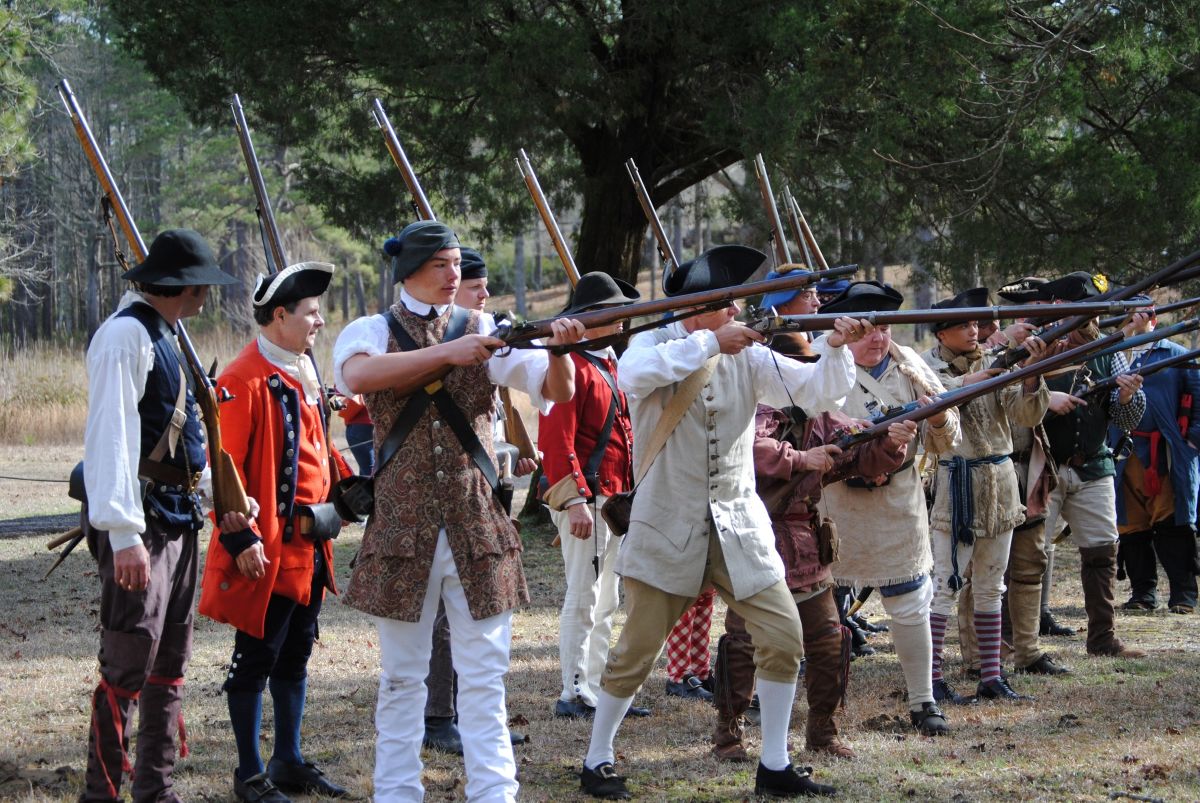
Moores Creek Chief of Interpretation Jason Collins explained that the battlefield will welcome on Feb. 26 multiple school groups to experience living history demonstrations. Feb. 27 will begin with a traditional wreath-laying ceremony, followed by living history demonstrations and special speakers, and Feb. 28 is a celebration with music, games, “Freedom” Art Show, food trucks and living history displays.
“To pull back the curtain,” Collins said, there’s typically around 75 reenactors for an anniversary event. “Take that number and multiply it by about two and a half for the number of reenactors we’re expecting for this year’s event. Roughly around 200 — kind of — almost neatly split between loyalists and patrons, which is really exciting.”
Collins said First in Freedom is bigger than Moores Creek. From Feb. 21-28 and throughout the year, there will be activities in Onslow, Pender, New Hanover, Brunswick, Duplin, Sampson, Bladen and Columbus, the eight counties making up the region.
For example, on Feb. 21 is the Historical Society of Topsail Island’s Visit Colonial Topsail at the historic assembly building, living history events at Brunswick Town/Fort Anderson State Historic Site, and a Black History Carnival in Wilmington.
The following day, Feb. 22, Colonial Faire at Harmony Hall is to take place at 1615 River Road, White Oak, in Bladen County, as well as “North Carolina’s Black Patriots of the American Revolution” aboard the Battleship North Carolina and “Freedom’s Road: the refugee crisis of 1865 in the Lower Cape Fear,” at the Oak Island Library.
Collins continued that for this year’s celebration of the 250th, First in Freedom Festival has released a companion passport, similar to the National Park Service’s passport program, for the festival.
“Folks are going to be able to visit different sites throughout the counties,” Collins said. At each site, they can have their passport stamped, and there will be different levels of prizes. Participants will need to turn their booklets in by Dec. 31 to receive a prize.
Flying Machine Brewery Sales Manager Allen Denning mentioned during the press conference that the taproom on Randall Parkway in Wilmington is featured on the passport, where the brewery will be serving its First in Freedom Battlefield Porter. The limited-edition beer was brewed using research-based colonial techniques for the 250th anniversary.
Denning explained that hops were hard to come by in the Americas at the time, so they got creative and used plants like spruce tips, he said, and the new beer is a nod to that ingenuity.
Moores Creek National Battlefield Association President Jim Buell reiterated that Moores Creek was the first decisive patriot victory, and “North Carolina was the first colony to declare their independence.”
Buell said that Woods, the park superintendent, had the idea for the First in Freedom Festival that “has now sprouted and grown tremendously. And we’re here today to kick it off officially, and then we’re hoping that a lot of people come enjoy it.”
First in Freedom is taking place with the support of America 250 NC. The initiative coordinated under the N.C. Department of Natural and Cultural Resources helps the state’s communities commemorate 250 years of United States history.