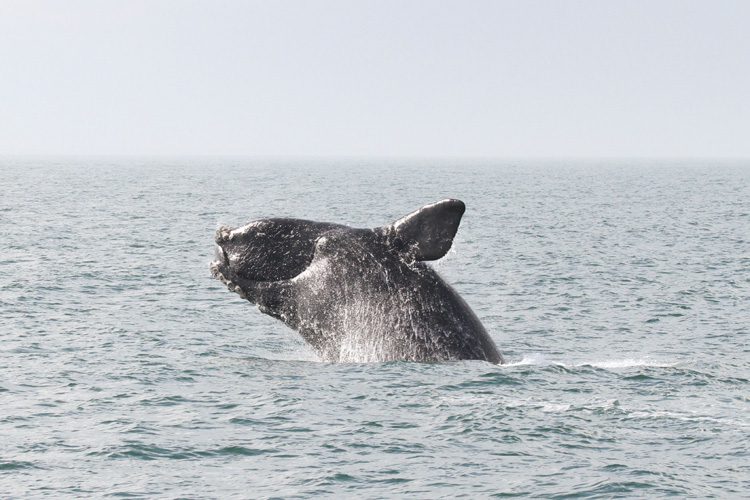
A critically endangered North Atlantic right whale that a team of responders attempted to disentangle from fishing gear nearly two months ago was found dead earlier this week off the North Carolina coast.
The 4-year-old male, identified as “Division,” died from injuries caused by being entangled.
Supporter Spotlight

An aerial survey team on Tuesday spotted what was left of Division’s carcass floating about 25 miles offshore of Avon, according to the National Oceanic and Atmospheric Administration.
On Dec. 4, 2025, responders from NOAA Fisheries, the Georgia Department of Natural Resources, and the Florida Fish and Wildlife Conservation Commission took to the sea to join forces with a Georgia-based aerial survey team from Clearwater Marine Aquarium Research Institute in an effort to document Division’s entanglement and monitor his behavior.
At that time, Division was off Georgia’s coast near St. Simons Island.
An aerial survey team from the Florida Fish and Wildlife Conservation Commission later relieved the first aircraft. Aerial and on-water teams consulted partners at the Center for Coastal Studies to plan the response operations.
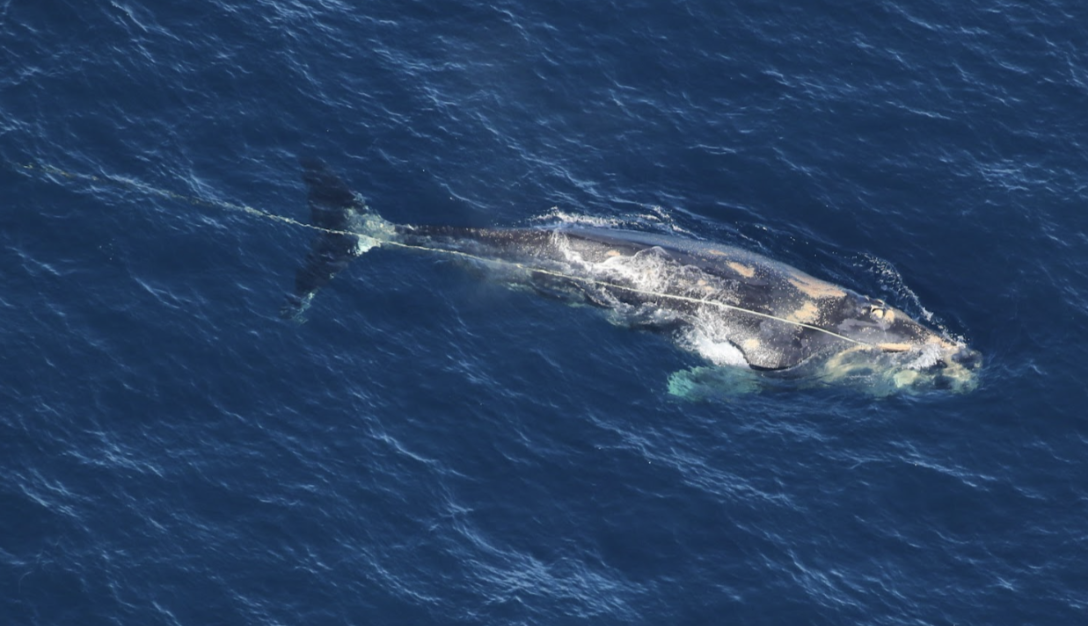
The on-water response teams were able to successfully cut a line passing over the left side of Division’s head and blowholes, according to NOAA. The line was cutting into and trailing from the whale’s left flipper.
Supporter Spotlight

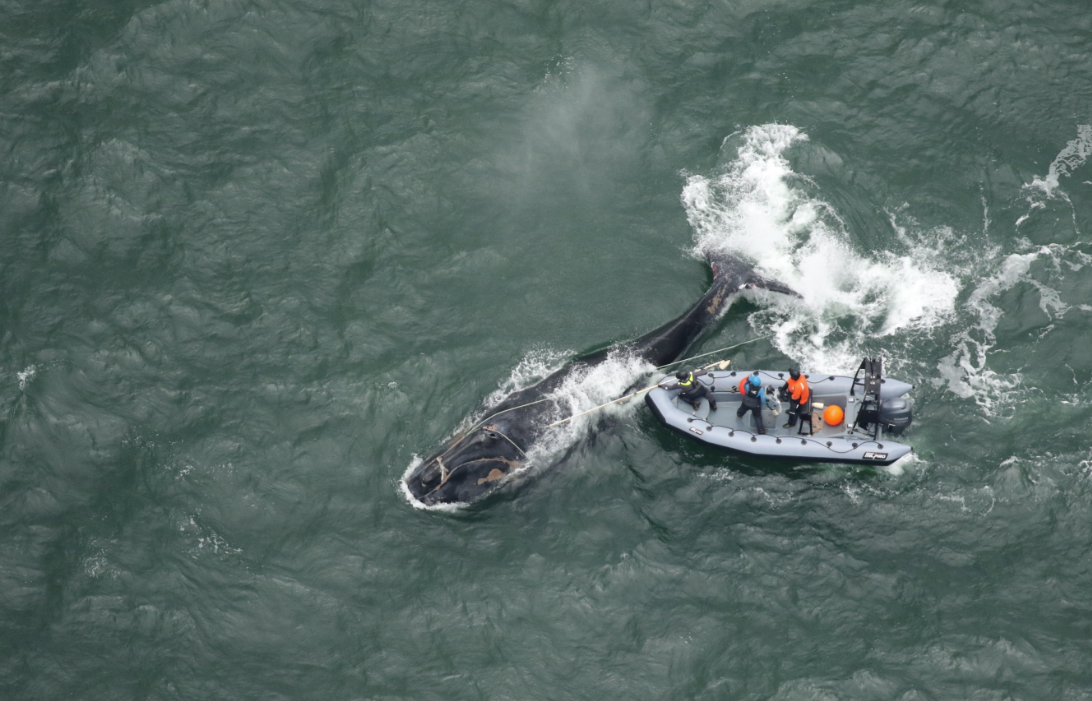
Responders were also able to shorten a line exiting the right side of the whale’s mouth and reattach a telemetry buoy to the remaining entangling gear.
Unsafe weather in the days after response teams made initial contact with Division thwarted them from being able to attempt to remove the remaining gear.
They were able to track Division’s trek north into waters off of New England, then back south. During that time, aerial teams observed the whale in declining health, his injuries worsening from his entanglement.
Weather conditions and the whale’s distance from shore prevented teams from conducting further disentanglement efforts.
“Recently, the satellite track began showing a movement pattern more consistent with drifting than active travel,” NOAA wrote in an update Friday. “Although this is not the result we wanted, our dedicated partners made every possible effort to save this whale.”
There are only around an estimated 380 North Atlantic right whales, including 70 breeding females, in existence.
The leading causes of death to these whales are vessel strikes and entanglement in fishing gear.
According to Oceana, roughly 1 million fishing lines sprawl across the whales’ migration routes and feeding areas off the Atlantic coasts of Canada and the United States.
“Fishing gear from these two countries entangles an estimated 100 right whales each year, with about 86% of all right whales having been entangled at least once,” the organization said.
In a statement Friday, Nora Ives, a marine scientist for Oceana in the United States, blamed the government for Division’s death.
“Humans have caused preventable pain and suffering for these critically endangered animals for long enough,” Ives said in a release. “What will it take for our elected officials to finally implement solutions like on-demand fishing gear and slowing vessels down to prevent further tragedies like this one? Continuing to ignore this issue will guarantee more right whale deaths. We need urgent action now. Oceana challenges policymakers to right this wrong, stand up for marine life and for the health of our oceans by adequately funding and staffing the National Oceanic and Atmospheric Administration (NOAA), advancing stronger protections for right whales, and supporting bedrock laws like the Endangered Species Act and Marine Mammal Protection Act before another whale washes up on our coastlines.”