Dirt.
Such an innocuous word for such an important item.
Supporter Spotlight

Dirt is all around us. Under our feet. What we live on. What we build our houses and roads on. Dirt is just … there, something we don’t pay much attention to unless we’re cleaning up a mess somebody tracked in, or planting.
Topsoil, the thin top layer of soil that makes life on Earth possible, comes in many different forms. Clay, like up around Raleigh. Silt, which is what Newport River is full of. Sand, pretty self-explanatory. Loam is the good stuff you find in the woods where leaves and rotting tree trunks are left alone to enrich the soil as they return to it. Peat, which around here usually indicates acidic, swampy conditions.
Topsoil takes a long time to accumulate because it involves the breaking down of bigger particles into smaller particles. Think boulders in the mountains, with pieces continually breaking or wearing off. Smaller rocks get washed downstream, becoming smaller the farther they travel until at some point they end up as sand on the beach.
Like Jules Vern’s “Journey to the Center of the Earth,” there’s a whole nother world right beneath our feet.
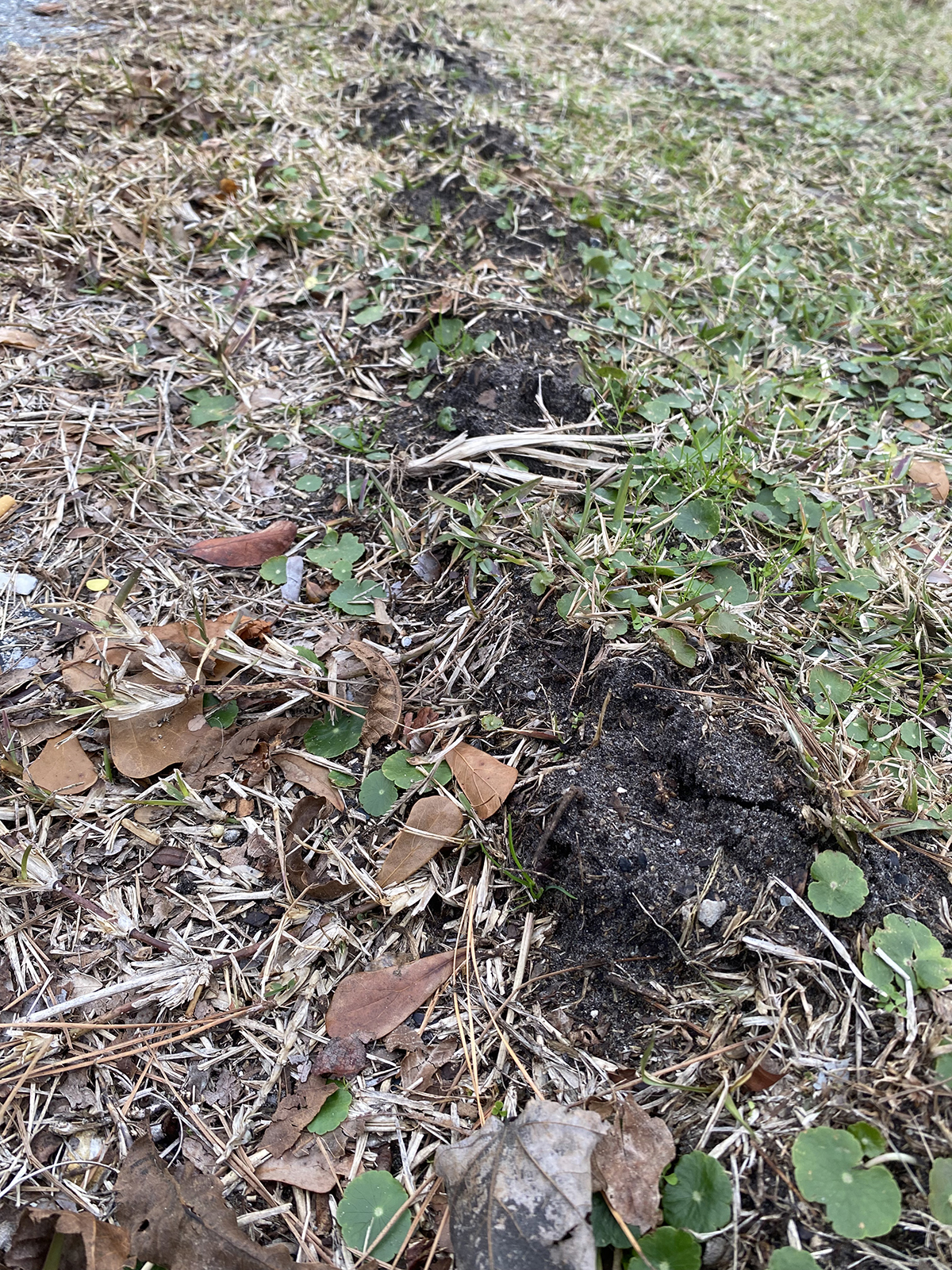
This time of year when the grass goes dormant, you’re more prone to notice something tunneling in your yard. Various sorts of critters tunnel, some you can see and some you can’t. All kinds of things make up the critters in the soil. Microbes, too tiny to ever see with the naked eye. Funguses and bacterias and mycelium and … You get the picture.
Supporter Spotlight
Ant tunnels are like a path through the woods. Then the earthworm tunnels, looking like a one-lane dirt track. Mole crickets, a wider dirt road. Moles and voles are a two lane, while gophers are more of a four lane.
Ever seen that metal sculpture of a fire ant nest? The one where they poured liquid metal into the ant nest and then scraped all the dirt off once the metal cooled? Pretty neat, huh?
Earthworms’ tunneling is vital to soil health. By consuming a third of their bodyweight in dirt and organic material every day, they move nutrients and minerals from below the surface to the surface, via their waste. Poo. Worm castings.
Their feasting and tunneling also allows water and air to move up and down in the soil.
Earthworms (Oligochaeata) have five hearts, and as kids we were told if you accidentally broke a worm in half, voila: You’d get two worms.
This is not necessarily true, although some earthworms are like our little green lizards, or chameleons (Anolis carolinesis) in that their tail is easily detachable in order to enable them to escape easier.
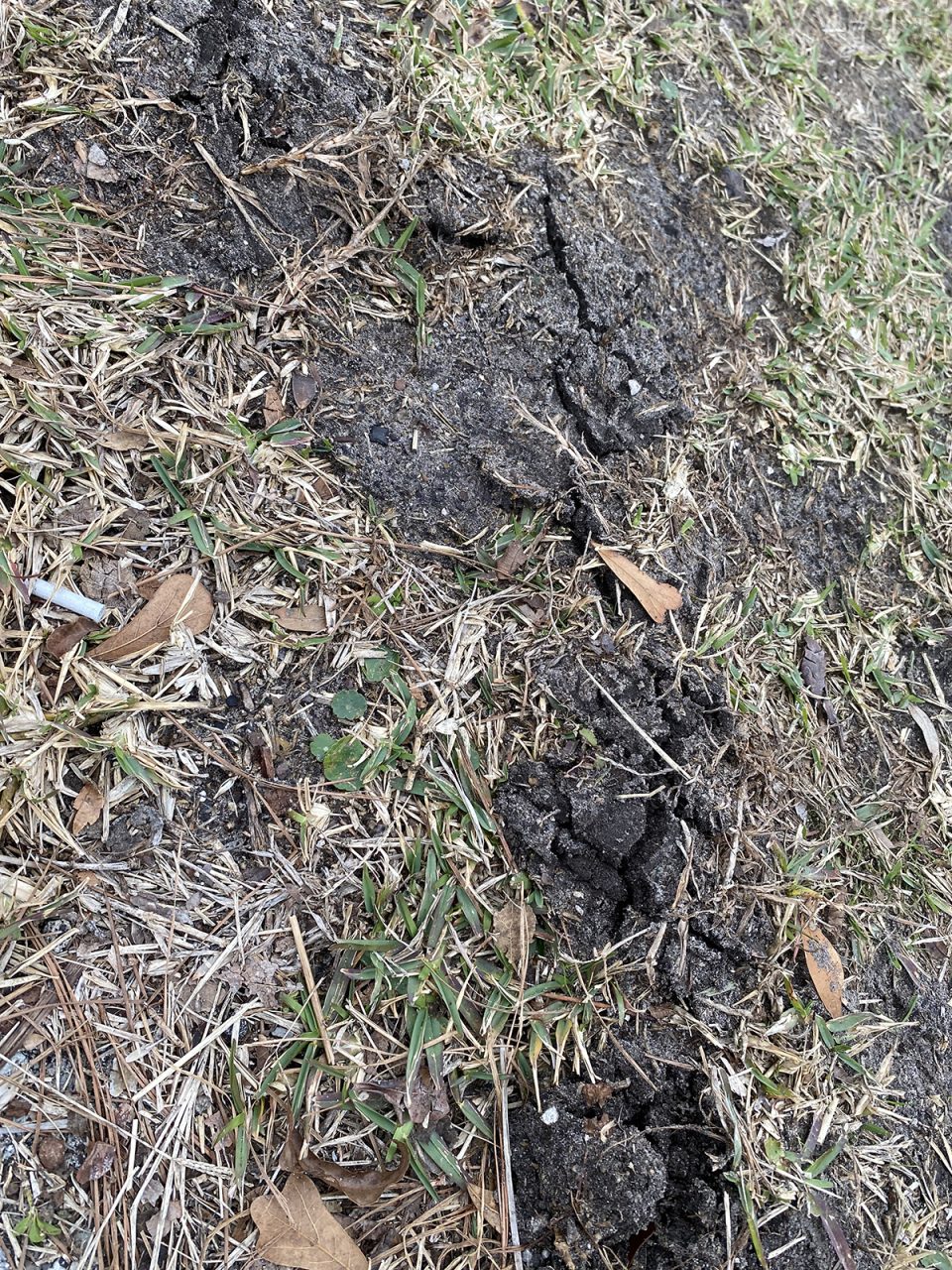
Mole crickets, especially tawny mole crickets (Scapteriscus vicinus), have become a serious pest in recent years. In their voracious quest for food, consisting mainly of grass roots and shoots, their tunneling severs grass roots and results in large patches of spongy soil and dead grass. The weather staying warm longer in the fall encourages a longer breeding season with multiple hatches. Also, pole lights and streetlights attract mole crickets. While it’s fun for kids to poke a piece of pine straw or a stick into a hole and catch them, mole crickets are the No. 1 enemy of lawns and golf courses.
Moles and voles rate a whole other level of destruction. Eastern moles (Scalopus aquaticus) are dark gray, velvety soft, blind, have webbed feet, and no tail. They eat crickets and grubs, which is a great thing. Unfortunately, they mess up your yard with their tunnels. Crickets are annoying (can you imagine keeping one as a pet, as Japanese people do?) and grubs are beetle (think Japanese beetle) larva.
Southern pine voles, (Microtus pinetorum), on the other hand, look like hamsters. Golden brown, they have a short tail, are not blind, and do not have webbed feet. Unlike moles, voles will come above ground to scrounge for seeds and berries, and farther to the west of our state, can decimate orchards. They like to ring fruit trees and chew the bark off right at ground level.
Both moles and voles tunnel, oftentimes sharing the same tunnels. Both are nocturnal. So how do you tell which one is destroying your yard? Other than catching one, or being gifted one by your dog or cat, it’s hard to differentiate. Sometimes, if there is a dirt mound in your yard with an opening, it’s a vole. Southern pine voles tend to live around pine trees or pine stumps. While you can put out poisons to kill the crickets and grubs so the moles will move elsewhere, eradicating voles is another story.
Moles do good things, voles are a pain, and getting rid of both is hard. Can you imagine having gophers? Or armadillos?
Did you know armadillos have made it into North Carolina? Wonder how they’d be as a pet …
Humans don’t much enjoy the critters burrowing in our yards, but everything has to eat something. Earthworms eat dirt, birds and moles eat earthworms and insects, bigger predators nosh on birds and moles.
Some of us love to go barefoot and feel the textures beneath our feet, connecting us to the Earth and to our past. I can’t imagine it, but some people hate being barefoot. Going barefoot has a deeper purpose than tactile comfort. Humans may be able to absorb minute amounts of minerals and other vital nutrients through the soles of our feet.
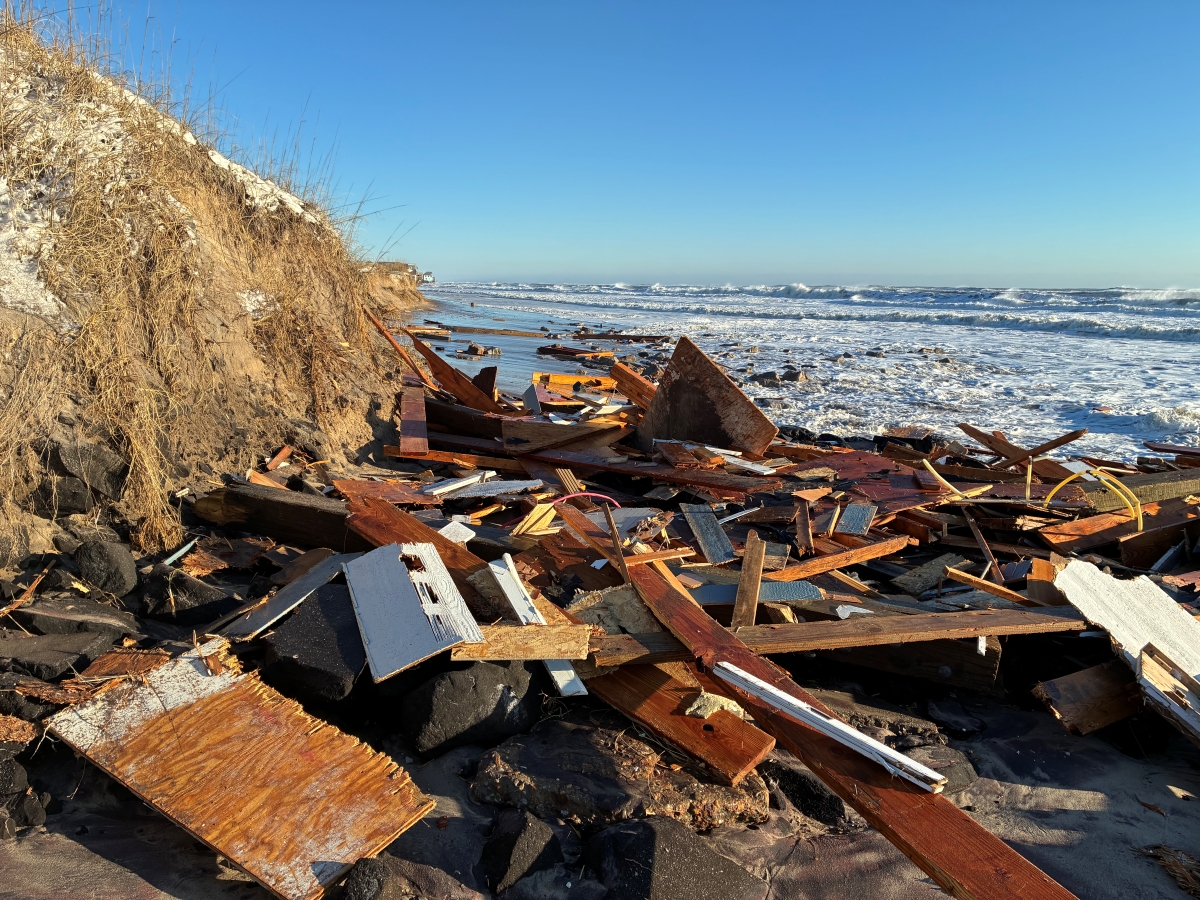
Humans like to pretend that the ground is permanently fixed in place, even as much of the world’s topsoil is being lost to erosion because of building, mining or weather. Not “lost,” per se, just ending up somewhere else, because soil is a living entity, constantly evolving.
Coastal Review will not publish Jan. 1 in observance of New Year’s Day.