Part of an ongoing series on coastal North Carolina’s observance of America’s 250th.
Tensions began to brew between the colonists and Britain in the early 1760s after the Seven Years War, also called the French and Indian War, in North America. The British decided to impose new taxes on the colonies to recoup the funds that went to the war, but instead incited widespread protest.
Supporter Spotlight

Britain passed the Stamp Act March 22, 1765, and then in June 1767, the Townshend Act imposed duties on paint, paper, tea and other commodities. British troops attempted to enforce the Townshend duties in Boston October 1768, ultimately leading in March 1770 to the Boston Massacre that left five dead.
The British, to help the struggling United East India Co., passed the Tea Act in May 1773, allowing the company to import and sell tea to the colonies duty-free, undercutting the Dutch who had been smuggling tea in, and creating a monopoly.
Then, on Nov. 28, 1773, the Dartmouth sails into Boston Harbor, and three more ships were expected to arrive, all carrying chests of tea.
Over the next few weeks, colonists met to figure out a way to fight back. On the night of Dec. 16, 1773, around four dozen men impersonating Native Americans boarded the ships and dumped 342 chests of tea into the harbor.
Almost a year later, 51 women in Edenton took a more peaceful approach to protesting the tea tax by drafting a document explaining their boycott. The women committed to no longer drinking tea or wearing British cloth because of taxation without representation and sent the final copy to England.
Supporter Spotlight

“This action forms one of the earliest-known political actions written and organized by women in the American colonies,” the Edenton Historical Commission explains. “The events of the ‘Edenton Tea Party’ today form an iconic moment in our nation’s history, when a community of women used their own voices to stand by their loved ones and risk the wrath of the Crown by protesting injustice.”
The women of Wilmington responded to British taxation with a similar protest in the spring of 1774, though little is known about the gathering to publicly burn tea.
Burgwin-Wright House and Gardens Assistant Museum Director Hunter Ingram told Coastal Review that the Wilmington Tea Party is an oft-overlooked event in the final days before the start of the American Revolution.
In the port city of Wilmington, the import of tea had ground to a halt by the spring of 1775.
The Continental Congress had forbidden tea from coming through the colonies’ ports, so it had become a scarce commodity, he said. That is why events like the Boston Tea Party and the Edenton Tea Party were so crucial to the cause of resistance.
“Tea was hard to come by and sacrificing it sent a message to those who were already hurting from the disruption of its trade,” Ingram continued.
The Wilmington Tea Party happened in the spring of 1775 and is only documented in one place: the writings of Janet Schaw, a Scottish woman who was traveling through Wilmington to visit her brother.
“She wrote a single line about her observations of the tea resistance in Wilmington, which she did not support. ‘The Ladies have burnt their tea in a solemn procession, but they had delayed however ’til the sacrifice was not very considerable, as I do not think anyone offered above a quarter of a pound,’” Ingram said.
While the simple description doesn’t give many specifics, Schaw was clear in what the protestors did, Ingram said. “Burning the tea was unique, and it meant the women of Wilmington, even in the eleventh hour before the outbreak of war, were willing to set a precious privilege blaze in the name of revolution.”
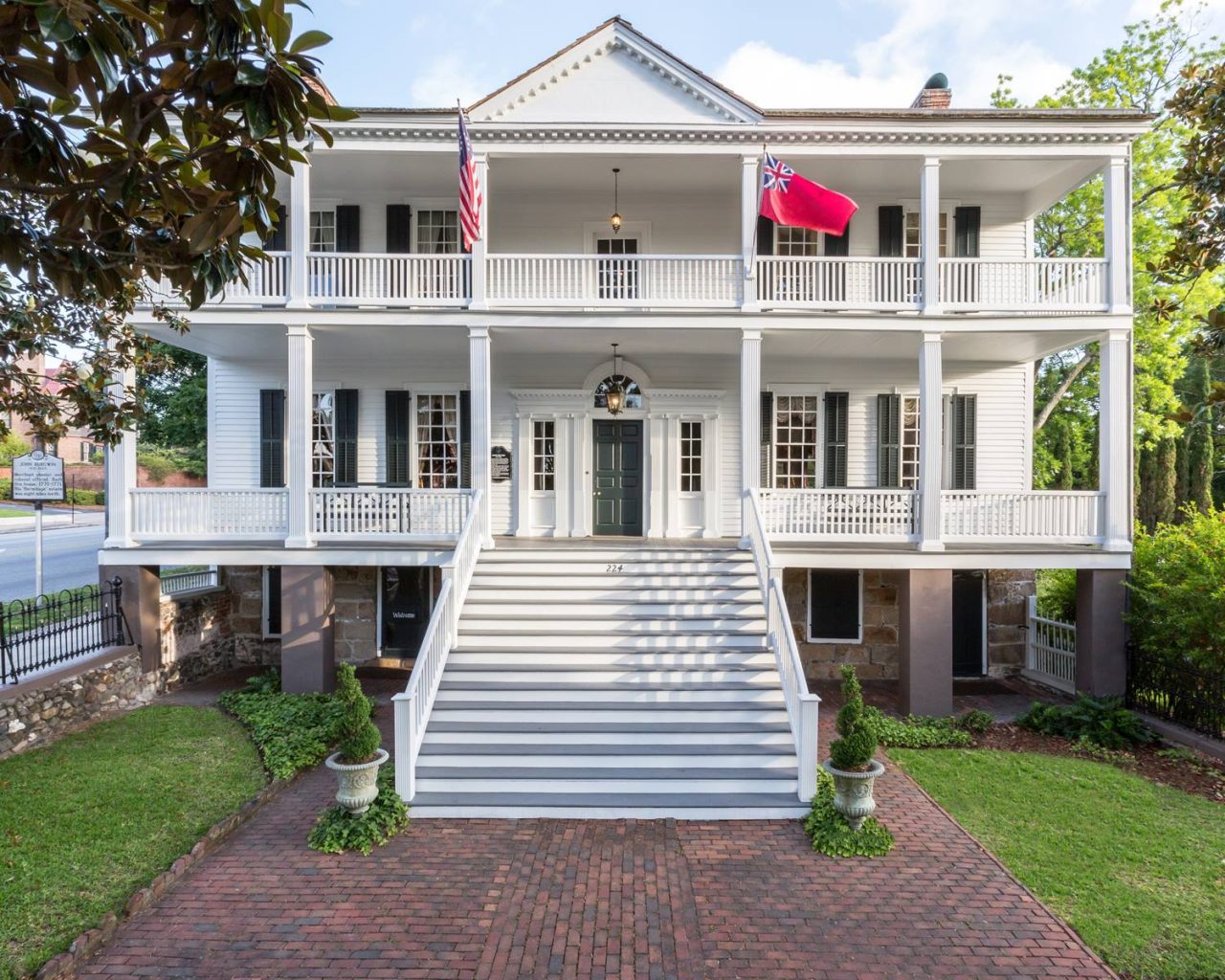
The Burgwin-Wright House is the oldest and largest historic site in Wilmington, comprised of four of the eight remaining colonial structures in town, Ingram said of the house’s importance during the Revolution.
“We have three buildings from the city’s first jail, circa 1744, and the mansion home built in 1770 on top of the main jail building after the prisoners were relocated. It has sat at the corner of Third and Market streets for 256 years, and it has watched Wilmington grow from small-but-mighty port city into a thriving town that was, for a time, the most populous area in the state,” Ingram explained.
“The colonial era in Wilmington doesn’t always get its due, but the surviving home built for merchant and politician John Burgwin can tell that story –– and has been for generations,” said Ingram.
Ingram explained that that the Burgwin-Wright House had partnered with the National Society of the Daughters of the American Revolution’s Wilmington Ladies Tea Walk Chapter to commemorate the 251st anniversary of the protest with the “Wilmington Ladies Tea Walk.”
The Wilmington Ladies Tea Walk event begins at 10 a.m. Thursday, March 25, at 224 Market St. the program will include remarks from a few historic organizations and officials and samples of a brand-new tea blend by Cape Fear Spice Merchants.
“Guests can walk through the gardens, enjoy a presentation about Janet Schaw and then join members of the Daughters of the American Revolution and the Sons of the American Revolution as they walk, in a solemn procession, to river to burn tea in commemoration of this act of resistance on the eve of revolution,” he said.
The historic home is a good fit for the Wilmington Ladies Tea Walk because the site likely would have been “witness to that solemn procession into history, and the act of resistance that helped give Wilmington a reputation for rebellion even before the war.”
Schaw was also a Loyalist, as was Burgwin, and it’s “likely she would have visited the house during her time in Wilmington. This was a home built for a wealthy guest list, and Janet would have qualified,” he said.
Though the program is offered at no charge, registration is required. Call 910-762-0570 to register.
“If you can’t get in this year, we hope to make it a recurring event through multiyear A250 celebration,” Ingram said, referring to the state’s official celebration of 250 years of independence, America 250 NC, a program under the North Carolina Department of Natural and Cultural Resources.