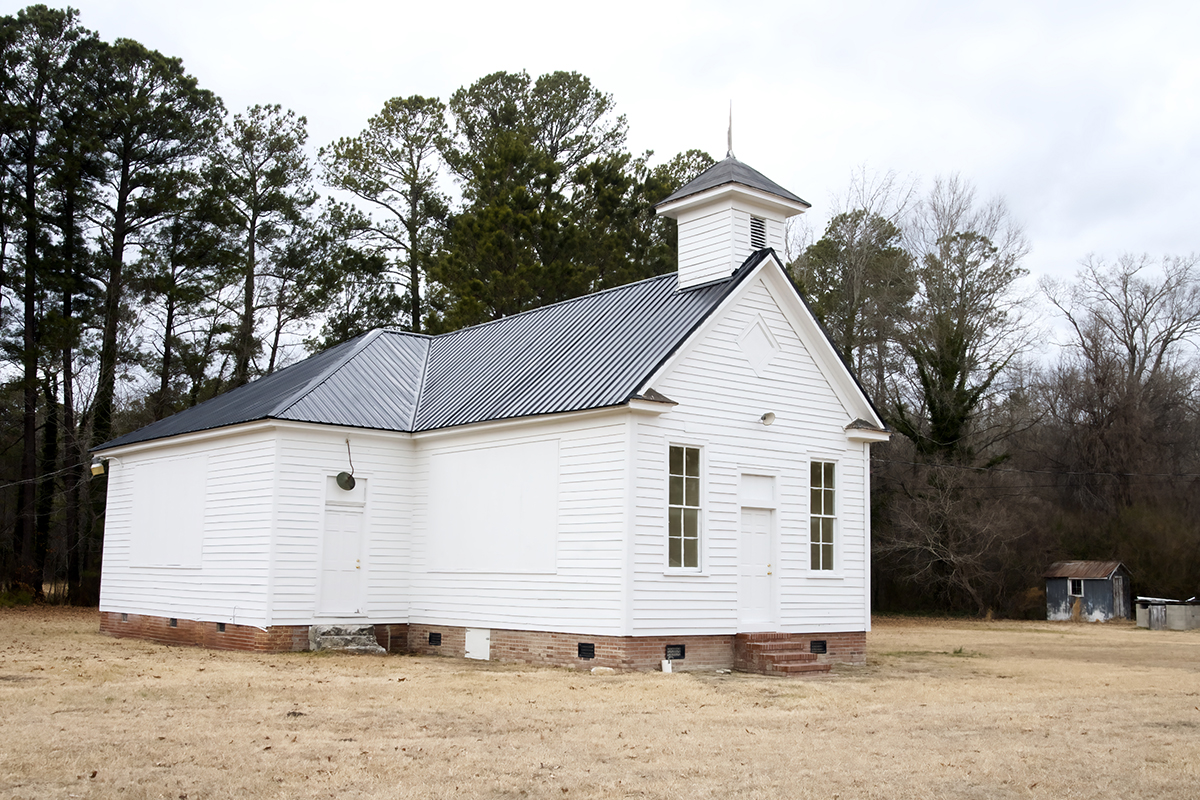
Across from the Pleasant Plains Baptist Church and just outside of Winton in Hertford County, it remained unclear for years whether the historic but badly damaged Rosenwald Pleasant Plains School built in 1920 could be saved.
If it could not, the school building, which replaced an earlier structure built on the grounds in 1866 that may have been the first “Colored” school in Hertford County, would probably be lost.
Supporter Spotlight
And then, in September 2024, a driver ran their car off U.S. 13 where the school is, and slammed it into the building with such force that the entire structure was moved off its foundation. The driver was drunk at the time.
With the one corner of the building crushed, the school off its stone foundation, and brick and other debris littering the inside, things looked bleak for the building that the National Register of Historic Places described in a 2016 report “as the only graded public school that served both local African American and Native American students in the Pleasant Plains community … from 1920 to 1950.”
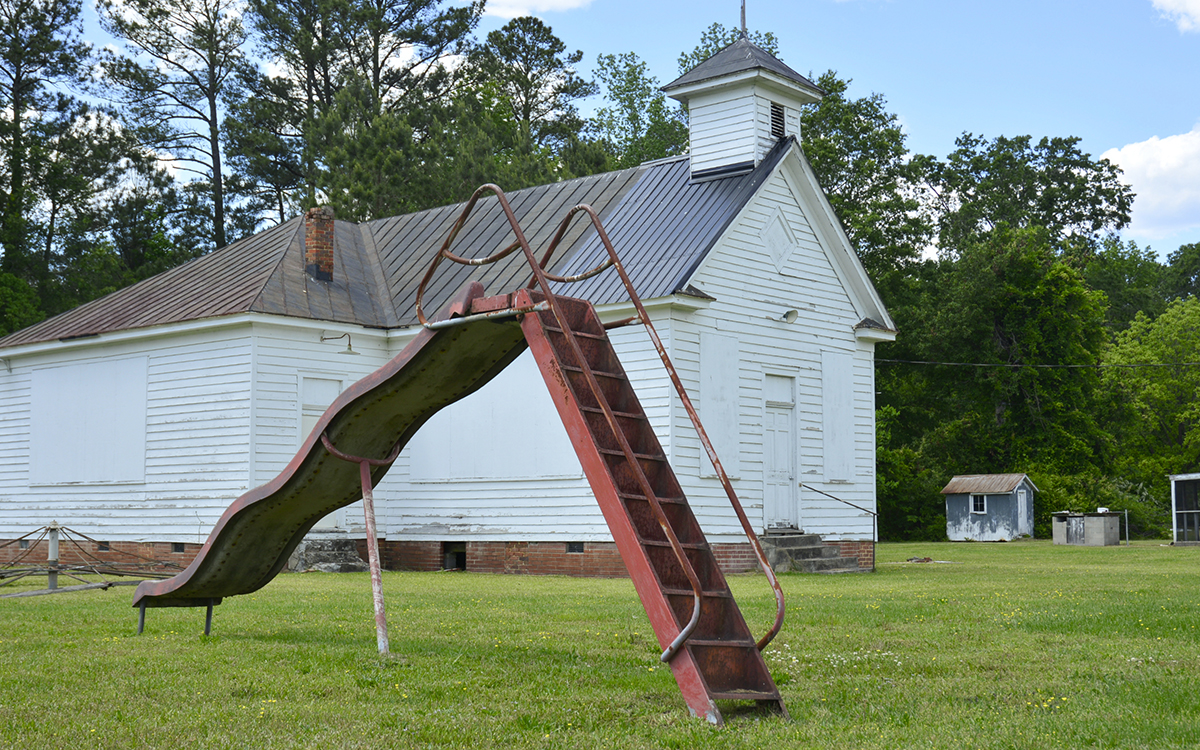
As the report notes, the building was “a very intact, representative example of early twentieth-century rural school design.”
Yet what at first seemed like a disaster, may ultimately have saved the building. The insurance settlement was enough put the structure back on its foundation, repair the roof and exterior and paint the building.
There is, though, still work to be done.
Supporter Spotlight

Even before the accident, the roof had been leaking, and a new roof “stopped the problem with the leaks,” Roy Pierce said, who has been monitoring the condition of the school and handling repairs for years. “But before that took place, there were some leaks around those old chimneys, and the water seeped in and damaged some of the wooden ceiling.”
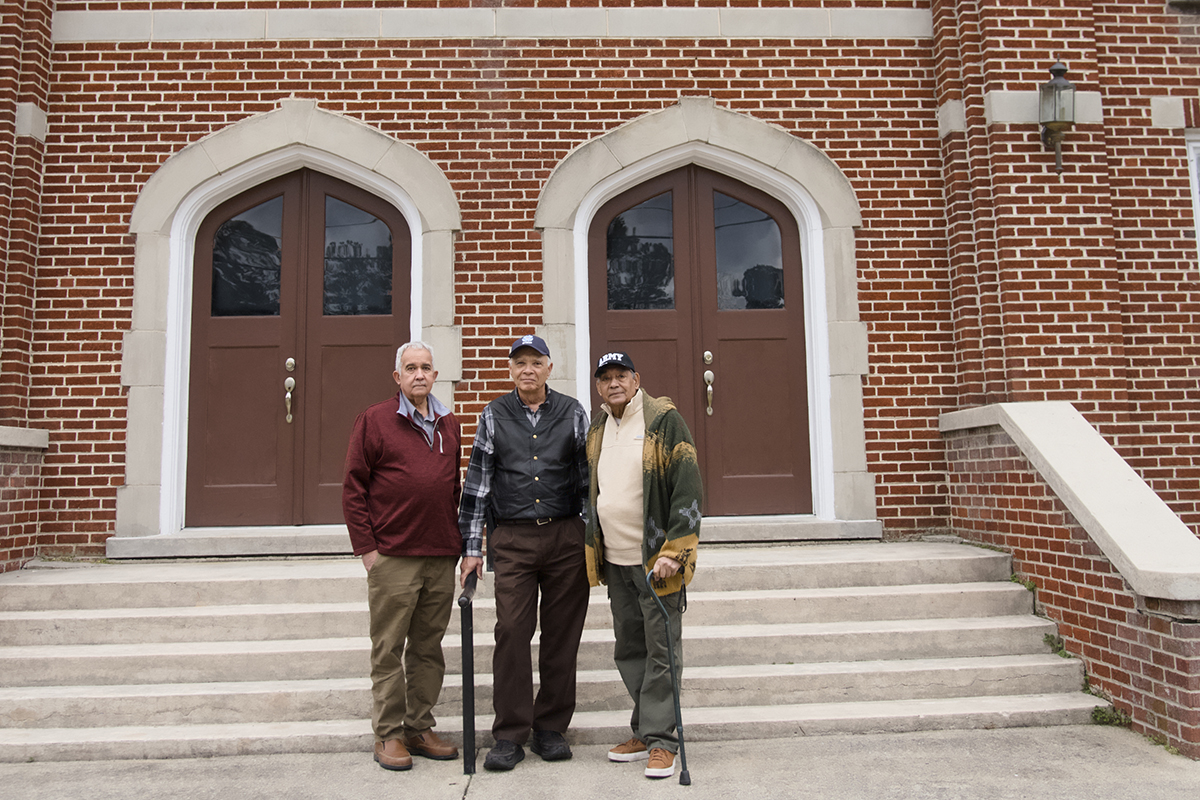
The ceiling needs repair, but it is just one of a number of problems pushing the cost of bringing the building back beyond the means of the Pleasant Plains Church, which owns the building and property.
Pierce pointed to the windows that have been boarded up to prevent vandalism. He explained that when restoration experts looked at the windows, he was told much of the glass was original, as were the frames.
“The estimate on just fixing those windows, was $17,000,” he said.
The land where the school rests has always been owned by the Pleasant Plains Church. The church, founded in 1851, is one of the oldest multiracial houses of worship in North Carolina. When founded, the church was for the nonwhite, free people of color only.
“Permission was granted to organize a church provided no slaves nor their descendants were allowed to join the church. The church was to be solely for the use of free-born people,” Corinne Hare Brummell wrote in Pleasant Plains Baptist Church 150th Anniversary Program in 2001.
At that time, and well into the 20th century, a person of color was anyone who was Black, African American or of mixed ancestry.
It is possible that there was a school associated with the church as early as the 1850s, but early church records were destroyed in a 1941 fire. It is known, however, that as early as 1866 “ten men were responsible for building a school house at Pleasant Plains,” the Hertford County Herald wrote recounting the history of Hertford County.
The first school house was one room, and “the only elementary school accessible to people of color, including African Americans and the descendants of Native Americans, in the Pleasant Plains community,” the National Register of Historic Places notes.
By the turn of the 20th century, it was clear a one-room school house was inadequate and in 1902, the county approved $90 “for the school with a total of ninety-eight students in the three classrooms,” according to the historic places document.
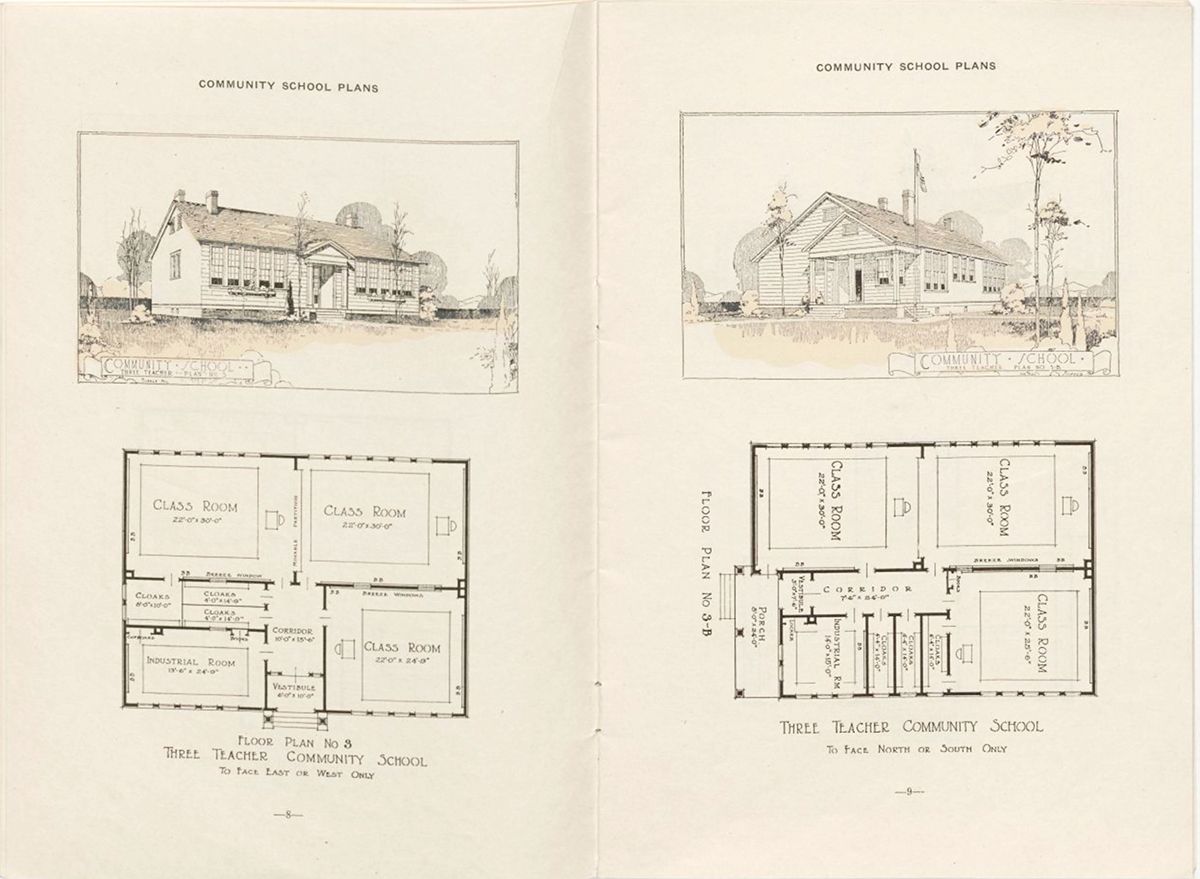
In 1920, hoping to improve the Pleasant Plains school, the community raised $750, the Hertford County school board contributed another $850 toward building a new three-room school, and the community received a $300 grant from the Rosenwald Foundation.
Although about a third of the construction cost of the school was low compared to other Rosenwald schools, Julius Rosenwald, the founder of the fund, “agreed to allow … funds to help rural Southern communities erect schools for black,” the historic places document explained if the community also contributed.
The school was in use from 1920 to 1950. When it closed, students began attending C.S. Brown School in Winton, which was also a Rosenwald-funded school that is now the Hertford County C.S. Brown Cultural Arts Center and Museum in Winton.
Chief Thomas Lewis, chief of the Meherrin nation, began his formal education at the school, but he recalled, “the floor fell in, and we had to go from there to one of the county schools. So by living in this area, we went to C.S. Brown.”
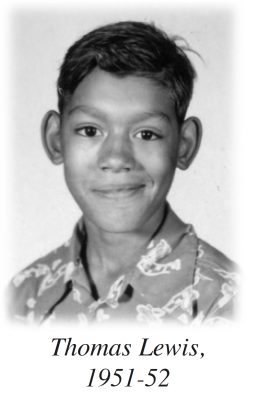
When he got to his new school, he and his brother who was in the second grade, “had to repeat grades,” he said. “I don’t know the reason, but that’s what they made us do.”
Although he attended the Pleasant Plains school for only the one year, Lewis has a clear memory of at least one of his teachers.
“Miss Ardelle Garrett, she was my girl. I brought her an apple every day,” Lewis said.
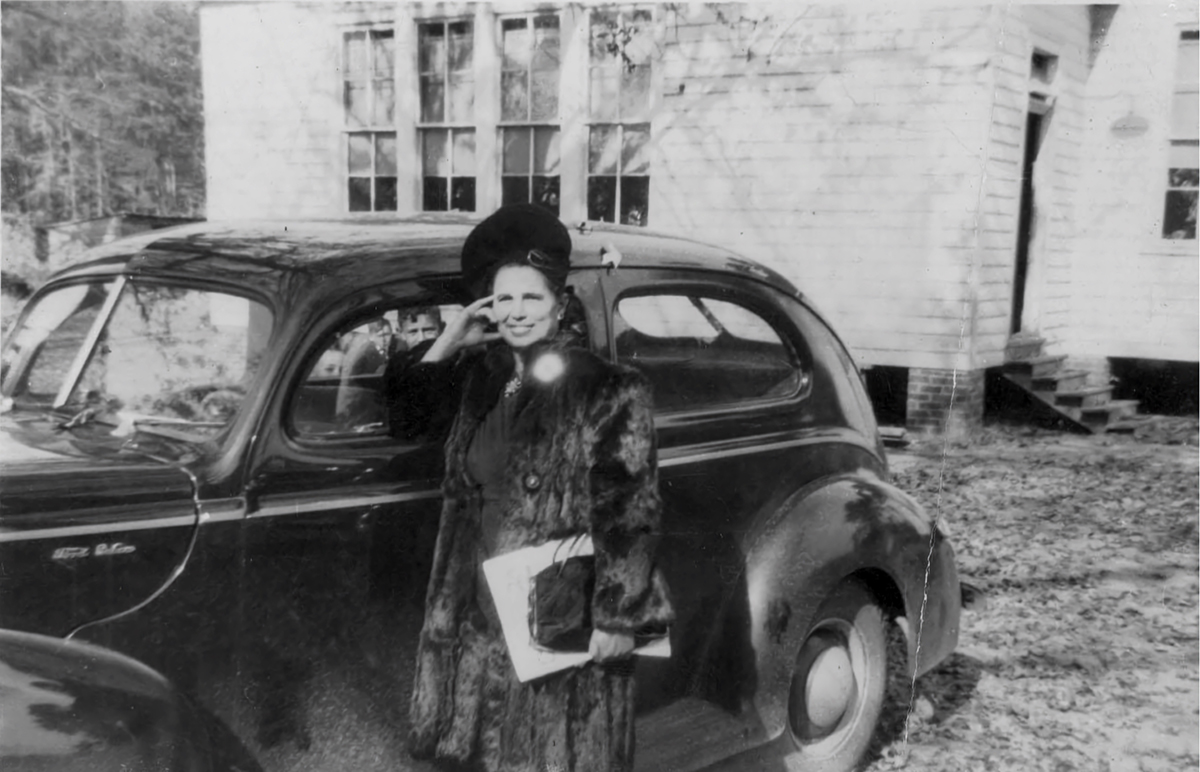
Garrett who, was born in 1904 in Ahoskie, had a long association with the school. As early as the 1930 census, Garrett is listed a teacher in a public school on the census form. And “the North Carolina Education Directory in 1939 notes the school with three teachers, including Ardelle Garrett, the principal,” according to the historic places research.
As a teacher, Garrett seemed to have had an impact on all her students.
“My father’s 96 and he talks about Ardelle Garrett to this day,” Lewis said.
There are other memories of what the school was like as well. Lewis mentioned that in the morning “we had people designated to go to the coal power and get coal, because that’s how the classrooms were heated.”
There is also a mention in the historic places report that Lewis recalled using “the outhouses in back of the school.”
There was a strong sense of community among the families surrounding the Pleasant Plains community.
“This stretch of highway, at one time you could leave Winton and drive to Ahoskie, and you knew that was Roy’s house and Thomas Chavis’ house, and whoever’s house. Back then, we knew everyone,” said Dr. Terry Hall, Pleasant Plains Church deacon, in describing U.S. Highway 13 that passes the church.
Yet if the C.S. Brown School was a larger and more modern school, it still took the community keep it going.
“There were a lot of fundraisers,” Lewis recalled. “They would sell cakes and pies to buy band uniforms and football equipment, all that kind of stuff.”
“They used to show movies. You could pay 15 cent and go see a movie,” Pierce added.
Although the school did not have the resources the white schools of the county had, what it did have were very good teachers.
“The teachers were good. We had people from here that went on to colleges and did well,” Hall said. “I think in some of the competitions, they used to have debates and stuff like that. They did good.”
In 1968, Hertford County Schools began the process of consolidating their schools and for the first year, student attendance was optional.
“It was part of what they called freedom of choice. I wanted to try to get a new experience. So I transferred (to Ahoskie High School),” Pierce said. Pierce graduated from Ahoskie High School in 1968.
The greater opportunity that was offered by the white schools may now be playing a role in how difficult repairing the Pleasant Plains School has become.
“We’ve gotten into an older population and people have gone into different professions,” Hall said. “Years ago, Thomas and his father and other people that did carpentry … they would have been buying the materials would have been all that would have cost us.”
“It’s like my younger brother, he said, ‘I’m leaving here because I’m not doing nothing with my hands,’” Lewis said. “And he moved to Roanoke Rapids.”