We all like vibrant colors and new show-offs in our gardens, and with a mailbox full of gardening catalogs this time of year that advertise all sorts of gorgeous goodies, what’s a gardener to do? Ignore all the pretties?
Though it is tempting to collect plant specimens from faraway lands — a part of human history that is many, many centuries old and not likely to fizzle out any time soon — there’s a risk to introducing non-native species to your garden.
Supporter Spotlight
So, what’s so bad about trying out new plants? Sometimes plants from far off make it, sometimes they don’t. Sometimes they thrive, and sometimes they really thrive, to the point of becoming dangerously invasive. Sadly, the only way to find out is to try it, often with disastrous results.
While natives have evolved over centuries to survive in certain soil and temperature conditions, and native pollinators have thrived along with them, non-natives often throw off the delicate balance.
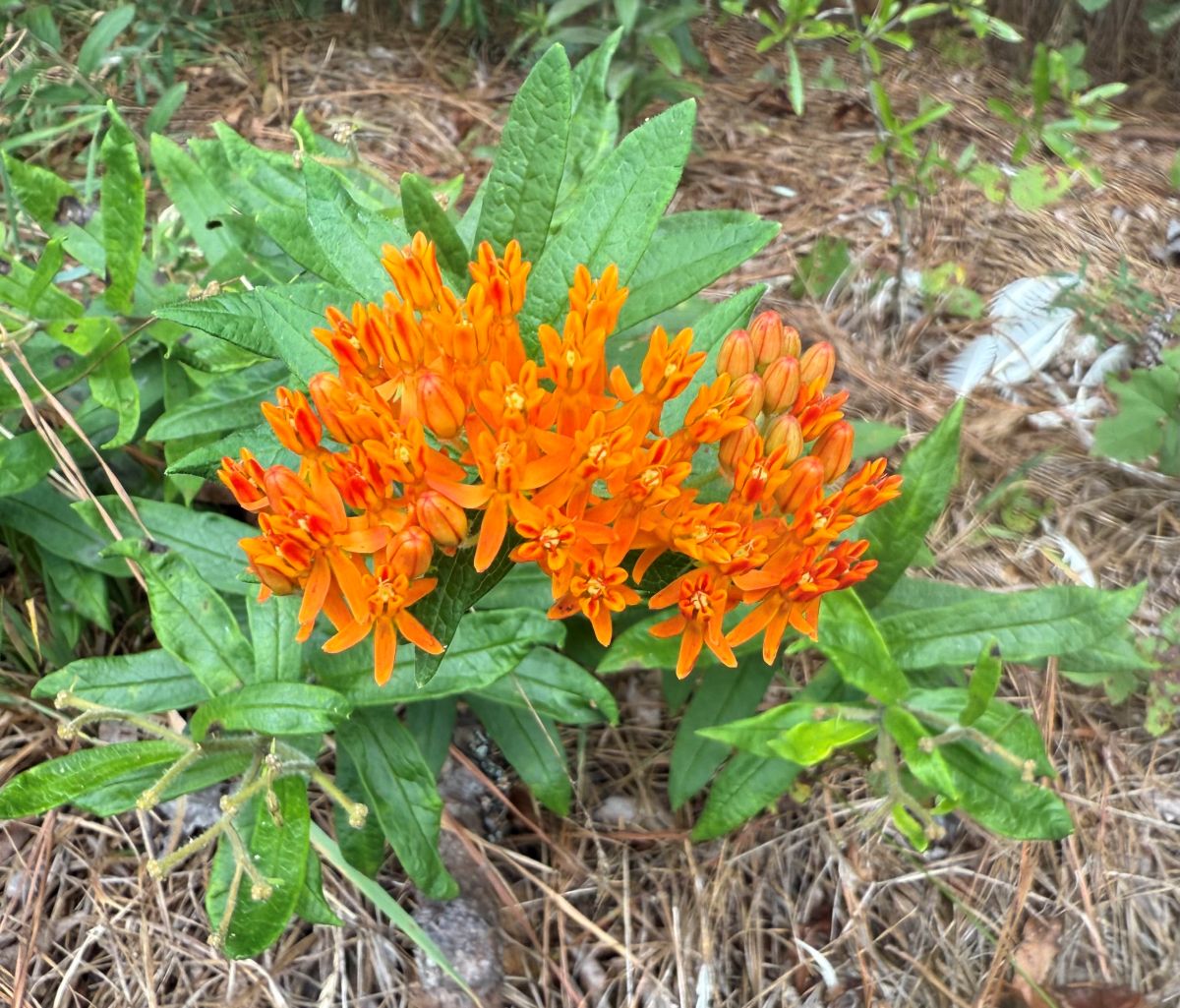
Some pollinators, such as monarch butterflies (Danaus plexippus), have specific plants for feeding or laying their eggs on. Monarchs love milkweed, both to nosh on and for their nurseries. The plants and butterflies have developed a symbiotic relationship.
Milkweed (Asclepias spp.) is the sole host plant for monarchs. Momma monarchs lay their eggs on milkweed plants. When the eggs hatch, the caterpillars feed on the leaves of the milkweed.
While poisonous to most critters, including humans, the monarchs use the toxins as their first line of defense. Because the milkweeds are toxic to many critters, the monarchs store the toxins in their bodies, thus making them unpalatable to many predators. The butterfly’s bright orange coloring serves as an added warning.
Supporter Spotlight

Adult monarchs feed on brightly colored flowers such as zinnias, sunflower, golden rod, asters, and lantana. Since milkweeds are, well, weedy looking, and because people fear them as a poisonous plant, many people rid their yards and woods of the plants.
But wait … can’t you just go to a nursery and buy milkweed plants? Again, native versus non-native.
Native milkweeds die back in winter, encouraging monarchs to migrate. Tropical milkweeds such as Asclepias curassavica, do not die back, confusing the monarchs and tricking them into staying.
Because the tropical variety overwinters, a harmful protozoan parasite (Ophryocystis elektroscirrha) also overwinters on the plant. The spores of this parasite accumulate on the plant and infect monarch caterpillars, causing infection and deforming wings, leading to death.
Natives versus non-natives are kind of like name brand groceries versus store brand. Some things you can’t substitute. Like peanut butter, for instance. Team Jif all the way. Cream cheese has to be Philadelphia brand or nothing.
It may be cheaper and it may look the same, but the qualities you prize are muted or nonexistent and it won’t do what you want.
Growing up, we all took weedy lots and meadows for granted. They were just there, something waiting to be mowed and maintained to human standards.
Somewhere in the last few decades, or centuries, we’ve lost our appreciation for lush cottage garden-type landscapes and replaced them with sterile, manicured expanses of monoculture.
Monocultures, such as grass lawns, while orderly and green, feed pretty much nothing. In past times, there would still be enough wild places around to offset lawns and support plants and insects and critters. With more and more pavement, more and more houses and stores and buildings sprouting up every day, it’s becoming harder and harder for wildlife to survive.
We are fortunate enough to live in a place with vast tracts of woodlands and fields to support biodiversity. Anybody local ever hike the Patsy Pond loop on N.C. Highway 24 in Newport? Or any of our local trails, really?
At first glance, it looks, well, weedy. Take your time and really look. Because it is so “weedy,” there is a plethora of pollinators and critters.
A patch of purple blazing star (liatris) and honeybees here. Some native grasses and a lizard or toad there. Wild native blueberries and other berries scattered around. Toadstools on a rotting log. Lichens and fungi growing on trees. Beetles. Flies. Gnats. Mosquitoes.
While the insects bother us, they provide an all-you-can-eat buffet for birds and toads and turtles and frogs. Because the plants are all natives, they’re well adapted to the poor, sandy soil, humidity, wind, salt, and heat prevalent in our coastal area.
Walking our trails, in addition to lots of natives, you may also notice invasive plants.
Centipede grass (Eremochloa ophiuroides) tracked in on someone’s shoes and thriving because it found a perfect spot for itself, and because it isn’t being mowed. Did you know it was once an on the books law that it was illegal to plant Centipede within a certain distance of crops?
One of the worst invasives is Elaeagnus, or Russian tea olive. With its distinctive speckled foliage, tannish on the bottom and green on the top, this one is easy to spot. Originating in China and Japan, spreading invasively here by the bird/berry method, this fugitive from Sleeping Beauty’s protective wall was planted as hedges and soil conservation for decades.
Did I mention it has thorns? Nasty thorns. And it’s almost impossible to kill.
So if you don’t want to plant non-native invasives, what can you plant? Kind of depends on where you are, your soil, what your objectives are. Do you want color? Trees? Butterflies? Wildlife? Some combination of all of the above?
What if you love a certain non-native but don’t like its downside? With a bit of research, you can probably find a native with similar qualities.
To that end, check out these resources:
- go.ncsu.edu/CoastalLandscapes
- https://ncwildflower.org/native-plant-nurseries/
- https://homegrownnationalpark.org/keystone-plants/
- https://plants.ces.ncsu.edu/
- https://ncseagrant.ncsu.edu/plant-this-instead/
- https://auth1.dpr.ncparks.gov/nbnc/a/accounts.php
These are just a few of the many resources designed to help you help the environment while beautifying your yard. With a little research, planting can be much more than just seeing a really cool plant and sticking it in your yard only to regret it later.