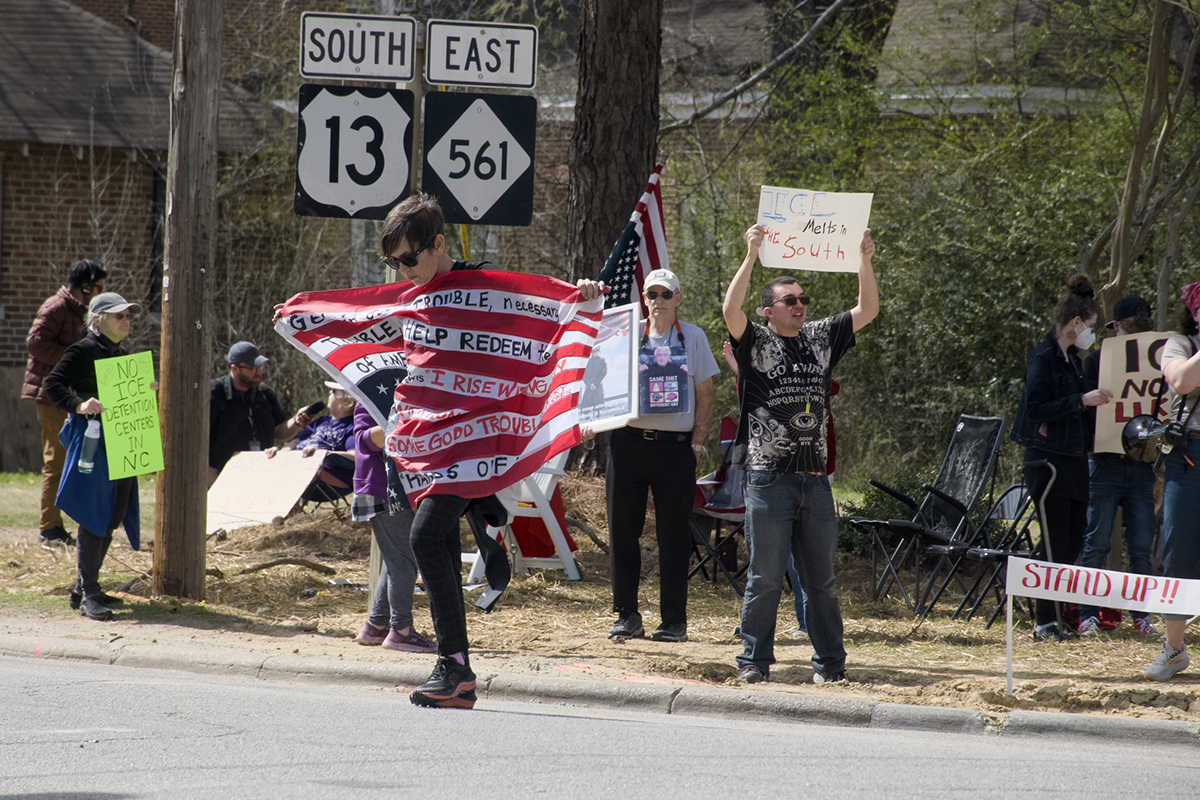
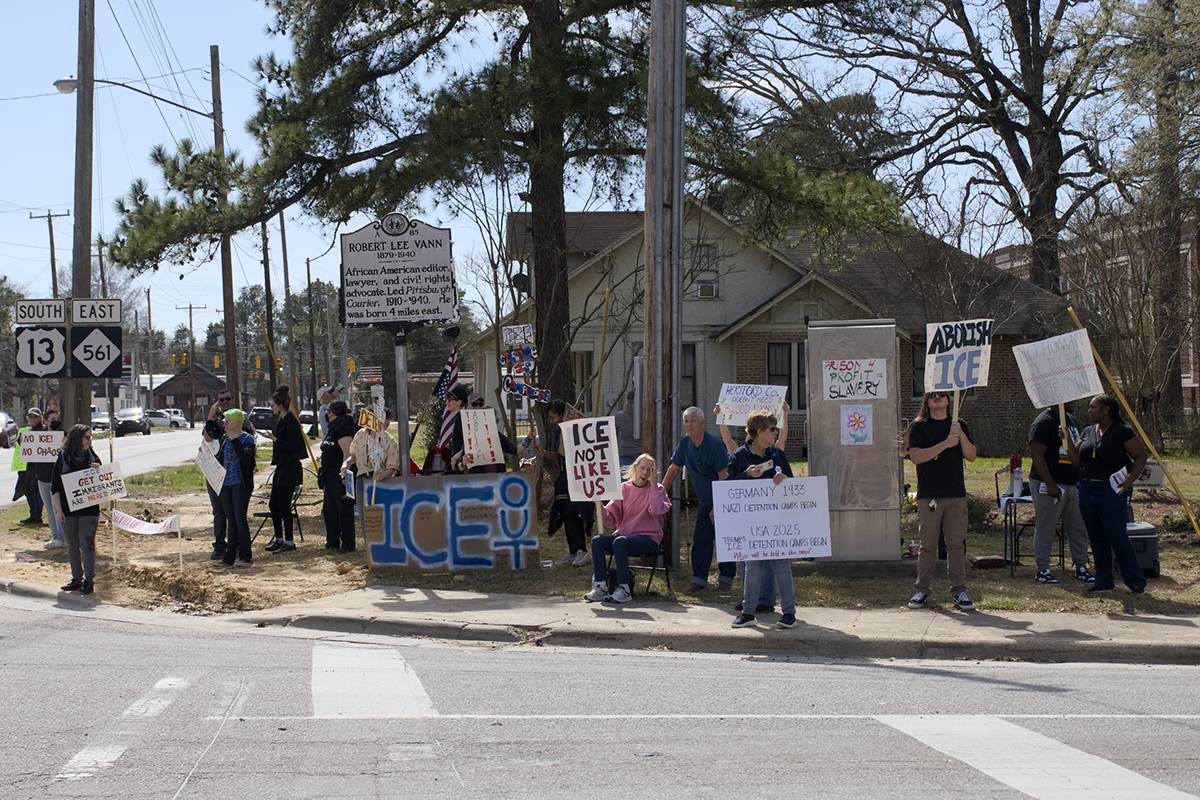
AHOSKIE — Between 35 and 40 protestors gathered on a downtown street corner Saturday to call attention to the proposed reopening of the Rivers Correctional Facility in Winton as a federal immigrant detention center.
While the number protesting was modest, they were buoyed by the overwhelmingly supportive response from passing drivers.
Supporter Spotlight

The 257-acre, 1,450-bed facility shuttered in 2021 is being considered as a facility to house people seized by Immigration and Customs Enforcement officers and suspected of not being in compliance with U.S. immigration law. The facility is owned by international private prison company GEO Group, “the largest detention services provider to ICE, with nearly 40 years of operational experience under ICE contracts,” according to the American Civil Liberties Union.
The ACLU on Jan. 29 released the information it had obtained via a Freedom of Information Act process, and within three weeks, during the Hertford County Board of Commissioners Feb. 16 meeting, at least 10 people spoke out against the prison plan.
One individual, while not expressing support, noted that the decision about the fate of the Riverside prison was in the federal government’s hands, leaving county officials little, if any, recourse.
County commissioners, as of this publication, had declined to take a position on the property. Soon after the Feb. 16 commissioners meeting, Coastal Review asked County Manager Bill Shanahan whether he had been contacted about reopening the facility.
“I can tell you that the county manager has not been contacted,” he said, indicating that he had no more to add.
Supporter Spotlight

In an email following Saturday’s protest, Shanahan said nothing had changed.
Caroline Stephenson, who helped organize the protest, told Coastal Review that while she opposed ICE moving in, she had also been thinking about the “implications for citizens and residents,” she said. “I think the implications are not great.”
She said the facility would overwhelm the sheriff’s office, emergency medical services and hospital. “We’re a really small, rural county in terms of the amount of capacity that we have,” she explained.
Hertford County had fewer than 22,000 people when the last census was taken, and the official estimate was fewer than 20,000 as of 2024. Its population is roughly 58.4% Black, 36% white, 6.7% Hispanic or Latino, 1.9% Native American and 1.2% Asian. Nearly 23% of residents live in poverty and the per capita income is less than $29,000.
Walking along the protest line, Bobby Riddick used his cellphone to record the protest, planning, he said, to use it on his Facebook page. As cars passed by honking in support, he talked about the challenges of organizing a protest in Hertford County.
“It’s a very small area. A lot of people here have been here all their life,” he said. “They’re not used to protesting. They’re not used to fighting for their rights.”
Stephenson agreed, telling Coastal Review, “A lot of people, I think, are unsure or afraid of using their First Amendment rights and any of their rights that are provided under the Constitution. I think it’s important to educate people about their rights, but also about the dangers of not speaking.”
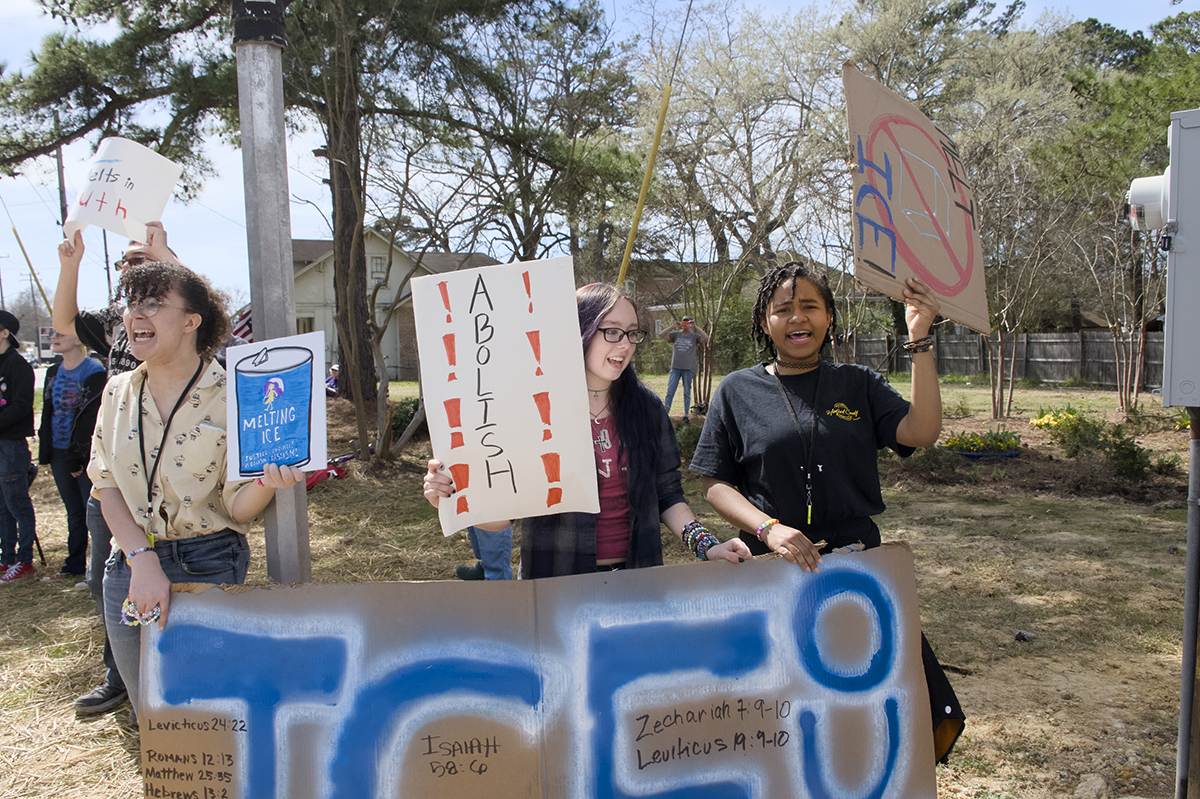
Standing with two friends behind a sign reading “ICE Out,” C.S. Brown High School senior Bird Lashbrook spoke clearly about her feelings.
“I have a voice that should be put to use, and I’m happy to give my support,” she said.
In 2021, President Biden, citing Justice Department reports that found private prisons were often less safe and had lower safety standards, as compared to publicly managed facilities, ordered the Justice Department to no longer renew contracts with private prison companies.