The North Carolina Maritime Museum in Beaufort welcomed visitors Saturday for the first time in over a year after closing to the public in late 2024 for a major overhaul of the heating and cooling system.
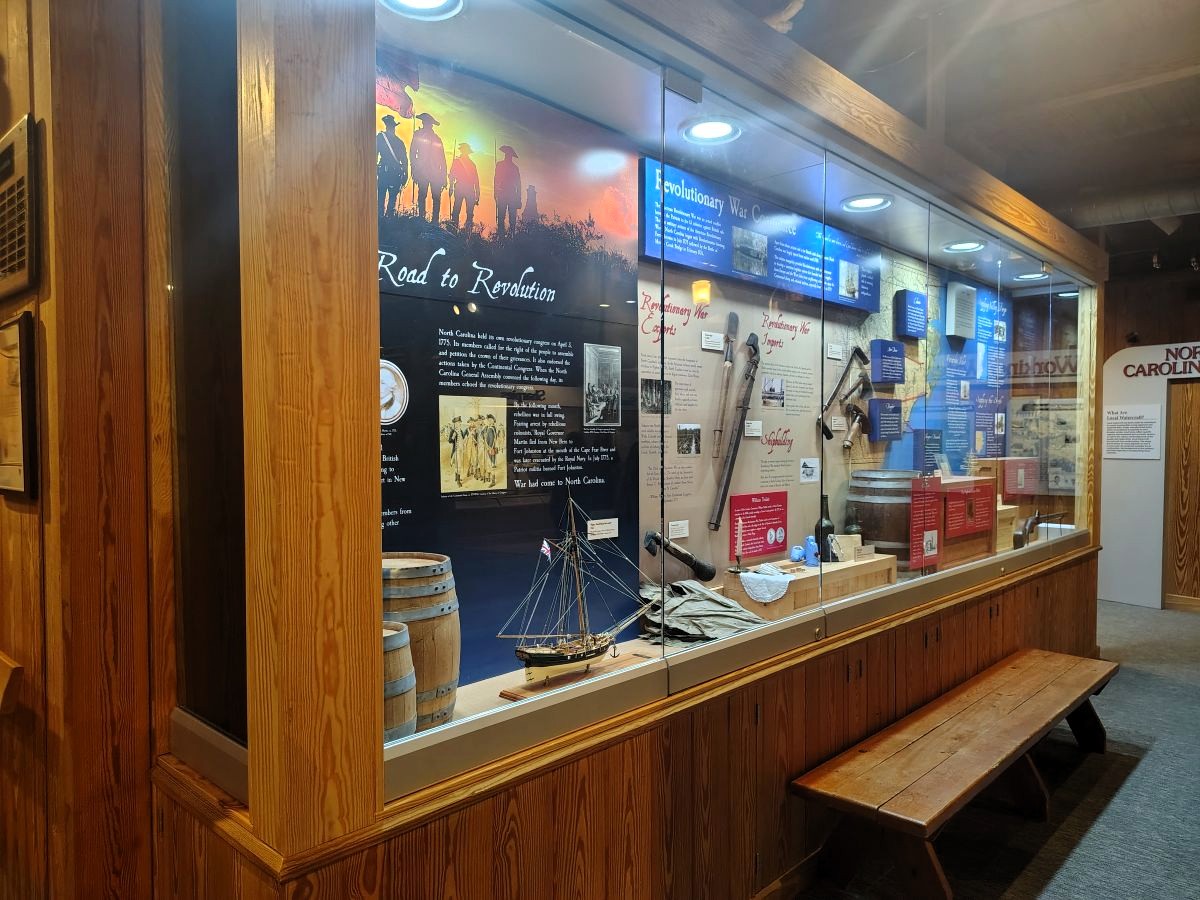
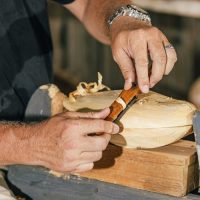
During the yearlong closure, staff worked to revamp existing displays and installed two new exhibits, Museum Site Manager Jamie McCargo explained during a ribbon-cutting last week.
Supporter Spotlight
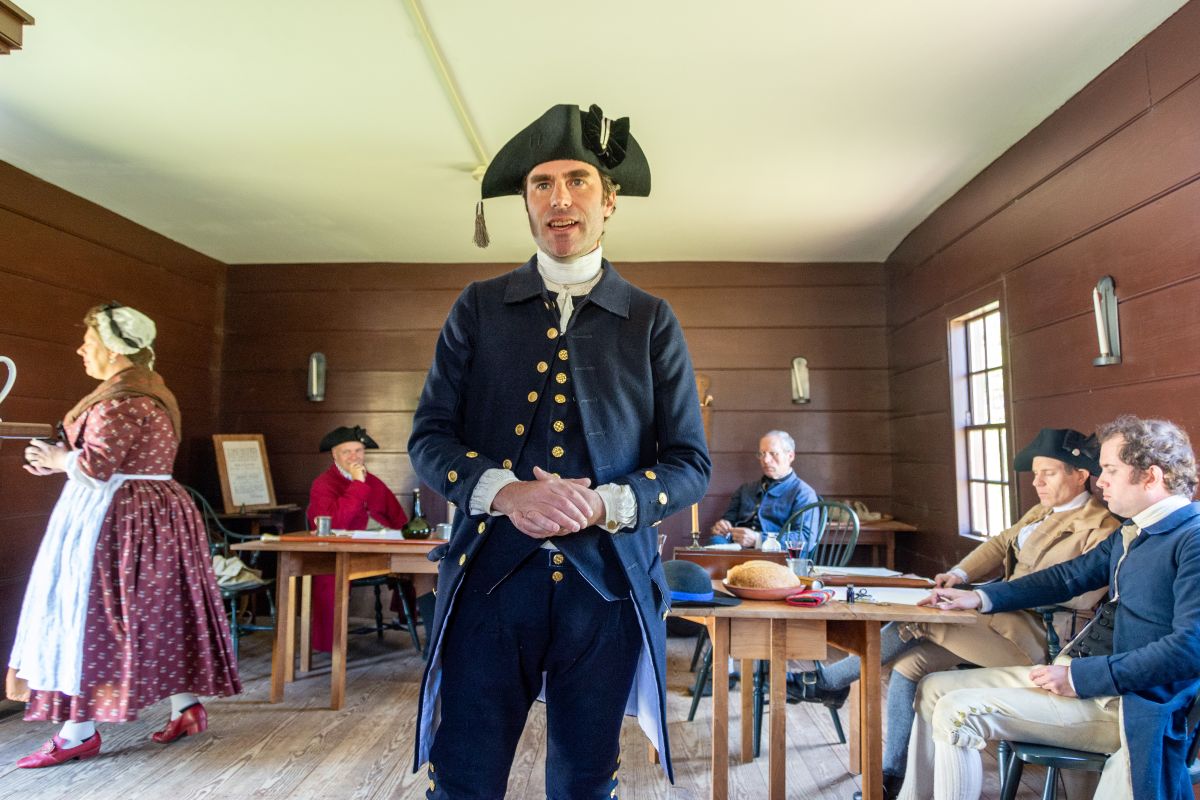
“We have two brand-new exhibits. We are very proud to say one is called ‘North Carolina’s Road to Revolution,’” McCargo said, which celebrates America’s 250th anniversary, and “is wonderfully aligned with our division-wide initiative to celebrate the anniversary.”
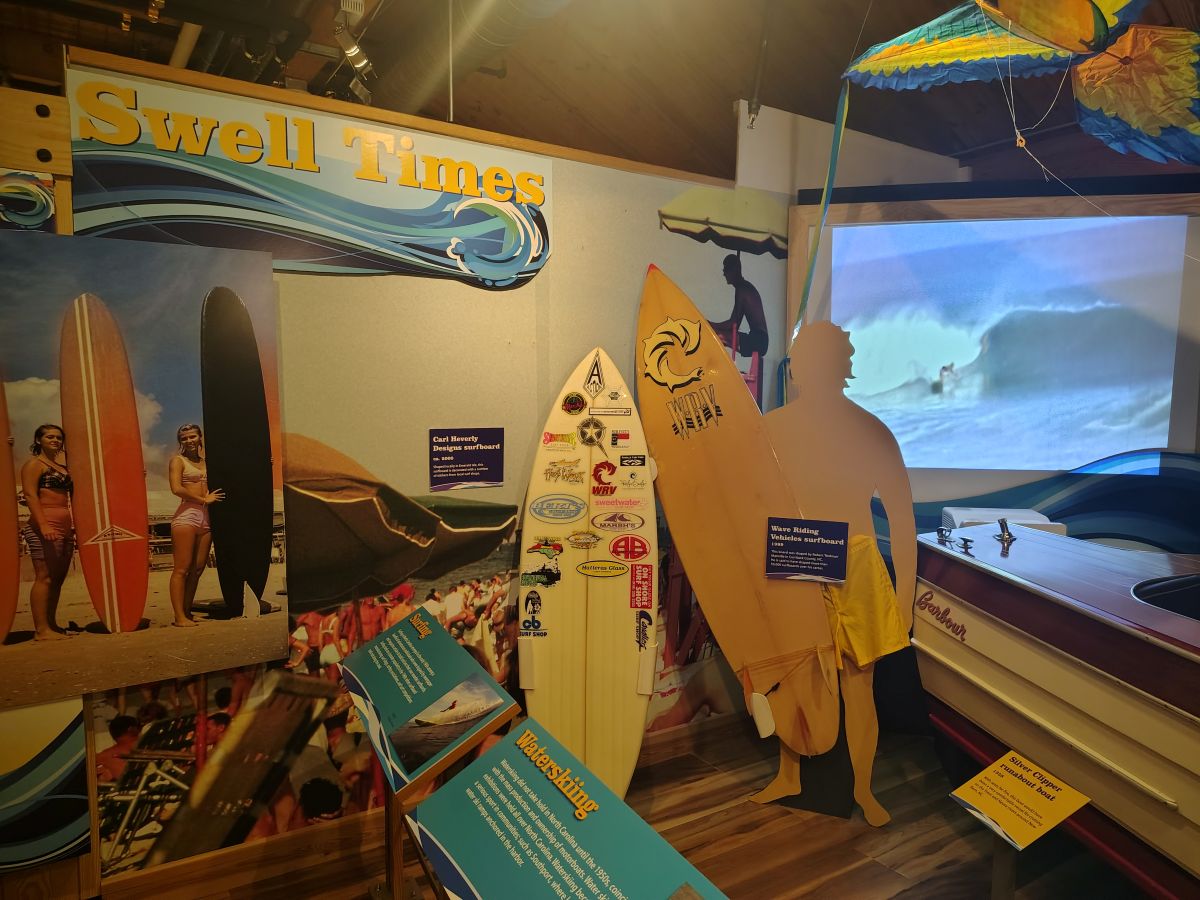
The other new exhibit is “Swell Times,” which highlights coastal recreation, such surfing, fishing and boating, she said.
The maritime museums are under the N.C. Department of Natural and Cultural Resources, which is leading America 250 NC, the state’s yearlong commemoration of the 250th anniversary of the signing of the Declaration of Independence. Programs, experiences, exhibits and more are scheduled throughout the year at sites across the state.
McCargo highlighted one panel from the “Road to Revolution” exhibit. During the winter of 1777-78, Gen. Washington’s army was camped Valley Forge, Pennsylvania, and desperately in need of supplies.
“They were cut off and just really were in dire need, and North Carolina rose to the occasion. North Carolina was able to provide food and clothing. They came from Ocracoke Inlet and traveled up our rivers and sounds and were able to deliver items to both South Key, Virginia, and on up to Valley Forge,” McCargo said.
Supporter Spotlight

McCargo added that the extensive upgrades inside the facility required moving all of the artifacts, around 10,000, to a controlled-climate room, while the rest of the facility’s HVAC was replaced.
During the site closure, staff continued to work by planning new and updating existing exhibits, including adding new artifacts to the Queen Anne’s Revenge exhibit. The museum is the official repository for the ship, which Blackbeard the Pirate was captaining when it ran aground in Beaufort Inlet 1718, and are expecting more from the Queen Anne’s Revenge conservation laboratory in Greenville.
McCargo also thanked the Friends of the N.C. Maritime Museum, for the $80,000 gift the nonprofit made toward the updates before welcoming the president of the group that supports the museum, Tom Kies.
“The museum is important on many different levels. First and foremost, it safeguards our history. The stories preserved within these walls of boatbuilders, sailors, fishermen, families and communities — and pirates — are not just relics of the past. They are living reminders of who we are and how this region was shaped by the sea. The educational programs offered here ensure that these stories are not last or lost, but passed on to a new generation who will carry them forward. But this Museum’s impact extends far beyond education and preservation,” Kies said.
He added that places like the Maritime Museum are where visitors can connect with the state’s maritime heritage, experience something authentic and meaningful, and understand why this part of North Carolina is so special.
“When they do, they don’t just visit the museum, they support local businesses, stay in our hotels, dine in our restaurants, and leave with a deeper appreciation of our community. In that way, the Maritime Museum is both a cultural anchor and an economic engine, strengthening the region in ways that are sometimes unseen but always felt,” Kies said.
Division of Cultural and Natural Resources Secretary Pamela Brewington Cashwell opened her remarks by telling the room that, for the past year, she had been asking when the facility would reopen.
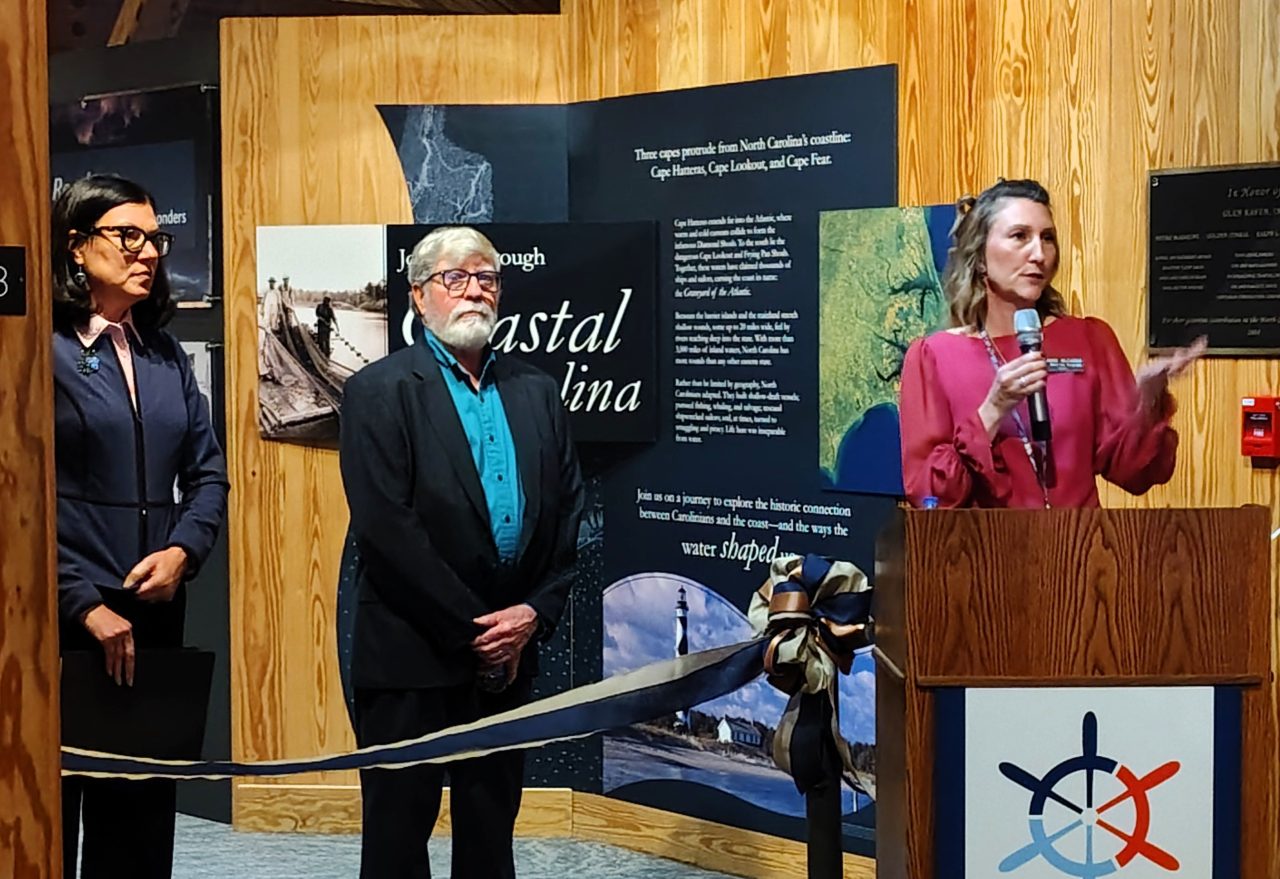
“How long does it take to put in a new HVAC system?” she said, with a hint of humor. “To which my staff says, ‘It’s not a window unit, secretary, it’s different,’” and the museum underwent a facelift, which she said many state sites need.
She thanked legislators for help with the $1.8 million project and the supporters, who are “critical to allowing us to do what we do across all of our over 100 sites in North Carolina.” The total includes other sites in the nearby area, like Fort Macon State Park and the N.C. Aquarium at Pine Knoll Shores.
The museum was initially scheduled to reopen Jan. 31 but the event was rescheduled for Feb. 21 because of inclement weather.
‘America 250 NC,’ ‘Swell Times’
The museum’s Information and Communications Specialist Cyndi Brown told Coastal Review that the “America 250 NC” exhibit is the first of three phases looking at North Carolina’s role in the American War for Independence.
“This first phase, which will remain on exhibit for about three years, looks at Revolutionary War commerce. The exhibit explores the state’s imports and exports, shares stories about some of its interesting figures and details the importance of the maritime routes in supplying war efforts to the north,” Brown said. “Phase 2 will focus on North Carolina’s privateers and the state’s navy. The final exhibit will look at the end of the war, focusing on coastal raids and the battle of Beaufort.”
Brown explained that creating these exhibits, as with all exhibits in the museum, starts with the history curator and collections staff.
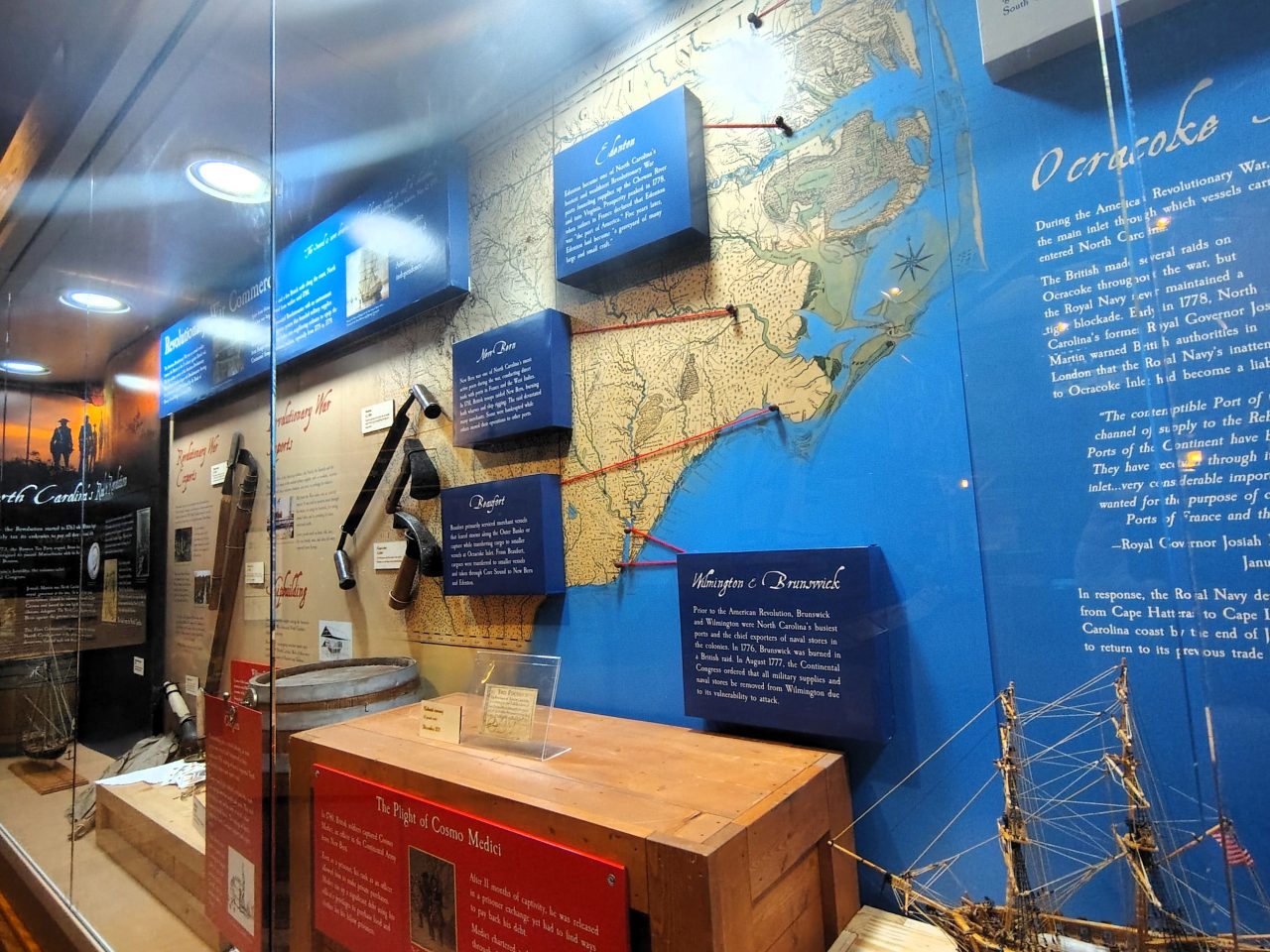
“The historian will come up with a potential theme or concept and research it to be sure there are enough primary sources accessible to tell the history. He’ll then work with collections to be sure we can support those histories with artifacts that are either already in our collection or available for purchase or via loan from another institution,” she continued.
The other new exhibit, “Swell Times,” explores the history of recreation along the coast, specifically on the water.
“There’s info on surfing and sailing, boating, spearfishing, hunting and more. There’s a fun interactive with various historic postcards, front and back, to show some personal perspectives of being on the coast,” Brown said.