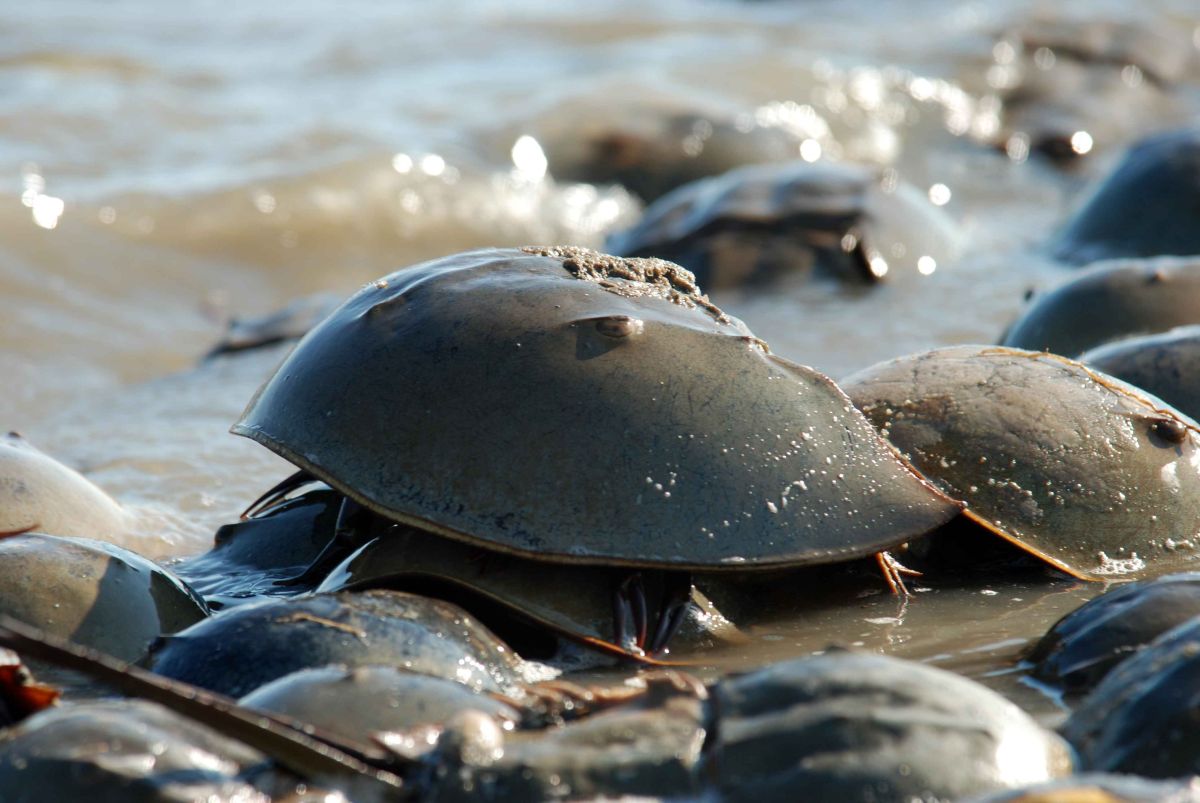
The Center for Biological Diversity filed a lawsuit Monday against the National Marine Fisheries Service for what it calls “failing to make a preliminary decision on whether to protect American horseshoe crabs under the Endangered Species Act.”
The nonprofit is among the more than two-dozen organizations that petitioned the federal agency in February 2024 to protect the ancient species found along the Atlantic and Gulf coasts. When a petition is filed, the service is required to publish within 90 days their initial findings if the species warrants protection. The petition was due May 2024.
Supporter Spotlight
Though the Endangered Species Act allows the service some leeway in publishing its initial finding “within 90-days of receipt of the petition ‘“’to the maximum extent practicable,’ but in no case longer than one year,” according to the lawsuit filed Monday.
Nearly twice as old as dinosaurs, horseshoe crabs date back to than 450 million years. The animal is a brown, body-armored arthropod with 10 eyes and a long, spiked tail. Each spring horseshoe crabs lay their eggs on beaches in massive spawning events.
In recent decades, according to the center, horseshoe crab populations have declined by more than 70% because of overharvesting and habitat loss.
“Biomedical companies drain the blood of horseshoe crabs for drug safety testing even though synthetic alternatives are available, approved and used widely in Europe and Asia. Biomedical harvests have doubled in the past seven years, with more than 1 million horseshoe crabs harvested in 2024,” the center explains in a press release.
Additionally, horseshoe crabs are harvested for use as bait by the commercial whelk and eel fisheries, fishing regulators have increased the amount of horseshoe crabs that can be harvested, and development and sea level rise are threatening horseshoe crabs and their spawning beaches across their entire range from Maine to Louisiana, the center said.
Supporter Spotlight

“Horseshoe crabs have saved so many people, and now it’s up to us to pay back that debt and save them,” said Will Harlan, a senior scientist at the center, said in a release. “We could lose these living fossils forever if they don’t get Endangered Species Act protections soon. It’s reckless to delay their obvious need for protection, so we’re going to court to force the government to do its job.”
As horseshoe crab numbers have declined, so have other species like endangered sea turtles, fish and birds. The rufa red knot, a shorebird species that feeds on horseshoe crab eggs during its 19,000-mile migration from South America to the Arctic, was listed as threatened under the Endangered Species Act in 2015. The listing decision cited horseshoe crab overharvesting as one of the contributing factors to the red knot’s decline, per the center.