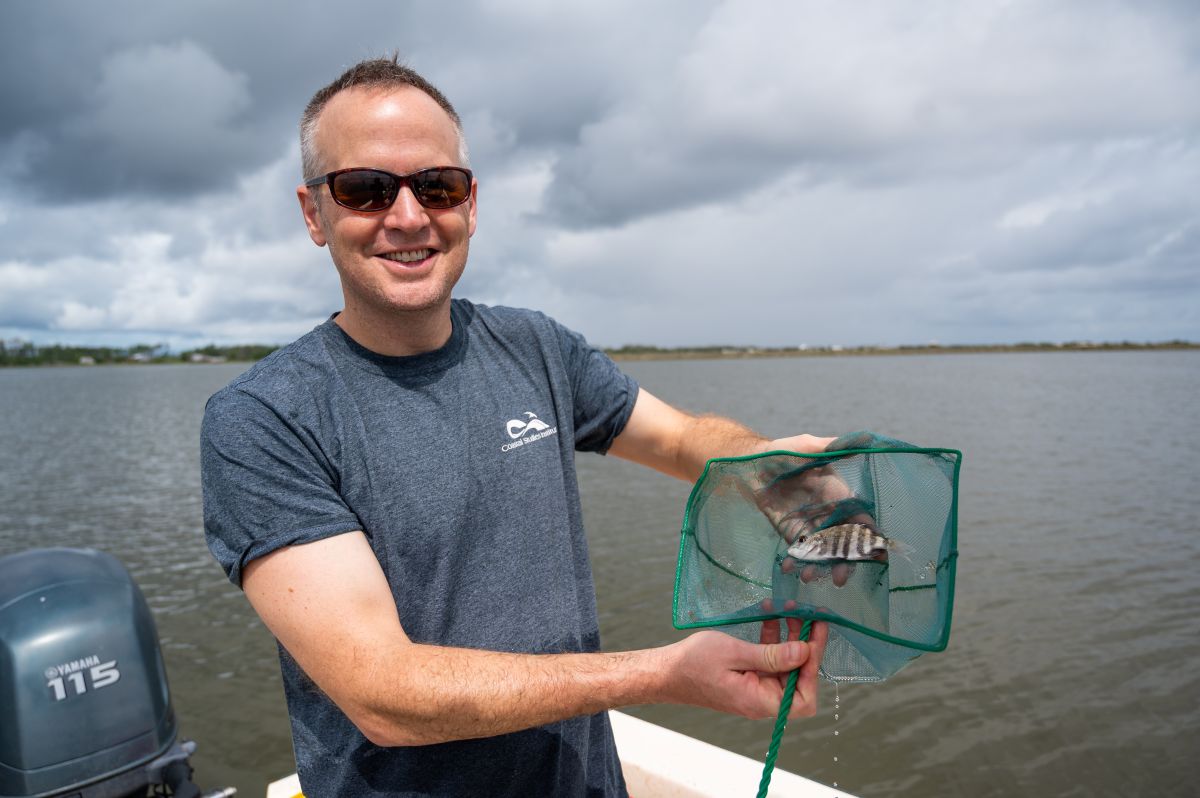
Why do sheepshead have a mouthful of human-like teeth? Fisheries ecologist Dr. Jim Morley will explain that and more during this month’s “Science on the Sound” Lecture Series.
Morley, an assistant professor in the biology department at East Carolina University, will present, “Investigating the Life History of Sheepshead, North Carolina’s Toothiest Fish,” starting at 6 p.m. Thursday, Jan. 15, at the Coastal Studies Institute on the ECU Outer Banks Campus in Wanchese.
Supporter Spotlight

The public is encouraged to attend the program being offered at no charge. The talk will be livestreamed on the CSI YouTube Channel and archived for later viewing.
Though sheepshead are a popular species among anglers throughout the state, their life history is one of the most poorly understood, according to the university. “Recently, researchers have uncovered important aspects of sheepshead biology relating to reproduction, movement patterns, and habitat use. However, as with all good science, new questions emerge.”
Morley has been investigating the life history of marine and estuarine species in North Carolina for more than 20 years. He is interested in how human-caused disturbances and climate change interact with the life cycles of aquatic species.
Science on the Sound is a monthly, in-person lecture series with the Coastal Studies Institute that brings perspectives from all over the state and highlights coastal topics in northeastern North Carolina.