Guest Commentary
To stimulate discussion and debate, Coastal Review welcomes differing viewpoints on topical coastal issues.
The news that the entire Atlantic Coast, including North Carolina waters, has been excluded from the latest offshore drilling Draft Proposed Program is a welcome moment of relief for coastal communities. This exclusion is a direct result of decades of tireless, bipartisan opposition from citizens, businesses, and elected officials who have sent a message to Washington, D.C.: Our coast is not a chip at the poker table.
Supporter Spotlight

But let’s be crystal clear: This is a temporary reprieve, not a permanent victory. Without permanent federal protection, the oil industry will be back in five years, threatening to gamble with our livelihood all over again.
The High-Stakes Bet: Tourism vs. Oil
Our state’s economy is not hypothetical; it’s a proven powerhouse built on clean sand and clear water. In 2024, North Carolina welcomed over 40 million visitors who poured a record-breaking $36.7 billion into our economy. According to Visit NC, a stunning 90% of coastal region overnight visitors came for leisure.
Our identity is our asset: towns like Kure Beach thrive because of our clear coastline and the East Coast’s oldest fishing pier — not the promise of an oil rig. Our economy is built on soft sand. It’s our livelihood. Why would we risk a proven, multi-billion-dollar industry for the volatile, dirty promise of oil?
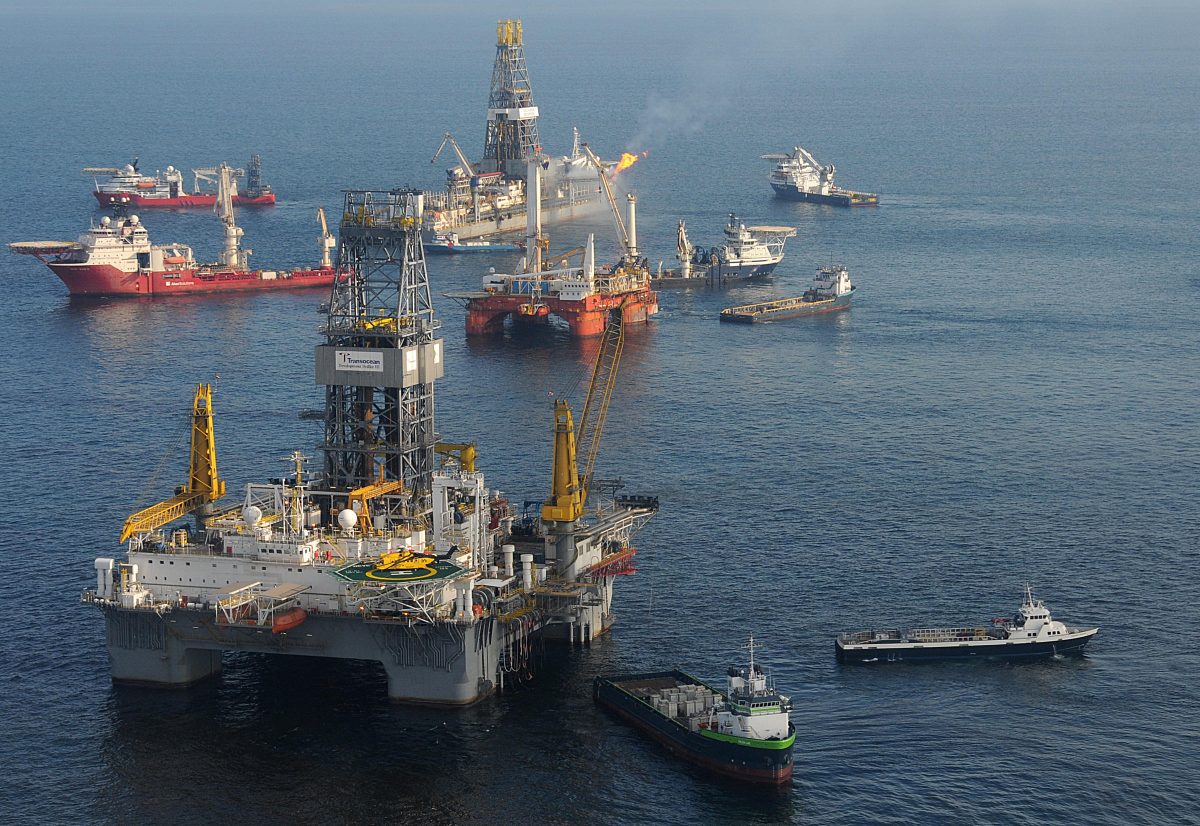
The danger of offshore drilling is not an abstract fear—it’s a guaranteed threat to our future. To argue that a disaster like the 2010 Deepwater Horizon explosion could not happen here is to ignore reality: the U.S. saw nearly 6,000 spills between 2010-2020. Our waters are ruled by powerful, north-flowing Gulf Stream and lie directly in the path of severe hurricanes and tropical storms. A spill would not be contained; it would rapidly devastate beaches, estuaries, and wetlands along the entire North Carolina coastline.
Even without a spill, industrial infrastructure and ugly rigs drive away tourists. Studies of the Gulf Coast have shown that counties with drilling infrastructure suffer a significant reduction in tourism revenue compared to non-drilling coastal areas. The promise of oil riches is a hollow one when the immediate cost is the destruction of our established, high-value tourism market.
Supporter Spotlight

United Opposition
Let’s be clear: this isn’t a political debate; it’s an enduring, bipartisan call for common economic sense. Earlier this year, both North Carolina Gov. Josh Stein, a Democrat, and South Carolina Gov. Henry McMaster, a Republican, issued a joint letter opposing the expansion of offshore oil and gas leasing, proving this threat unites governors across state and party lines.
This mandate flows directly from the coast itself. Kure Beach became ground zero of the opposition movement in 2014, and we have passed two resolutions opposing offshore drilling, the most recent of which passed in June 2025. We have since been joined by a chorus of over 40 North Carolina governments, all of whom have passed similar resolutions over the years.
Crucially, the business leaders who power our coastal economy — like NC Catch, the Outer Banks Association of REALTORS, and the Carteret County Chamber of Commerce — all understand a simple truth: clean beaches are their primary asset, and drilling is the greatest threat to their bottom line.
The Path Forward: Codify Protection
The people of the North Carolina coast have bought us time. We cannot afford to be complacent. The exclusion from this proposed program is merely a pause button, not a definitive “game over” for the oil industry.
I urge every reader: Contact your federal representatives. Demand that they move beyond the Draft Proposed Program and actively work to pass the COAST Anti-Drilling Act (S.1486, H.R.2881), that permanently withdraws the Atlantic from all future offshore oil and gas leasing.
Do not let Washington, D.C., gamble away North Carolina’s future again in the next five-year cycle.
We won the battle, but the war for our beaches rages on.
Opinions expressed by the authors are not necessarily those of Coastal Review or our publisher, the North Carolina Coastal Federation.