Before accepting the Trump administration’s $1 billion taxpayer buyout, TotalEnergies fostered a campaign that its wind energy project off the coast of Brunswick County would eventually generate enough electricity to power 300,000 homes in the Carolinas.
“Our team is passionate about creating a clean energy economy and the new opportunities it brings to our local communities,” reads an excerpt from TotalEnergies Carolina Long Bay website. “Our partnerships in the Carolinas are making renewable energy a regional priority, building a stronger future for us all.”
Supporter Spotlight

TotalEnergies Carolina Long Bay, a wholly owned subsidiary of the France-based global energy company, “will harness the power of offshore wind to generate abundant energy and significant economic growth for the communities of the Southeast.”
The Interior Department’s announcement Monday that TotalEnergies had accepted a federal buyout of its wind energy leases off the New York and North Carolina coasts is a sharp pivot from the company’s previous narrative on offshore wind in the United States.
TotalEnergies’ chief executive officer and chair of the company’s board of directors said in a Department of Interior release that the decision to relinquish offshore wind development in the United States was made because such projects are “not in the country’s interest.”
Instead, TotalEnergies will invest the refunded money in a liquefied natural gas export terminal in Texas and other fossil fuel projects.
The Trump administration lauded it as an “innovative agreement,” one that is a major win for President Donald Trump, who has made offshore wind the biggest bullseye in his target to dismantle renewable energy projects and replace them with fossil fuel and nuclear power.
Supporter Spotlight

“Offshore wind is one of the most expensive, unreliable, environmentally disruptive, and subsidy-dependent schemes ever forced on American ratepayers and taxpayers,” Interior Secretary Doug Burgum said in a release. “We welcome TotalEnergies’ commitment to developing projects that produce dependable, affordable power to lower Americans’ monthly bills while providing secure U.S. baseload power today – and in the future.”
Shortly after taking office in January 2025, Trump issued an executive order barring new offshore wind leases and requiring reviews of existing and permitted wind projects.
Last December, the Trump administration, citing risks to national security, ordered work to stop in five offshore wind energy areas on the East Coast, including Dominion Energy’s 2.6-gigawatt project based in Hampton Roads, Virginia.
Courts have since allowed all five of the projects to operate for the time being until final judgments are rendered in those cases.
Monday’s announcement drew immediate rebuke from opponents who argue the deal sets a dangerous precedent and limits alternative energy production as Americans face rising electricity bills and concerns mount about the amount of power artificial intelligence data centers use.
“Donald Trump truly can’t leave a good thing alone,” BlueGreen Alliance Vice President of Federal Affairs Katie Harris said in a release. “His never-ending vendetta against offshore wind shows that he either doesn’t understand the affordable energy crisis or that he just doesn’t care. Either way, it’s clear he’s never paid his own electricity bill, and he’s determined to raise bills for working people.”
Southeastern Wind Coalition Senior Program Manager Karly Brownfield said that the agreement “feels really counterproductive” at a time when people are closely watching their energy costs at home and at the pump.
“The whole thing is unprecedented and it’s also completely unprecedented to take a lease payment and then refund it in exchange for investment in the natural gas industry. That has never happened before,” she said in a telephone interview earlier this week. “Whether you’re investing in offshore wind or you’re investing in solar or whatever it might be, it’s not a great feeling to know that just because you have a project that’s permitted or a project that’s received all the stamps of approval that it still runs the risk of the plug being pulled halfway down the line. Certainty is what drives business and the more uncertain we make our energy market the more complicated this is all going to become in the long term.”
North Carolina is investing in natural gas, but the gas turbine industry is facing years-out backlogs on turbine orders. Nuclear power, from permitting to production, can take upwards of 15 years to build.
“And the leg up we had with offshore wind was that these projects were leased. Permitting had started. The sites were secured. There was some sort of headway that was made on those projects,” Brownfield said.
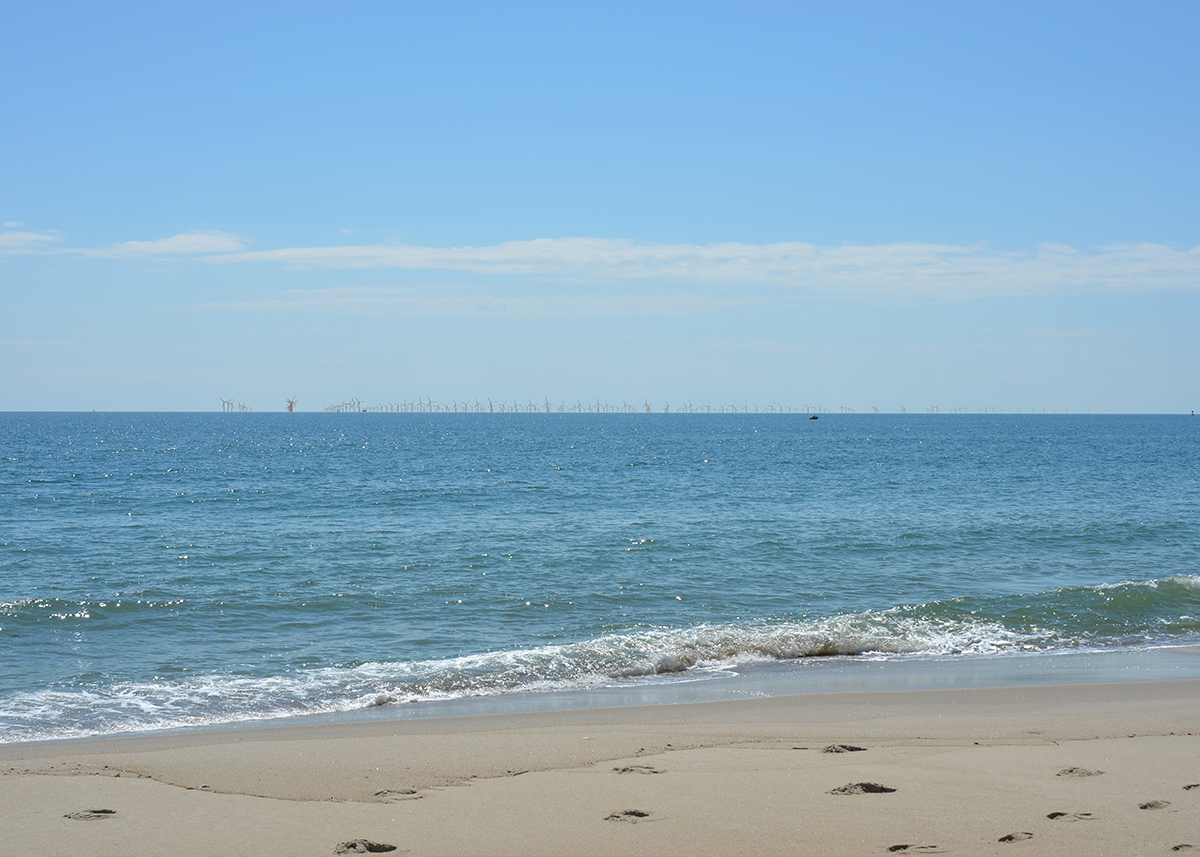
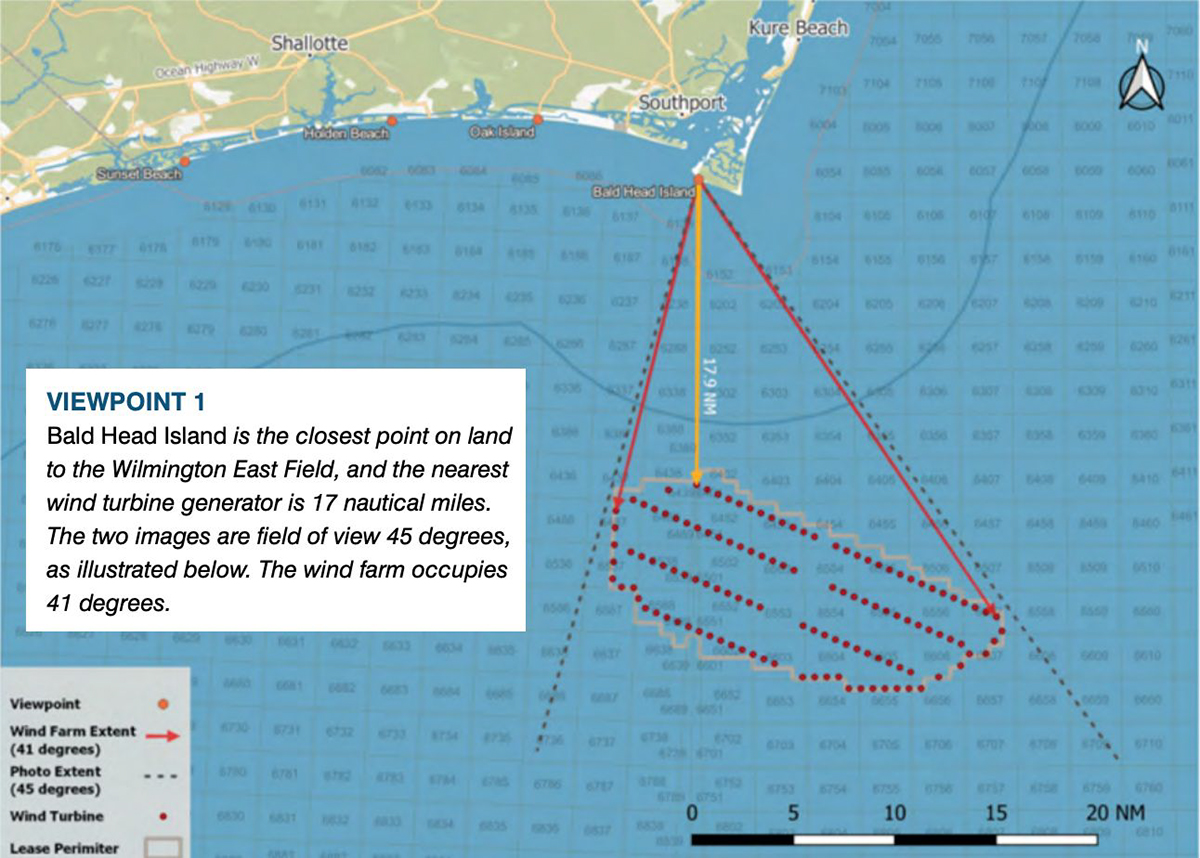
The Carolina Long Bay wind energy area spans a little more than 110,000 acres roughly 22 miles offshore, south of Bald Head Island.
The area is split into two leases.
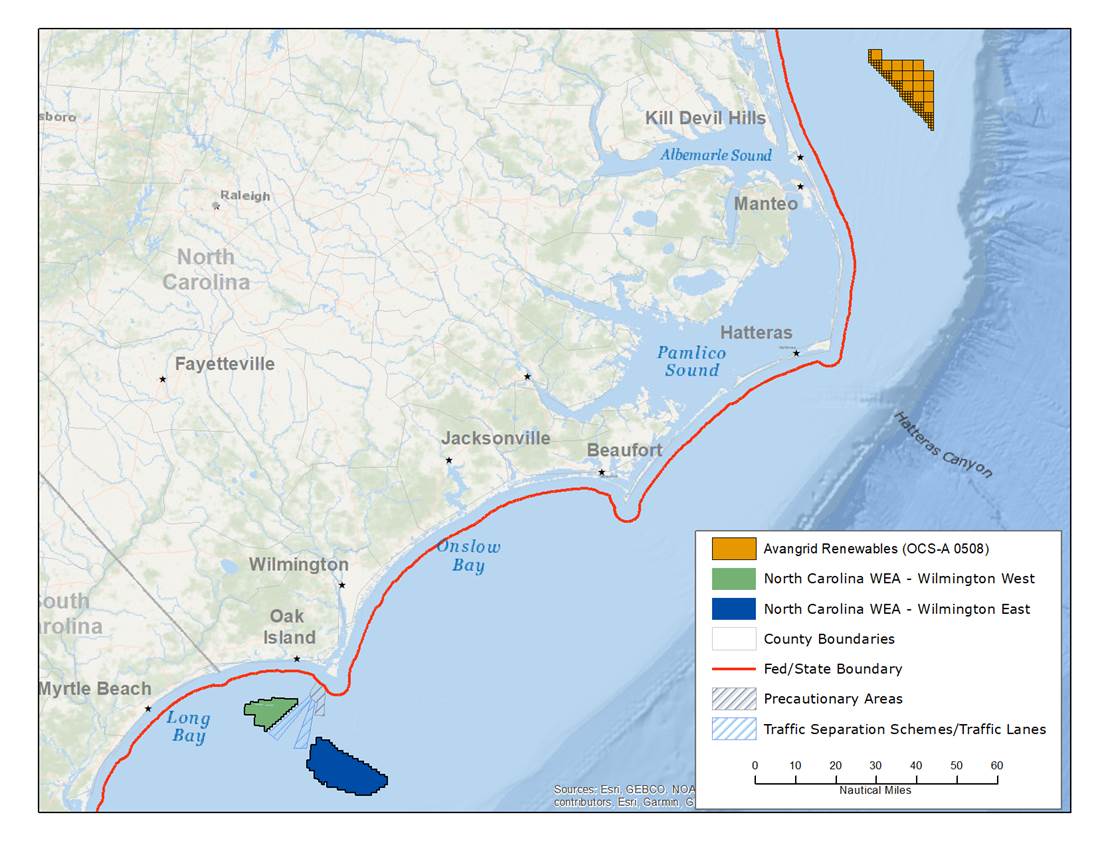
In May 2022, Duke Energy paid $155 million for what equates to a little more than half of the total wind energy area.
In June of that same year, TotalEnergies Renewable USA paid more than $133 million for the adjacent lease.
Projects in the Carolina Long Bay area were anticipated to generate up to 3 gigawatts of electricity, enough to power about 675,000 homes, and estimated to provide more than $4 billion in net economic impacts.
According to information on its website, Duke Energy was collaborating with TotalEnergies on “early development activities.”
When asked for comment, Duke Energy spokesperson Bill Norton responded to Coastal Review by email, writing in part, “Large offshore wind projects involve substantial capital investments and extensive development timelines. It’s reasonable that policy makers question cost-exposure of such projects to customers. We continue to evaluate next steps as it relates to the Carolina Long Bay lease, which is currently maintained by Duke Energy’s nonregulated subsidiary, Cinergy.”
Duke Energy prioritizes energy sources “proven to be the most cost-effective while meeting the growing needs of our customers,” he wrote. “A diversified energy mix is essential to meeting the moment of high demand under all conditions.”
Offshore wind, Brownfield said, offers just that.
“What offshore wind is really, really good at is providing that really stable and predictable energy during extreme weather, and especially at nighttime, when solar is not really working, or when either gas is really constrained or you’re looking at scarcity pricing,” she said. “And, with wind being a free resource, yes, it’s an upfront investment, but it’s a very predictable cost of the project.”
There are still active leases for a wind project off Kitty Hawk that’s owned by Avangrid Renewables and Dominion Energy.
“As far as I know, Avangrid is still very much firm on engaging in North Carolina and they’re still looking at a longer-term future for their lease,” Brownfield said.
As she sees it, the Interior Department’s agreement with TotalEnergies is perhaps less of a setback to offshore wind energy production in the U.S. but rather increases the need for other energy resources.
“Not saying that we don’t need natural gas. SEWC is a very technology-neutral organization,” Brownfield said. “We don’t want to shoot down other resources by any means. But your grid is a lot more balanced when you’ve got a little bit of everything on it. And, right now, we’re on track for our grid to be about 50% gas by 2034, and that’s a lot of gas.”