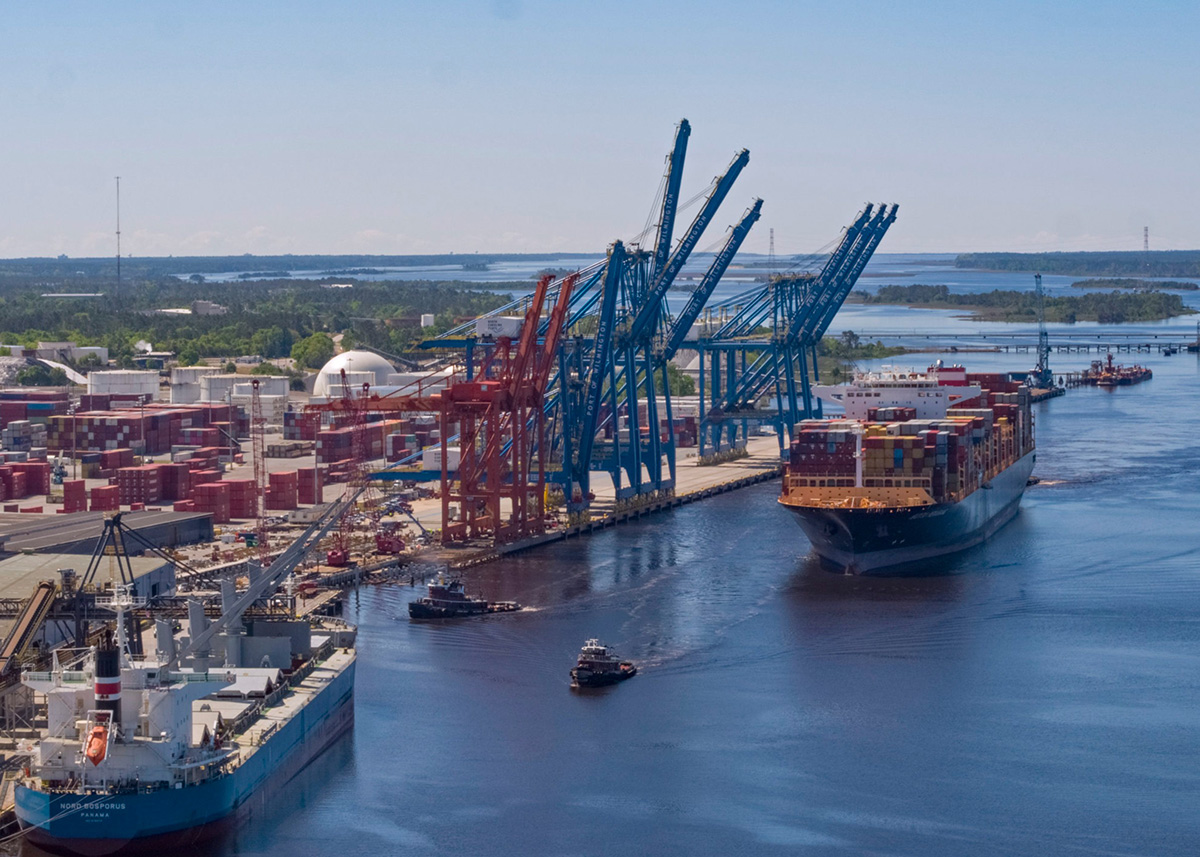
The North Carolina Division of Coastal Management has objected to the proposed Wilmington Harbor project, concluding that a federal study of the plan is too scant on details and that, as presented, deepening and widening the channel would have “significant adverse impacts to coastal resources.”
The Army Corps of Engineers’ review lacks an evaluation of PFAS in the sediment in the lower Cape Fear River, fails to adequately assess cumulative flooding impacts or thoroughly detail areas where dredged material would be placed, and does not sufficiently account for potential effects on fisheries habitat, freshwater wetlands, shorelines, or state, historic and other properties along the river, the division concluded.
Supporter Spotlight

The draft environmental impact statement, or DEIS, the Corps released last September also falls short in analyzing the project’s economic benefits and evaluating “potential economic losses associated with environmental degradation,” Division of Coastal Management Director Tancred Miller wrote to the Corps’ Wilmington District in a 15-page letter dated Feb. 24.
A Corps spokesman, in a statement Wednesday, called the state’s objection “disappointing” and highlighted what the Corps describes as offering “numerous opportunities” to engage with the public and work with state and federal agencies.
The Corps “felt we had been working hand in hand with all our State and Federal partners and resource agencies since we began coordination regarding this project nearly 3.5 years ago,” Jed Cayton, a public affairs specialist with Wilmington District, said in an email. “Given all the integration and engagement throughout this process, the objection provided at this late stage in the process is disconcerting.”
The Corps and North Carolina State Ports Authority are reviewing the division’s letter “to determine how we will proceed,” Cayton said. “Since we are very early in this review, we cannot yet give a specific date for completion.”
The Corps may pause the project and work with the state to try and resolve the state’s concerns or initiate a formal dispute resolution process.
Supporter Spotlight

The division’s objection comes a little more than a month after the division granted the Corps’ request to pause its review of whether the proposed project was consistent with state coastal management program laws, regulations and policies.
Miller wrote that, during that pause, the division “detailed its concerns along with possible paths forward to address the information deficiencies.”
On Feb. 16, the Corps asked the division in an email to resume its review of the project, one that has been highly scrutinized for its potential effects to the environment, shorelines and historic and culturally significant areas along the shores of the lower Cape Fear River.
“Our objection was based on a combination of lack of sufficient information to determine the impacts from PFAS and flooding and anticipated significant adverse impacts to fisheries resources, wildlife habitat and cultural and historic resources,” Miller told the Coastal Resources Commission during its meeting Wednesday in Atlantic Beach.
In his letter, Miller wrote that the lack of information regarding per- and polyfluoroalkyl substances was “of particular concern.”
“The DEIS does not evaluate the potential for contaminant resuspension during dredging and the resulting fate and transport of these chemicals into nearby water bodies and land areas,” the letter states. “This is of particular concern since extensive scientific research has documented the presence and persistence of PFAS over the past decade within the [Cape Fear River Basin], including a growing body of research indicating significant negative ecological implications of PFAS in fish, birds, and reptiles.”
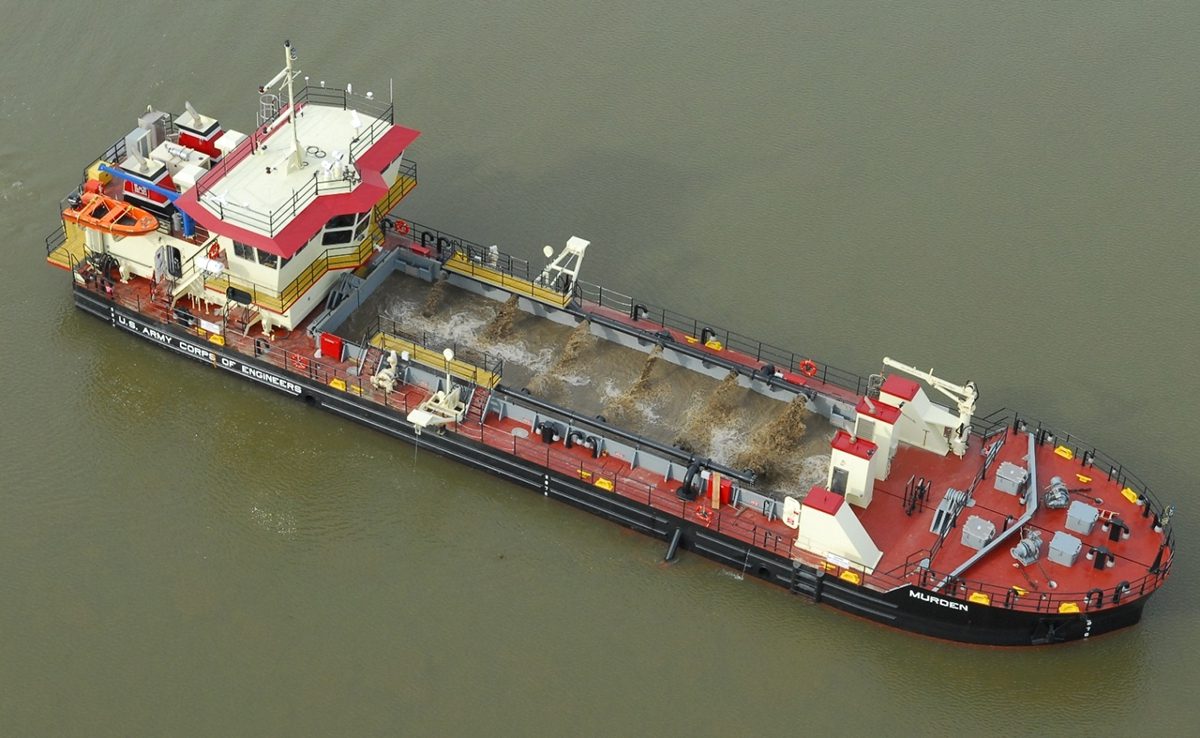
The proposal calls for extending the entrance of the federal navigation channel farther offshore, deepening the channel by 5 feet and widening portions of it from the mouth of the Cape Fear River more than 25 miles to the Wilmington port.
The ports authority says the project is needed to accommodate larger ships, which will attract more import and export business to the port, ease shipping congestion on the East Coast and keep the state’s ports competitive.
But opponents of the proposed project argue it will accelerate erosion and exacerbate flooding, destroy habitat, disperse PFAS in the riverbed’s sediment into marshes and onto public beaches, is not economically justified, and threatens historic and cultural resources along the river.
One such historic site is Orton, a privately owned property that spans some 14,000 acres off the lower Cape Fear River’s western bank in Brunswick County and that includes a former plantation.
Orton owner Louis Bacon has spent millions restoring an expansive rice field system and earthen dike that enslaved Africans built more than two centuries ago to protect the rice fields from the river.
In a statement to Coastal Review on Wednesday, Bacon said the Division of Coastal Management’s objection to the proposed harbor project, “is proof that facts and persistence matter.”
“My concern has always been simple: this project, as proposed, puts undue and unacceptable risk on important historical and ecological sites,” Bacon stated. “The corps has not provided the analysis or safeguards the law requires. At Orton, dredging so close to a 250-year-old earthen dike creates a very real risk of catastrophic failure according to two separate expert firms – collapsing and flooding 350 acres of freshwater rice fields and exceptional wetlands with Atlantic saltwater, thereby eradicating the legacy of enslaved African Americans who built these systems over centuries, a monument to their efforts that I have spent years restoring.
“My objection is rooted in the fact that the project cannot be considered ‘consistent’ with North Carolina’s coastal protections if it causes this much damage,” he continued. “Large infrastructure decisions must be grounded in rigorous scientific evaluations, transparent disclosure, and enforceable protections, because these valuable resources cannot be rebuilt once lost.”
Several towns in Brunswick and New Hanover counties have adopted resolutions urging state and federal agencies to protect a series of islands within the lower Cape Fear River that support 30% of the state’s coastal shorebird population. Those towns have also asked for the creation of a comprehensive, long-term, and fully funded environmental and adaptive management plan to cover costs related to monitoring and mitigation to prevent and repair environmental harm.
Last month, the Wilmington City Council unanimously adopted a resolution calling for state and federal decision makers to further review the proposed project.
In his letter, Miller noted that an overwhelming majority of the written comments the division received last year regarding the proposed project opposed it. And everyone who spoke at a public hearing the division hosted in downtown Wilmington last November opposed the project.
Kerri Allen, coastal management program director of the North Carolina Coastal Federation, which publishes Coastal Review, was one of the 72 people who expressed their concerns about the proposed project at that meeting.
“I’m encouraged to see DCM thoughtfully consider the many strong public comments submitted on this project,” Allen said in an email on Wednesday. “The level of engagement from coastal residents, local leaders, and partners shows how much people care, and it matters when that input is reflected in decisions. Our public trust waters belong to everyone, and transparent review like this helps lead to better, more resilient outcomes for our coast.”
Southern Environmental Law Center Senior Attorney Ramona McGee echoed similar sentiments in a release Wednesday.
“This decision is welcome news for the people of Wilmington and beyond who cherish the lower Cape Fear River and its surrounding natural areas,” McGee stated. “This $1.3 billion project would put at risk the communities and wildlife that call this region home by exacerbating flooding, destroying habitat, and damaging wetlands. The Lower Cape Fear is already threatened by sea-level rise and industrial pollution – we shouldn’t be further damaging this special place with an unnecessary and costly project.”