Reprinted from the Outer Banks Voice
On Tuesday, Feb. 17, the North Carolina Supreme Court heard arguments in the long-running legal battle between Currituck County and the Corolla Civic Association (CCA) over how the county spends occupancy tax money.
Supporter Spotlight

The CCA plaintiffs contend that the county has improperly used those funds to pay for police, fire protection, emergency services and equipment for public safety rather than earmarking them for tourism-related expenses. The Currituck County Commissioners, citing the extra needs placed on public safety in the summer tourist season in Corolla, have contended that state law allows public safety spending with those funds.
The state legislature passes a law for any county that wishes to charge an occupancy tax, with a provision outlining how the tax can be used. The Currituck County occupancy tax law was first passed in 1987 and amended in 2004. The Outer Banks Voice – NC Supreme Court to hear Currituck County occupancy tax case
In March 2024, the NC Court of Appeals Court ruled in favor of the CCA and members of the organization. Currituck County then appealed that ruling to the State Supreme Court. During the Feb. 17 arguments, it seemed clear that key elements of the case are whether public safety expenses are related to tourism and how much discretion the commissioners have in allocating occupancy tax dollars.
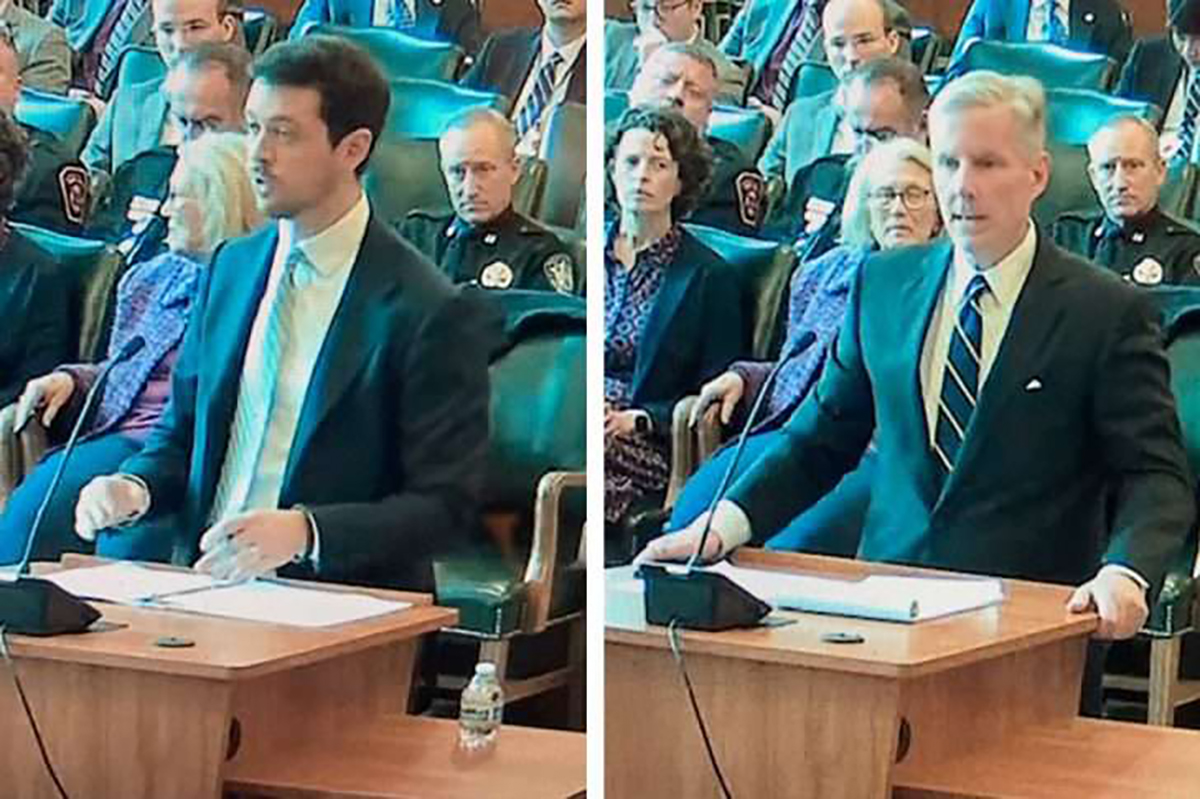
In speaking first for the defendants, attorney Chris Geis of the Womble Bond Dickinson firm argued that under the statute, the “[Currituck] Commissioners were given the broad authority to use their judgment to determine what is a tourism-related expenditure” that brings tourism to the county.
As an example, Geis cited occupancy tax spending on the county’s Veterans’ Memorial Park, which he said a “leaves people with a good feeling about [this] place. That is a tourism related expenditure.” He noted that the plaintiffs opposed spending occupancy tax dollars on the Park.
Supporter Spotlight

“We have reasonable disagreement here, we understand that,” Geis said, in addressing the Supreme Court Justices. “But this is not an area where the county has stepped outside that line” of violating state law.
Making the case for the plaintiffs, attorney Troy Shelton of the Dowling PLLC firm, stated that “the Court of Appeals saw exactly what happened for what it was,” in ruling for the plaintiffs. “The County’s been breaking the law, and it has to stop.”
In response to one Justice’s question, Shelton said that “I don’t think that paying for police or firefighters attracts tourists.”
“There is nothing stopping the County from going back to the [North Carolina] legislature and trying a new round of lobbying” to change the statute. “That’s what they need to be doing instead of fighting this case,” he stated.
Asked by Chief Justice Paul Newby what remedies the plaintiffs are seeking if they prevail, Shelton indicated that among things, they want the restoration of the occupancy tax funds they say were improperly spent.
You can see the Supreme Court arguments here. Supreme Court of North Carolina: 101PA24 Costanzo, et al. v Currituck County, et al.
This story first appeared in the Outer Banks Voice, Coastal Review Online partners with the Voice to provide readers with more environmental and lifestyle stories of interest about our coast.