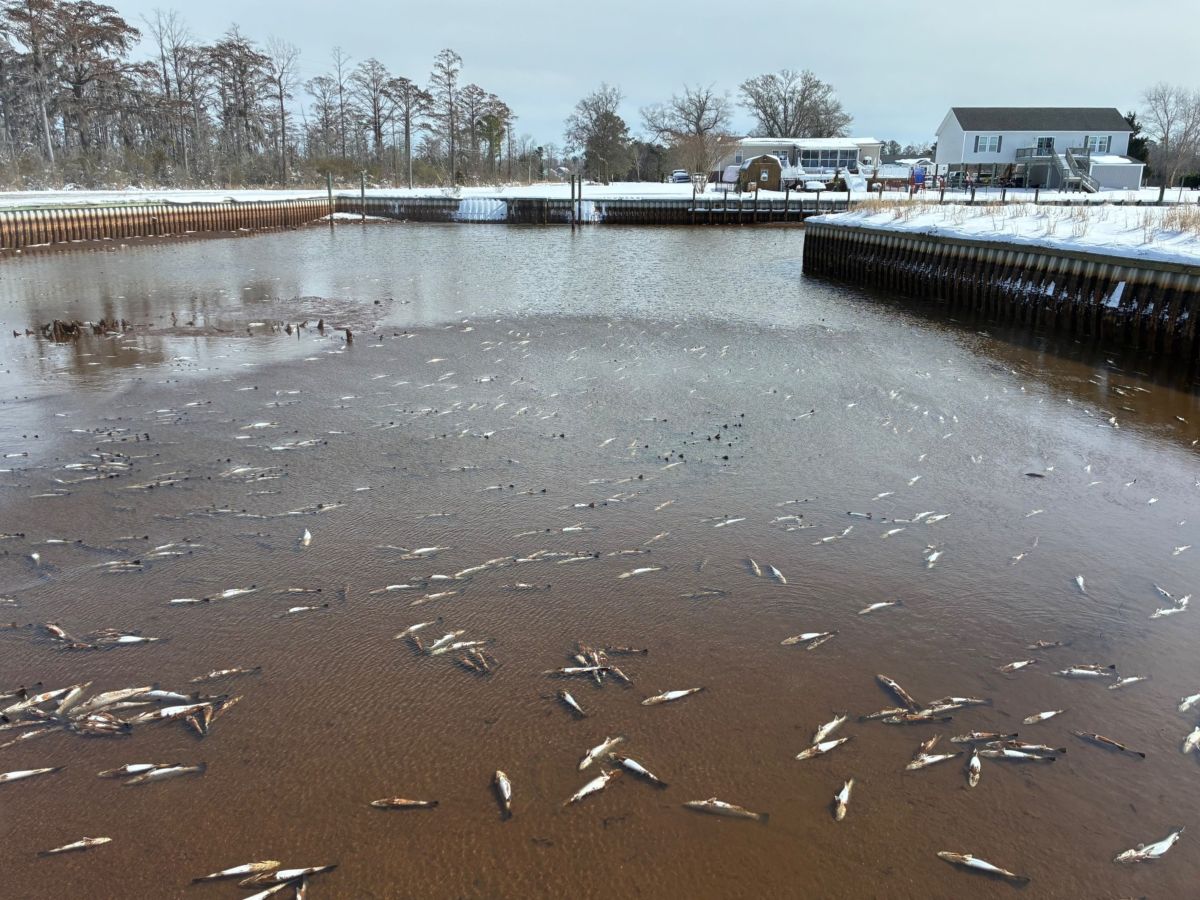
By the time you read this we will know the complete outcome of the aftermath of the cold event of late January/early February. Let’s take a look at why this occurred in the first place, the immediate effect, and what some old-timers think about possible consequences.
In the southern portion of the East Coast we have numerous species of gamefish that will use shallow creeks in winter. North Carolina Division of Marine Fisheries biologist Chris Batsavage says many of these species will be found in shallow creeks during winter.
Supporter Spotlight
“The mud bottom found in many shallow creeks, along with their shelter from the wind, can provide warmer water and forage during the winter,” Batsavage told Coastal Review.
Usually this provides a nice arrangement, and the fish are happy in sunny, hidey holes. However, through the years there have been situations where their natural tendency is detrimental to their survival. When there is an extreme cold snap that leads to creeks icing over for extended periods of time, fish using these waters may experience cold stun, or even be killed. The longer freezing conditions occur, the more severe the effect can be.
It would seem that the cold of those couple of weeks in January and February did the job. I talked to fishy friends all along the coast and their words were not encouraging.
“It seems there’s already been four major kills reported. I think it will be very significant,” reported Capt. Harry Meraklis of Kitty Hawk.
Capt. Dave Rohde of Kitty Hawk told me, “The sound was frozen solid yesterday. They are floating everywhere.”
Supporter Spotlight

Batsavage said quite a few reports were coming in from the public and division staff.
As is policy in these cases, the Division of Marine Fisheries shut down the speckled trout fishery for all users on Friday, Feb. 6. At this point the closure extends to June 30. However, an official opening date had not been announced at the time of this publication.
The reason is twofold: We have had significant cold events in consecutive years (first time in my memory although I am sure others go further back than me), and this 2026 cold kill was unprecedented in both breadth and length, in recent memory. The record amounts of snow and the length of time that temperatures were well below 32 degrees left creeks frozen for longer than I recall in my 30 years in the state. People were ice skating down the middle of Emerald Drive in Emerald Isle.
Fish kills have been reported as far south as Florida. I remember being down there in spring after a big cold spell killed lots of snook years ago. It was grim.
Experience tells us that this should work itself out. The fish themselves have evolved over millennia and will sort it for themselves. Capt. Seth Vernon of Wilmington holds this view.
“Nature seeks homeostasis,” Vernon said. “I would hope we keep the pressure off of them until after they have spawned, and they will make up for the deficit in the numbers of eggs produced and fertilized.”
Capt. Rick Patterson of Cape Carteret said that, in the cold kills that he had seen over the years, “there will still be trout this summer and fall. The numbers of big fish may be down, however.”
The hope is that recent conservation efforts will pay off in quickly rebuilding speckled trout populations.
“It seems like the stock rebounded quicker from the cold-kill events over the last 10 years or so, compared to those from further back in time,” said Batsavage.
Noted Carolina Sportsman columnist Capt. Jerry Dilsaver of Oak Island adds that, “I think it’s safe to believe the closures help the trout numbers rebound quicker.”
Dilsaver is quick to point out that the statewide closure is wise.
“For what it’s worth, I have heard some fishermen (at Ocean Isle Beach) saying, “Why did they close the season here? We didn’t have any significant kills.’”
Any different won’t work, he says.
“If an area is left open, it will be inundated with fishermen from other areas, and they will most likely harm the fish worse than the freeze,” said Dilsaver.
These are wise words from a wise man. Pay attention. There’ve been and will continue to be plenty of complaints about this in the months to come.
Batsavage agrees.
“It’s hard to measure the impact of closing the fishery after a cold-kill event, but reducing fishing mortality likely benefits the recovery,” he said.
In my personal experience (if that’s even worth considering), the closure helps the fish recover. I have caught 25-inch-long trout on topwater plugs in May while casting for redfish, and I personally have seen fish populations rebound after having been given a few months to recover from cold kills. It would be pretty obvious next fall when everybody had good action.
The only problem this time is the unprecedented nature of this year’s weather. Anyone who says they know precisely what is going to happen, well … no, they don’t.
Be patient. Give the system a chance to recover. The experts who I know know, regardless of what Uncle Ernie on the Internet says.