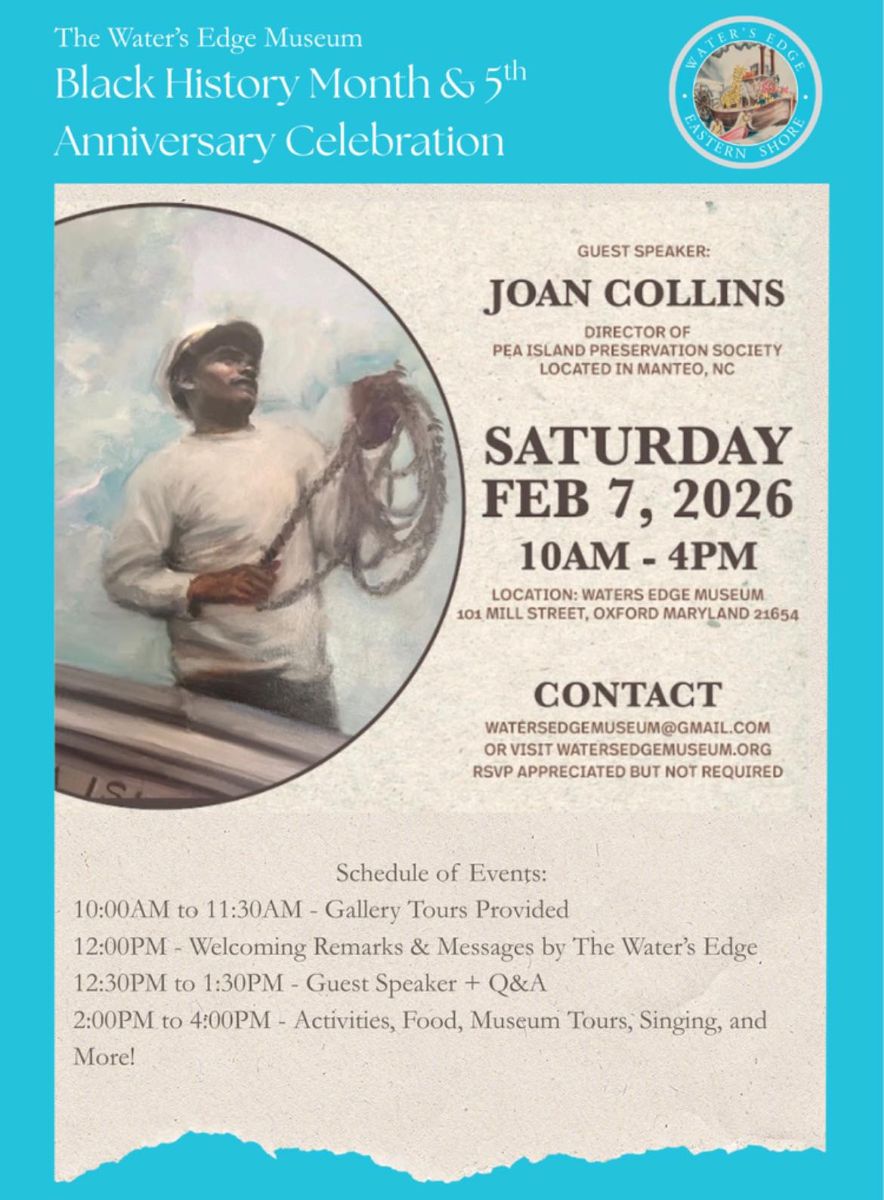
Note: The Feb. 7 event described below has been rescheduled for Feb. 21 because of weather-related issues.
Those who know me best often hear me say I wear two hats. One is to help raise awareness of the story of Keeper Richard Etheridge and the Pea Island Lifesavers. The other is to raise awareness of my father and his family who have deep ties to Roanoke Island and a remarkable record military service.
Supporter Spotlight
I am thrilled to speak of both on Feb. 7 and to help celebrate a momentous occasion, the fifth anniversary of The Water’s Edge museum.
The accompanying mini-exhibit will be the first outside exhibit there.
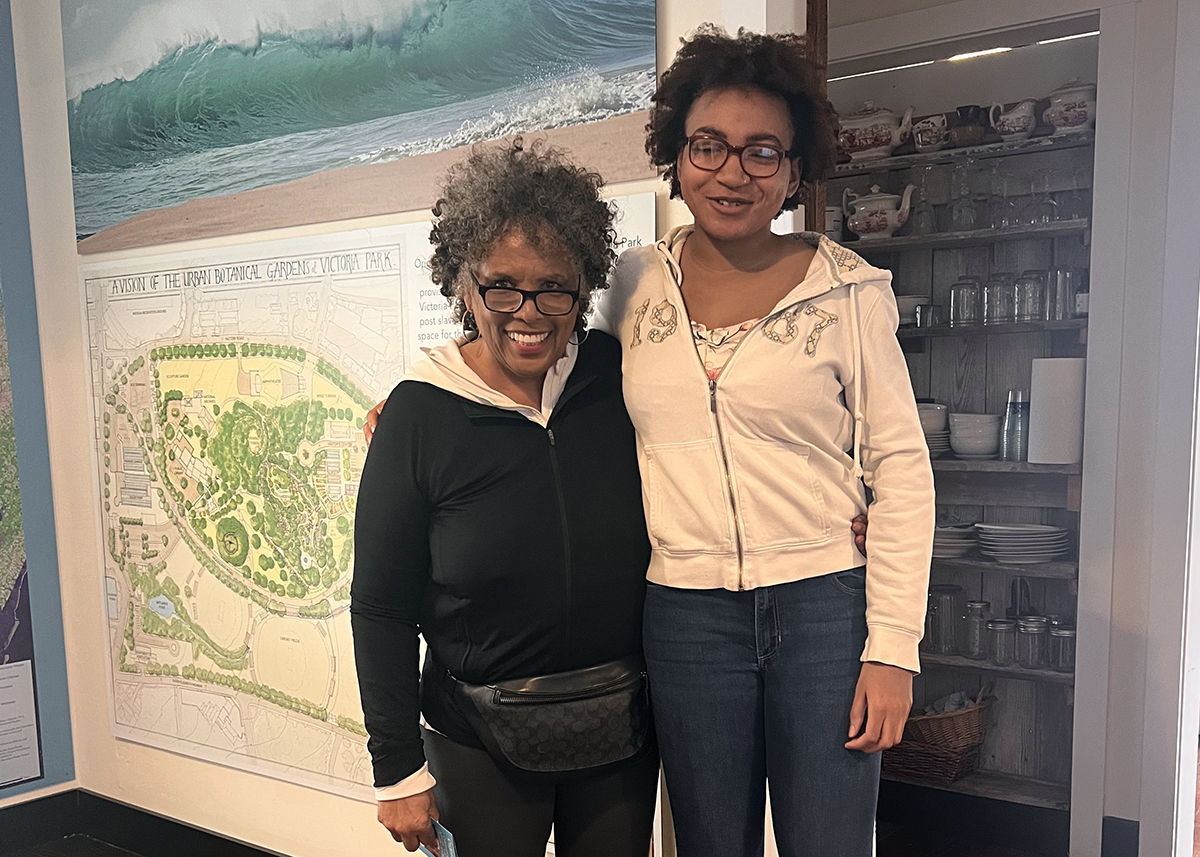
An invitation to speak at this event is something I would have never imagined when I first visited Oxford, Maryland, on March 29, 2025. The Water’s Edge had opened just a few years earlier and was new to me. I had never heard of or seen it before.
My niece, a frequent visitor to the Eastern Shore and an avid reader, happened to come across an article about the museum during a stay nearby. During a trip I made to Maryland last year, she urged me to visit the Oxford museum with her and her mother, my sister. Little did I know then what would lie ahead. I still feel the joy I experienced walking in The Water’s Edge for the first time.
I was immediately reminded of the Pea Island Cookhouse Museum on Roanoke Island. Many know me for my connection to this museum. I have helped manage, operate and raise awareness of this museum’s history for several years. Simply known as “the Cookhouse” this museum is a small structure built in the 1930s at the Pea Island station where surfmen cooked and ate their meals.
This historic station was the only U.S. Life-Saving Service (USLSS) station in the country with an African American commander and an all-Black crew. My great-great-uncle served under Keeper Etheridge, as did my great-grandfather. My great-uncle, father and other relatives also served at the Pea Island station. The station was staffed primarily with Black commanders and surfmen crews from January 1880, when Etheridge took command, until March 1947, when my father, Herbert M. Collins, the last surfman left in charge, closed its doors for the last time.
Supporter Spotlight

The USLSS station at Pea Island is most known for the Oct.11, 1896, rescue of an all-white contingent on board the shipwrecked E.S. Newman during a fierce hurricane and in the middle of the night. Etheridge and his crew were posthumously awarded the prestigious U.S. Coast Guard Gold Lifesaving Medal for this daring and heroic act in March 1996, some 100 years later.
Another captivating fact is that before becoming a surfman and commanding the Pea Island station, Etheridge grew up enslaved. He had also served with the 36th Regiment of U.S. Colored Troops during the Civil War, enlisting with other men on Roanoke Island to join the fight for freedom. By the time the war ended he had earned the rank of sergeant.
As a visual learner, when I first entered The Water’s Edge I was immediately moved. The colorful images on the walls, particularly the portraits and scenes of daily life in Oxford made me think of my father, grandparents, great-grandparents. The scenes reminded me of my father growing up on Roanoke Island during a time when church, community gatherings, and services were so important to the small community in which he lived.
I imagined him as a young child sitting in the church with his parents, grandparents, cousins, and friends. I imagined a community gathering with food, music, dancing and well wishes as he and his twin brother left Roanoke Island together at just 17 years old, and at their father’s urging, to join the Coast Guard. I imagined the smiles and the sorrow, particularly my grandmother’s likely tears as she watched them leave knowing there was little opportunity for them to succeed if they stayed.
When I returned to my home on Roanoke Island, I quickly sent The Water’s Edge more information, including a video. I also invited members of their staff to come to Roanoke Island to learn more. That resulted in staff members visiting the Cookhouse and staying at my home this past summer.
My talk will include showing the short video, “A Checkered Past: The Story of Keeper Richard Etheridge and the Pea Island Lifesavers.” There will also be other images including three, 4-foot-square oil paintings associated with my father’s career, part of my family’s collection, on display for the first time. The artwork is part of an ongoing family creative effort to preserve my father’s life story, and in a creative way, a project we began after his death in March 2010.
I am incredibly grateful for the opportunity on Feb. 7 to wear my “two hats,” one to tell the story of the historic Pea Island station and the other, the story of my father and his family. As a kid, my father and superhero grew up longing to wear a surfman’s uniform.
The picture on the event flyer was commissioned by the late portrait artist John de la Vega. It is based on a photograph of my father shortly after he first reported to Pea Island and as he told me, before his uniform arrived. Thankfully that uniform did arrive, which I am sure put a big smile on his face. He often recalled growing up as a kid longing to wear a Coast Guard uniform one day.
In March 1947, he left Pea Island proudly wearing that uniform. He would serve for 34 years, the longest of anyone in his family.