What if I told you that there was a class of fishing lures that not only imitate what a bait looks like, but also what it feels like?
That we have lures that not only smell like the real thing but also tastes like it? We have copied the movement, sound and exact colors of real baits. What if I told these were real and not some figment of my imagination? Would you ever use any other type of lure again?
Supporter Spotlight

Soft plastics have progressively gotten better — so good through the years that they are amazing imitations of life. Let’s talk a bit about where they have come from and where we are today.
The first plastic lures on the market were the Crème Scoundrel worms. They literally looked like earthworms. They were stiff and not at all lifelike. They caught fish.
The first saltwater shrimp imitation I ever used was the Boone Tout. It was a weird name, barely looked like a shrimp, and did nothing in the water. It, too, caught fish.
As the ’70s went on we saw the Tom Mann Jelly Worm add flavor to the mix and the Mister Twister added a curly tail and extra action to their baits. By this time, everyone knew how good plastics were.
I caught my first 5-pound largemouth bass on a 6-inch grape Manns Jelly Worm and about a million gray trout (weakfish) from the Delaware Bay.
Supporter Spotlight

So they work. No doubt about that. Let’s talk about some of soft plastic lures available today and how to use them to catch fish.
Let me start by saying that the most popular types of lures are changing quickly. It wasn’t too long ago that I used the Tsunami swim baits for almost everything. They have a weight built in and they have a great action that makes them look like an easy target. They’re expensive and bluefish ruin them. For a number of years, I always had one tied on. I caught every kind of fish that can be targeted around here. For some reason the retailers stopped carrying them in big numbers, and they have fallen out of favor. I still have a few bags here and there but it’s tough to get more.
The more popular brands now are Z-Man, Gulp, and DOA — and that’s just a start. The number of new products coming out is astounding. Let’s talk in more general terms.
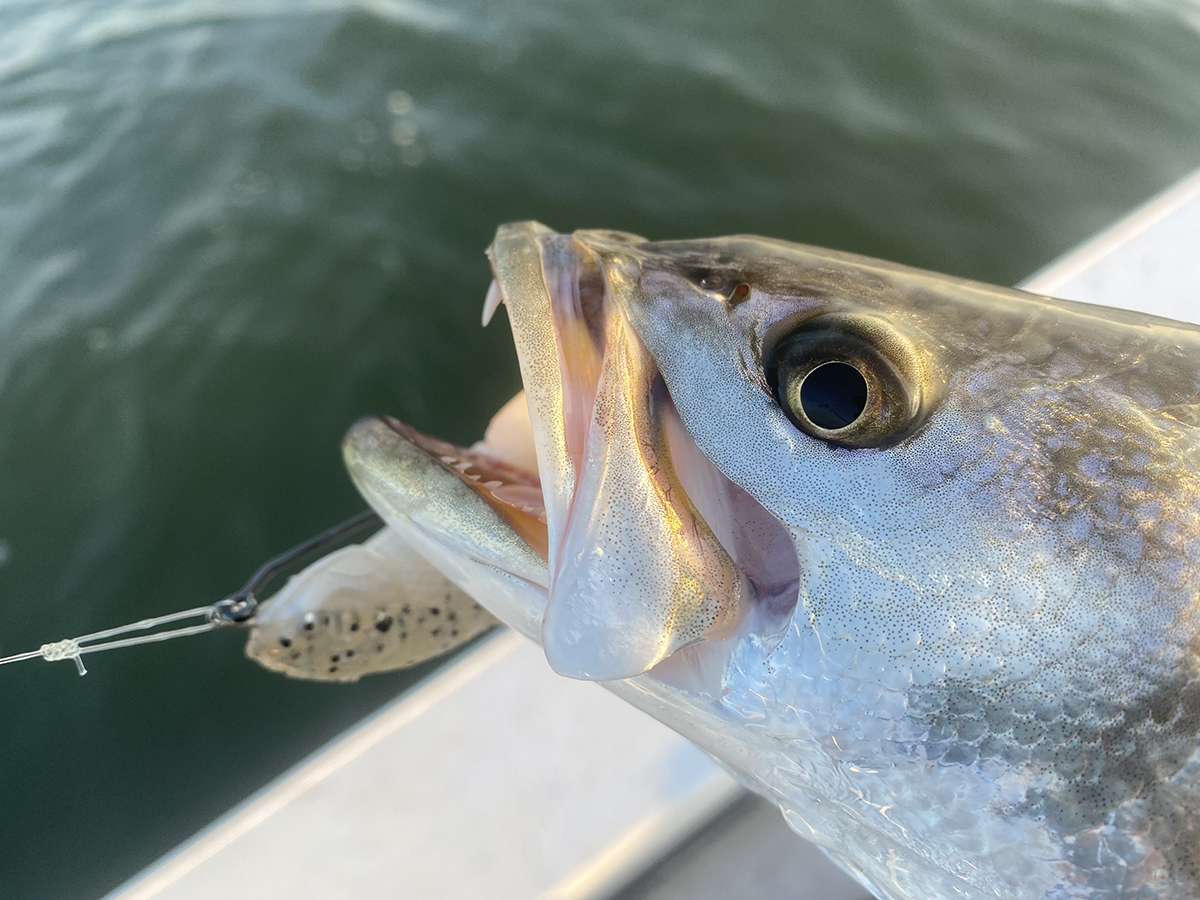
First let’s consider the kind you would attach to a lead-head jig. Many of these are designed to imitate baitfish. The Z-Man Shadz, and DOA CAL, are two of the most popular brands sold around here. They are quite realistic in both their looks and movement. They are attached with lead heads designed specifically for those baits to ensure a smooth look. There are split tails, twist tails, paddle tails, and something that somebody is making in their garage right now.
My suggestion is to pick one or two styles and stock up on those. Choose different colors based on the local conditions, and go with that. They all work, and instead of fixating on whatever brand is most popular, instead choose what works for you and move forward.
Make a cast, hopefully toward where a fish is lurking. Work it back like any jig.
“Twitch, reel. Twitch, reel.”
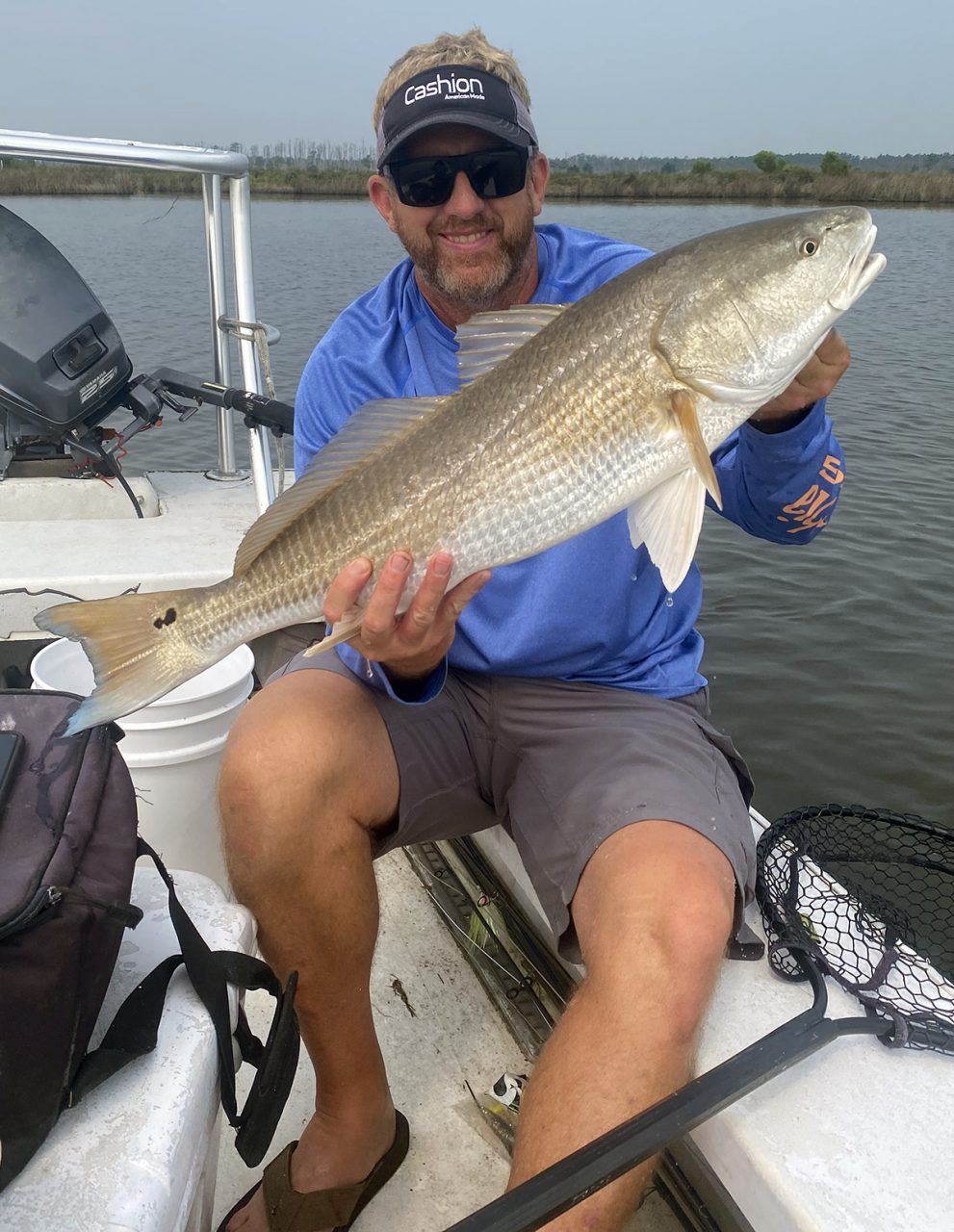
Strikes will feel like a tap. Snap set the hook – you don’t have to rip their lips off. I’ve caught 8-pound speckled trout, 6-pound southern flounder, 12-pound striped bass and a whole assortment of every single kind of fish that swims in these waters using soft plastic with a jig head.
Another style I like are the soft plastic shrimp made by the same companies. They are quite realistic and in some situations they are more effective than the living versions. Mainly it’s because you can use the same bait to catch multiple fish whereas a live bait is one and done.
Cast a plastic shrimp into a current run that drops off into deeper water. It might be only a matter of inches. Reel quickly enough to keep your line tight and add a touch of movement. That familiar “tick” means a fish. Reel down quickly and come tight.
This technique is very effective for red drum and trout in winter holes.
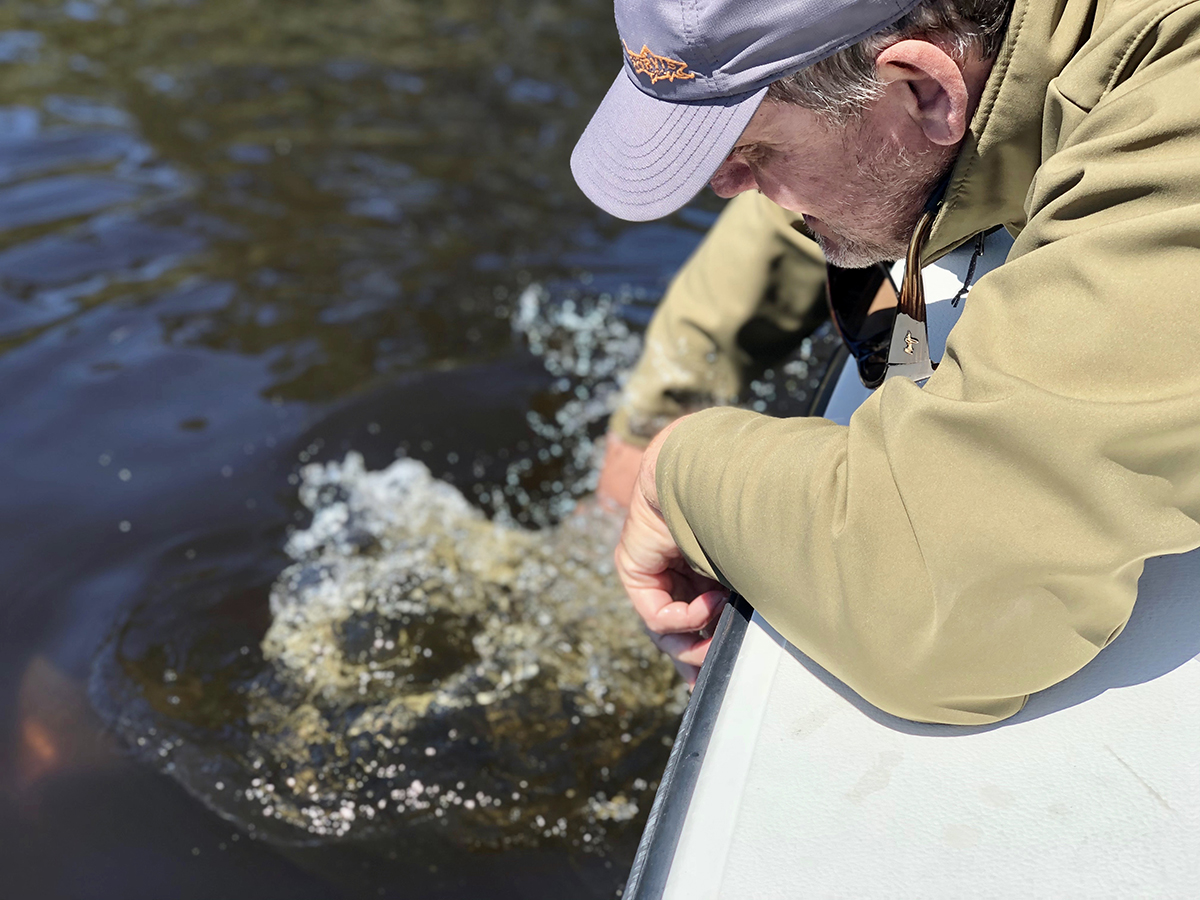
Another good use for them is as a dropper rig when fishing from a pier for speckled trout. Probably the most common way is under a popping cork around oyster bars and on grass flats. Rig the lure about 2 feet deep below the cork. Then pop and reel. A fish will announce itself by pulling the cork under. The plastic shrimp is versatile.
Unweighted soft plastic jerk baits first made their appearance in the mid-’90s with the Slug-Go. In hand it looks innocuous; fish shaped, split tail, nothing special. But rig a weedless hook on it, toss it into the water, and it becomes something.
First of all, it sounds like a living thing when it plops in. Then it moves like a minnow that’s having an extremely bad day and attracts attention from predators. My favorite was the 6-inch size. I could cast it easily with whatever rod I was using and they smoked it.
Now all the aforementioned manufacturers have similar designs. Put them to use in shallow weeds, around oysters, flats. You can even add rattles to them. See what happens when you cast to a school of trout on the edge of a flat during summer.
If imitation is flattering, soft plastic lures are the extreme. As Dustin Hoffman’s character was told in “The Graduate,” “There’s a great future in plastics. Think about it.”
Coastal Review will not publish Monday in observance of Martin Luther King Jr. Day.