Actively casting to visibly feeding fish is very exciting and often leads to days that will be become legendary. There are numerous ways to approach these situations that lead to ample opportunities for all the anglers who inevitably make an appearance.
Unfortunately, too many people either don’t know or don’t care about anything else but themselves and then proceed to mess it up for all concerned. Let’s figure this out so we don’t become one of “those” guys.
Supporter Spotlight
First, we have to recognize what a feeding school looks like. It can present many ways depending on location, depth, and species. If you don’t know what you’re seeing, you’re liable to roll right over them.
The most obvious species and one least likely to be spooked by boats and anglers is the bluefish. I’ve seen schools of bluefish spread out for acres with boats driving through them every which way, without much regard for … well … anything really. People were fishing and the fish were still biting all around.
A big school of bluefish up to around 5 pounds will remain pretty aggressive in almost any circumstance. When they get a little bit bigger, you have to be more careful about driving through them. Even then, they’ll probably not spook too badly, and if the bait is still around, they’ll feel compelled to strike.
Favored lures include almost any jig or spoon in a somewhat approximate size or color. They’ll probably take a whack. Make sure you have an appropriate bite leader or you wave goodbye.
False albacore and Spanish mackerel are less tolerant of sloppy driving. When approaching surface feeds of these, the angler must plan his approach to account for the direction of travel and the wind speed and direction. You must intercept in such a way as to not roll over them and still allow presentations to be made to the feeders.
Supporter Spotlight

You’ll see many mistakes being made by people who should know better, and often it can wreck the action for all. On a good day with all being cooperative and considerate, the good fishing can go for hours. Otherwise, it’s up and down with the ill-mannered butting in.
More realistic imitations must be used with albies and macks. Be aware of the size and color of the bait fish. Many times — not always — jigs that are too big or an inappropriate color will be ignored. A good starting point is an epoxy jig such as the Gun Slinger, approximately the size of a man’s ring finger, with an olive or other natural color. There are myriad other options. Try a soft plastic tail such as the Albie Snax with a jig head if things get tricky.
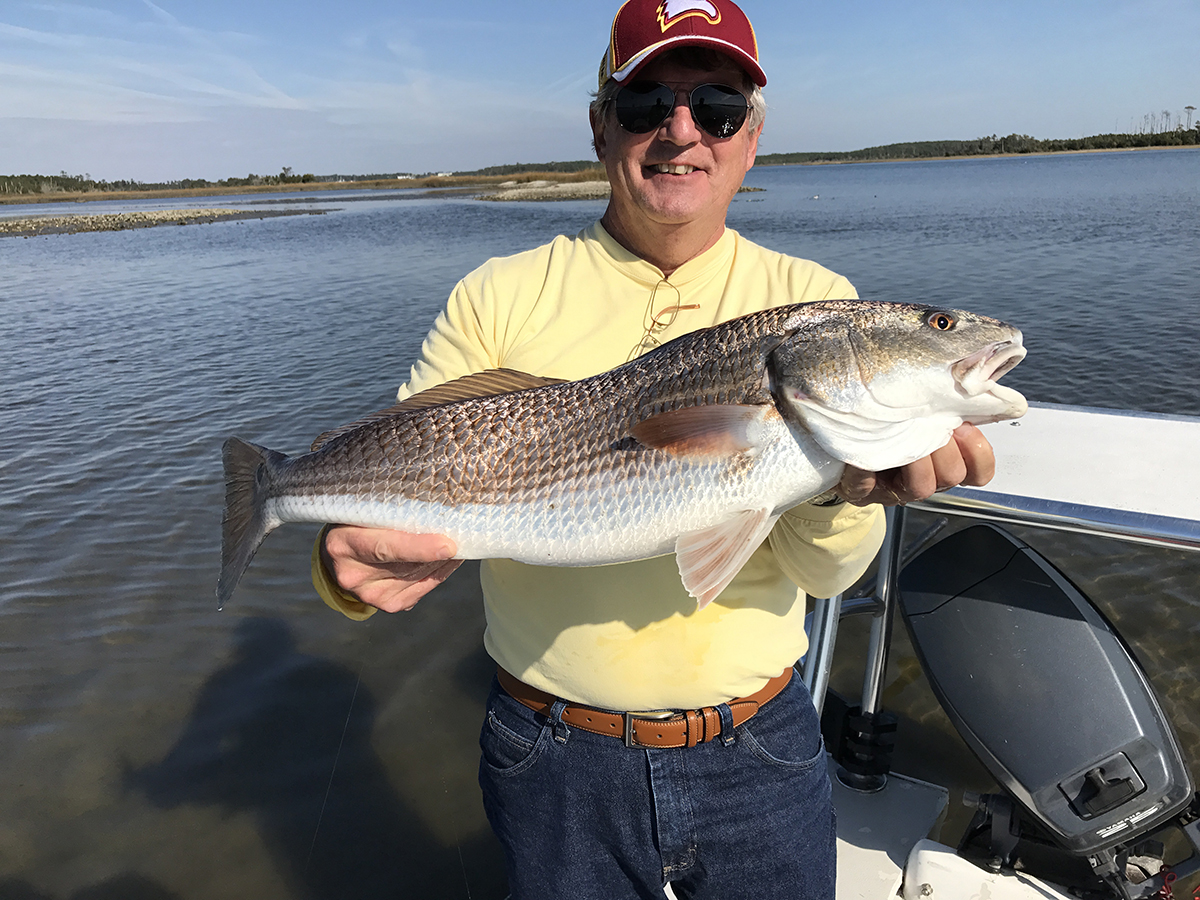
So far, we’ve talked about fish feeding in deep water near the surface. Everything changes in shallow waters. The shallower they go, the less tolerant they become of loud motors and erratic driving. The most extreme example of this is with schools of red drum feeding in water that may be better measured in inches rather than feet.
Most often these fish can be approached with an electric trolling motor. Even then, they can be put off if you get too close and they feel the vibration. Best to set it on low speed and go slowly. Even better is a push pole. This is the stealthiest option. When the water is less than a foot, this will be the only option.
Pay attention to the fish and where they are going and keep your boat a long cast away … did I mention the water is shallow? There’s plenty to get hung on. Through the years, when pursuing shallow redfish, I’ve had best success using D.O.A. plastic shrimp in any color that shows up in changing water clarity: bright colors in muddy water, muted colors in clearer water. Make as long a cast as possible and retrieve in a slow cadence with occasional twitches. They’ll get it, and it will be obvious.
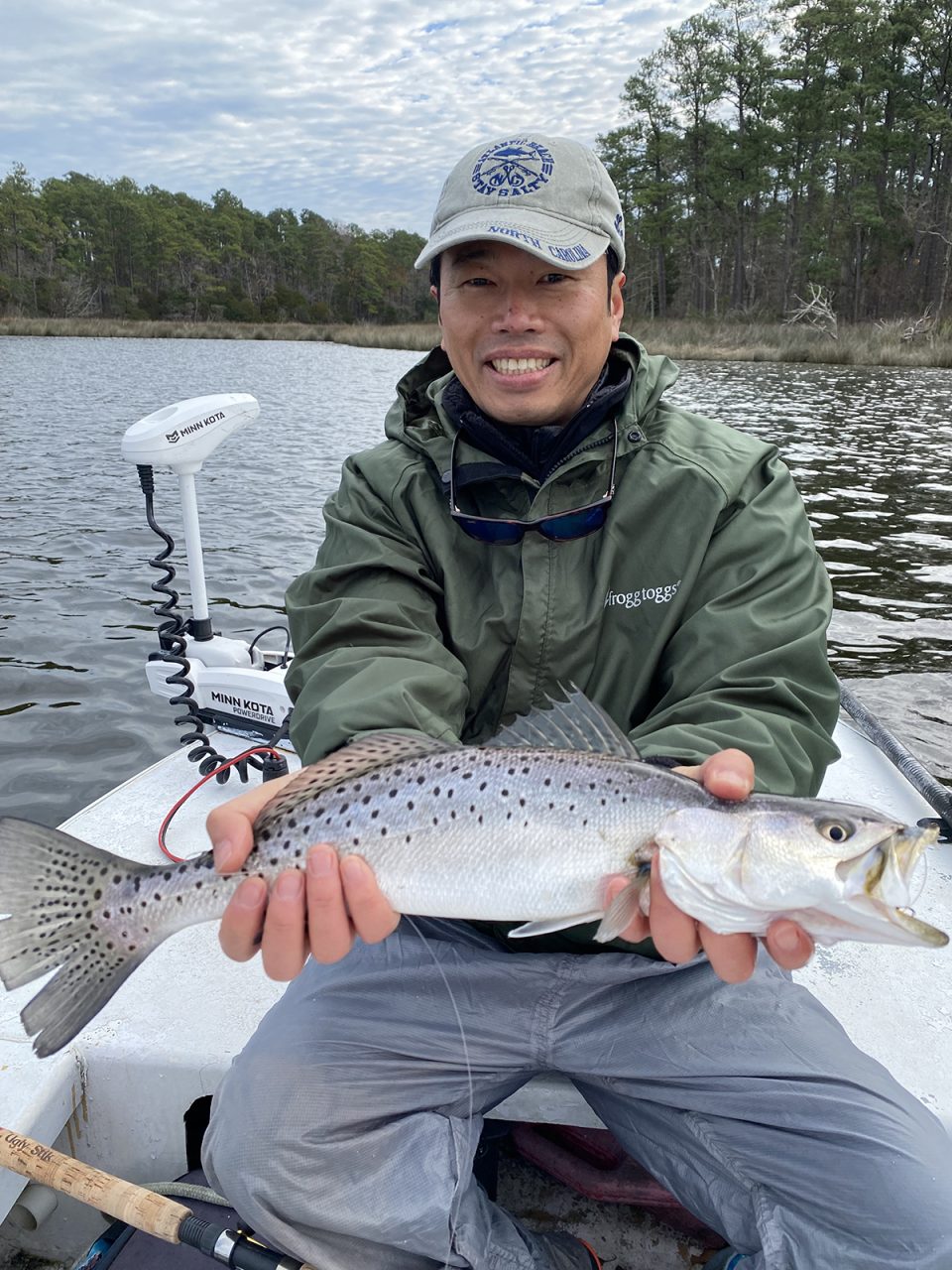
The most difficult to approach are speckled trout. A lot of times, if you’re not aware of the potential of a school being nearby, people will drive right over them and never know what they missed. In certain places, during certain times of the year (I’ll leave it to you to figure out), speckled trout will gather in large schools. This provides great fishing for those who know.
Some places are well known to the point of fame – or infamy — while others remain more quiet. In either case, it’s a good idea to approach quietly and carefully. Again, long casts are best. Use small jigs, ¼ ounce usually. I’ve used the Zman Jerk Shadz for the past decade. Light tackle. Don’t be in too much of a hurry. Use the trolling motor on as slow a setting as you can move up current.
If you get bit, slip the anchor over the side. As long as you’re quiet the fish will hang around. At some point you may need to move up a bit and start over. Be light-footed and, for goodness sake, don’t drive through the spot someone is already on. The fish behind will still be there and will start biting again soon enough. The idea is to keep the action going for everyone for as long as possible. When folks work together it can happen.
That’s pretty much a good rule to use whenever we’re out there. Be polite to others we see. Be considerate of where others are fishing. Sometimes we have to go around.
Start early if you want to be first, and be fine with it if you’re not. I see too many people behaving poorly when big schools of fish are around. Take it easy and we’ll all have a more relaxed and productive day.