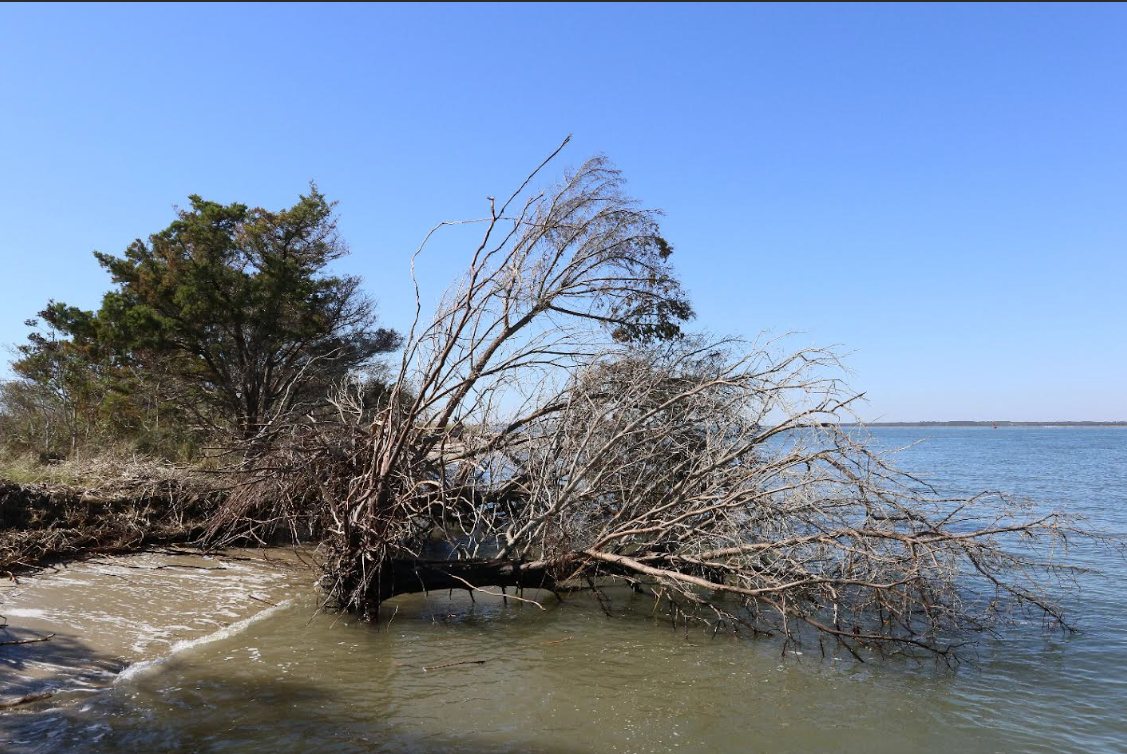
To get a sense of just how severe Battery Island’s shoreline is changing, look no farther than its trees.
As waves lick away at the fringes of this little island in the middle of the Cape Fear River near Southport, trees rising off its shores are toppling.
Supporter Spotlight
“The mature trees that the birds nest in are being lost along the shore,” said Lindsay Addison, coastal biologist with Audubon North Carolina.
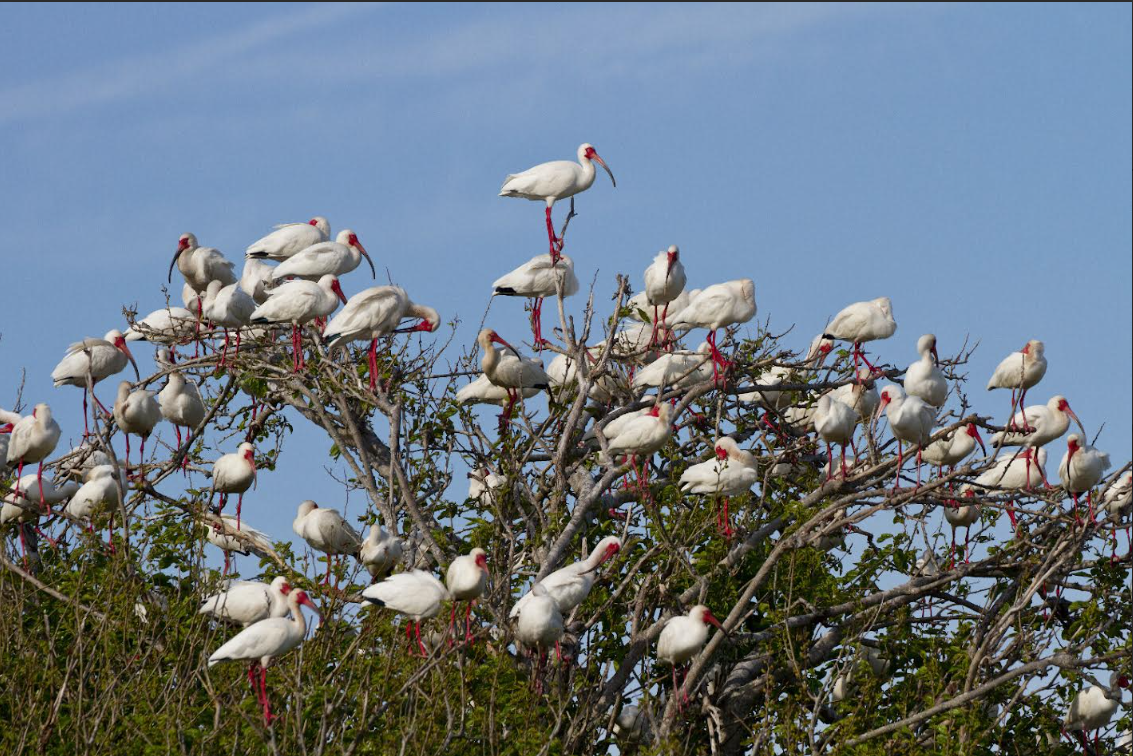
Each tree that plops into the river is one fewer on an island that is globally significant for nesting white ibis and home to one of the largest wading bird colonies in North Carolina.
To Battery Island’s east rests Shellbed Island, a large marsh system edged by elevated banks of old oyster shells called shell rakes.
In good condition, these rakes do not flood at high tide or during storms, making them a crucial and rather niche nesting habitat for American oystercatchers.
“The Cape Fear River supports almost 30% of the state’s nesting American oystercatchers. And about half of the American oystercatchers that nest on the Cape Fear River nest in these types of habitats. So, it’s a very important habitat type for American oystercatchers and they are a state listed species,” Addison said.
Supporter Spotlight

Like Battery Island, waves have altered Shellbed Island’s edges, where the elevated shell rakes have been flattened out and pushed back into the marsh by coastal storms.
In an effort to protect the threatened bird habitat on these islands, Audubon and its partners, Sandbar Oyster Co. and the North Carolina Coastal Federation, have teamed up to design and install two pilot living shoreline projects and test their effectiveness at protecting the low-lying islands on the river.
The Coastal Federation, which publishes Coastal Review, is contributing $13,800 in cost share for the $51,500 projects. Of the Coastal Federation’s contribution, $5,250 has been set aside for Battery Island and $8,550 for the project at Shellbed Island.
Georgia Busch, a coastal specialist in the Coastal Federation’s Wrightsville Beach office, said these projects, “align with our mission for preservation of critical habitats in our coastal and estuary systems.”
“But, particularly in the lower Cape Fear River, there’s a need for some extra reinforcement of those habitats there. Historically, the birds have used this area for a long, long time and we just want to make sure that stays intact. These sites were chosen for both their exposure and their critical points in the river,” she said.
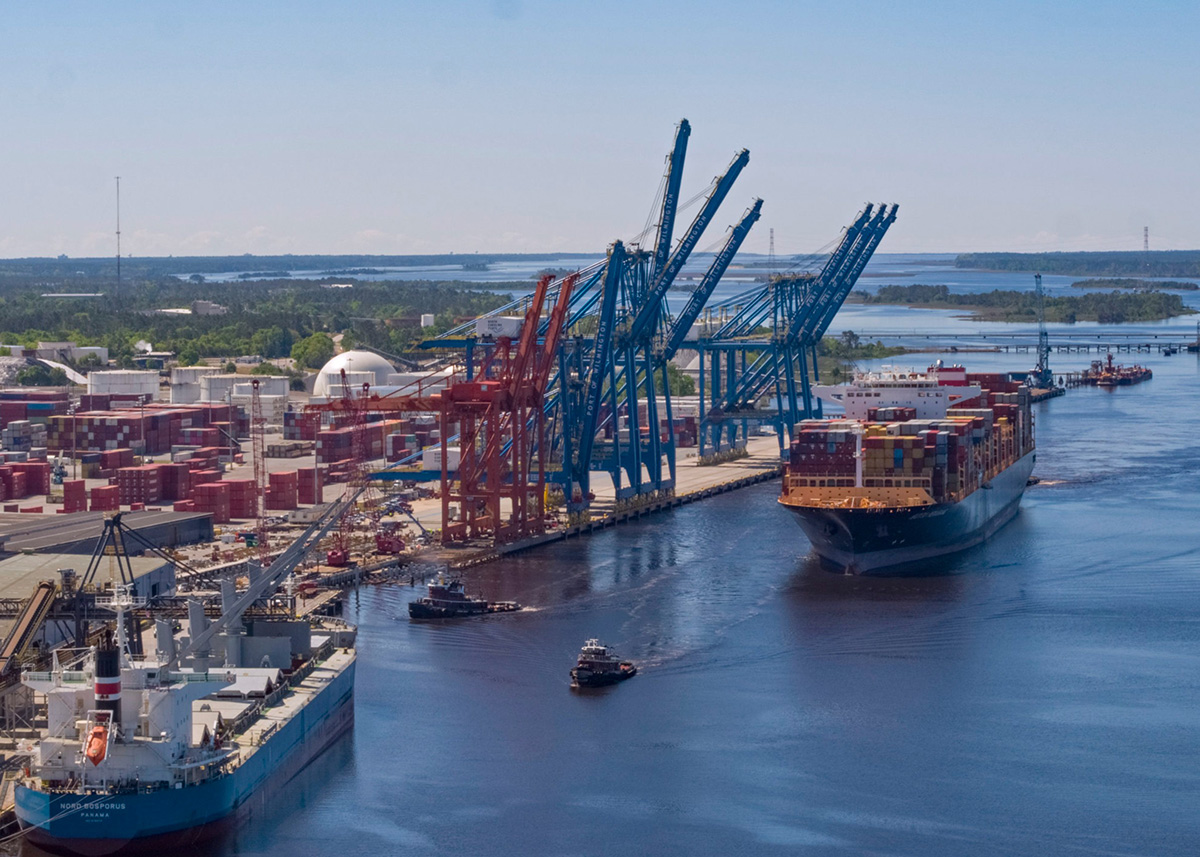
Battery Island’s shores have for years been battered by waves from large vessels that navigate the river to and from the Port of Wilmington, recreational boats that skim the waters around Southport, and the Bald Head Island ferry.
“What makes Battery Island special for the nesting birds is it’s relatively small, it’s far enough away from the mainland that it doesn’t have any mammalian predators on it, and so that allows this colony to have a lot of success,” Addison said.
There’s also little human disturbance on the island. The island, which is managed by Audubon, is closed to people March 1 to Sept. 15 each year.
A test section of about 70 linear feet of living shoreline will be installed along the roughly 100-acre island’s southwest corner, which has experienced some of the most severe erosion.
A reef constructed of Sandbar Oyster Co.’s Oyster Catcher reef building substrates, which are made with plant-fiber cloth, infused with different cement mixtures, and molded into different shapes to promote sediment accumulation and marsh growth.
The test project at Shellbed Island has been designed to prevent shell rakes from washing away.
Power hurricanes, including Florence in 2018 and Dorian in 2019, pushed the shell rakes back into the marsh and flattened them out. And the oyster reefs that at one time provided an abundance of oyster shell in the river are not as plentiful because of overfishing, pollution and habitat degradation.
“There’s still plenty of spat, larval oysters, in the water, but there isn’t a lot of substrate for them to settle on because oysters typically grow on other oysters,” Addison explained. “When you put in a living shoreline-type of material, or almost any hard substrate, you’ll get oysters recruiting onto it. What we would like to do is to help jumpstart some oyster populations in areas of these shell rakes.”
The project at Shellbed Island includes installing roughly 67 feet of living shoreline in front of the shell rakes and material behind the shell rakes, “so that when nature moves those loose shells around, it can build back up into a more sustainable nesting habitat where the oystercatchers are not losing so many of their nests to overwash,” Addison said.
Audubon has a received a grant for a separate project to place loose oyster shell directly on the existing rakes.
Busch explained the test projects are a first-of-their kind because they will be at isolated islands “where we’re really only looking at habitat and this will be really helpful for testing out the strength and feasibility of the Sandbar Oyster Company’s products and of living shorelines.”
“These sites were chosen for both their exposure and their critical points in the river,” she said. “We want to see how this product will work somewhere where we get a lot of wave energy. We’re going to find out.”
Addison said she has “high hopes” for the living shorelines in curbing erosion at the islands.
“If it turns out to look like it’s working well then we could seek larger pots of money and expand our permit to be able to do this at a larger scale,” she said.
Audubon is continuing to fundraise for the projects. Donations may be made by contacting Addison by email at lindsay.addison@audubon.org.